

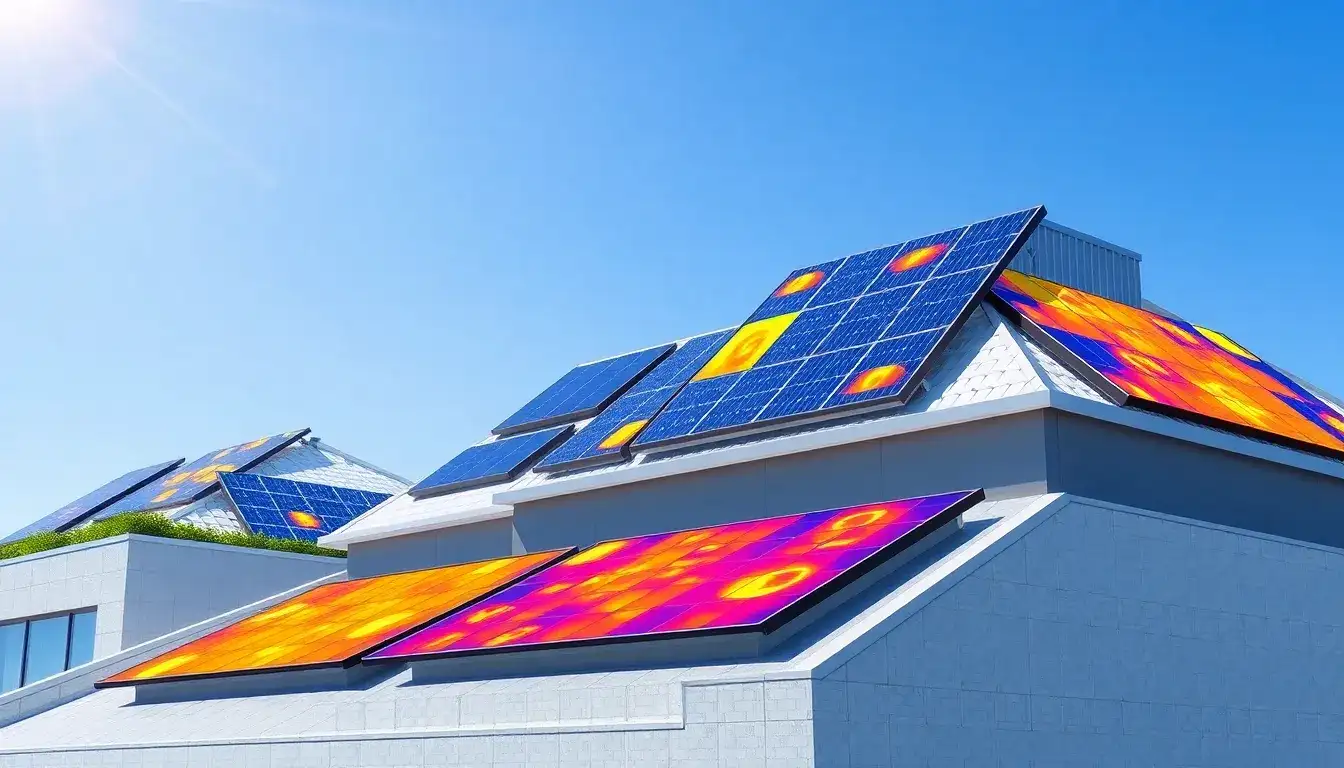
Certain roofing materials can indeed reduce the temperature of solar panels by lowering the roof surface temperature, which in turn improves solar panel efficiency and longevity.
Roofing Materials That Reduce Solar Panel Temperatures
Metal Roofs
- Metal roofing materials are highly reflective and can reduce the roof surface temperature by up to 55°F compared to conventional roofing materials like asphalt shingles.
- This high reflectivity helps maintain optimal solar panel temperatures, reducing thermal stress and improving energy output.
- Metal roofs are also lightweight and durable, with a lifespan (40-70 years) that matches or exceeds that of solar panels, making them well-suited for solar installations.
- Due to their reflective nature, metal roofs reduce heat absorption and contribute to lowering the roof and consequently solar panel temperatures.
Cool Roofs
- Cool roofs are specially designed to reflect more sunlight and absorb less solar energy than standard roofs, significantly lowering roof surface temperatures.
- They achieve this by having high solar reflectance (albedo) and thermal emittance, which means they absorb less heat and shed heat effectively.
- Cool roofs can keep the roof more than 50°F (28°C) cooler than conventional roofs under sunny conditions, which benefits solar panels by maintaining lower operating temperatures.
- Installing a cool roof reduces the heat load on the building and the solar panels, improving energy efficiency and reducing cooling costs.
Roof Coatings (Heat-Coating Paints)
- Specialized heat-reflective roof coatings or paints can be applied to roofs to reflect a significant portion of solar heat.
- These coatings help keep roofs cooler by blocking heat waves, potentially reducing roof temperatures by up to 20 degrees Fahrenheit.
- Roof coatings serve as an alternative or complement to solar panels for reducing roof heat and improving overall thermal management.
Comparison of Roofing Materials and Their Benefits for Solar Panels
| Roofing Material | Reflectivity / Cooling Effect | Weight (lbs/sq ft) | Lifespan | Impact on Solar Panel Temperature & Performance |
|---|---|---|---|---|
| Metal Roof | High reflectivity, up to 55°F cooler | 1.4 to 1.6 | 40-70 years | Keeps panels cooler, reduces thermal stress, extends panel lifespan |
| Cool Roof (various types) | Reflects more sunlight, 50°F+ cooler | Varies (depends on base) | Depends on material | Significantly reduces roof temp, improves panel efficiency and reduces AC load |
| Roof Coating Paints | Reflects heat waves, lowers roof temp | Very light (paint) | Periodic reapplication | Helps reduce temperature; can be used with existing roofs and panels |
| Asphalt Shingles | Low reflectivity, high heat absorption | 2.5-4 lbs (wood shingles lower) | ~12-20 years | Absorbs heat, can raise panel temperatures, reducing efficiency |
Why Lower Roof and Panel Temperatures Matter for Solar Panels
- Solar panels show optimal performance at around 77°F (25°C), and their efficiency decreases by about 0.45% for every degree above this temperature.
- High roof temperatures contribute to higher panel temperatures, reducing energy conversion efficiency and causing more thermal stress, which shortens panel lifespan.
- Roofing materials that reflect more sunlight and emit heat reduce roof surface temperature, allowing solar panels to operate closer to optimal temperatures and improving overall system performance and ROI.
Additional Considerations
- Cool roofs are particularly effective in sunny, warm climates; however, they may slightly increase heating needs in cold climates during winter due to lower heat absorption.
- Metal roofs not only reduce roof temperatures but can also provide insurance discounts and have a long lifespan matching solar panels, making them very practical for solar installations.
- Green roofs and solar panel roofs themselves can reduce surrounding air temperatures but cool roofs have shown to provide the greatest reduction in near-surface temperature and energy savings compared to these alternatives.
In summary, metal roofing and cool roofs (including reflective coatings) are the most effective roofing materials for reducing solar panel temperatures. They lower roof surface temperatures through high solar reflectivity and thermal emittance, which enhances solar panel efficiency, extends panel life, and reduces overall cooling costs for the building. Roof coatings serve as an additional or alternative method to reduce heat absorption on various roof types. Asphalt shingles, being highly absorptive, are less optimal for solar panel temperature management.
Original article by NenPower, If reposted, please credit the source: https://nenpower.com/blog/are-there-specific-roofing-materials-that-can-reduce-solar-panel-temperatures/

