

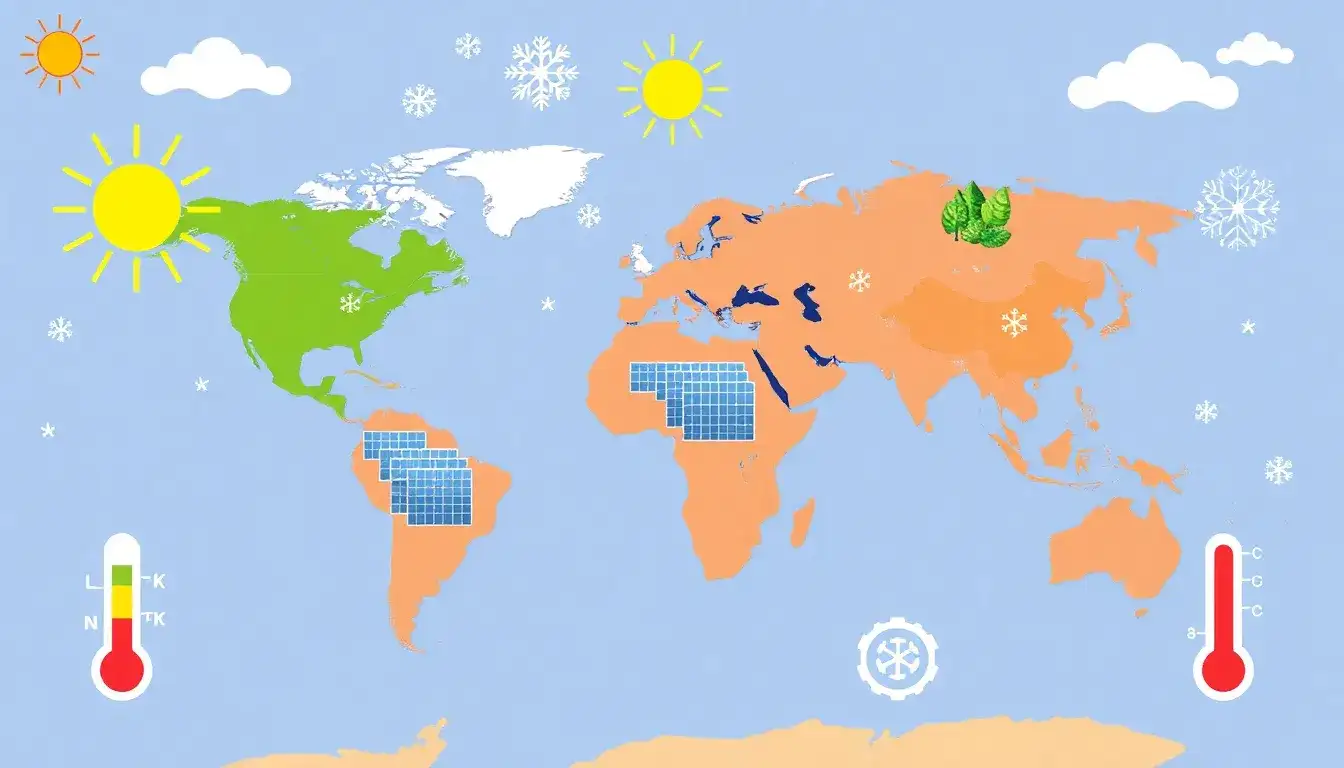
Yes, there are specific regions where temperature variations significantly impact solar panel efficiency, primarily due to the negative effect of high temperatures on photovoltaic (PV) cell performance.
How Temperature Affects Solar Panel Efficiency
- Solar panels generally perform best at around 25°C (77°F), their standard testing temperature. For every degree Celsius increase above 25°C, solar panel efficiency typically decreases by about 0.3% to 0.5% due to the temperature coefficient of the panel.
- In cooler climates or lower temperatures, solar panels actually perform better, with efficiency increasing as temperature drops below 25°C. For example, at 0°C (32°F), panels may produce 5-7% more power than their rated output.
- Despite this, even in hot regions, the total energy output might still be higher than in colder areas due to more intense sunlight, but the efficiency drops during peak heat.
- Solar panels can reach surface temperatures of 60°C to 70°C (140°F to 158°F) or higher in direct sunlight, especially in hot regions such as deserts, which can reduce their output by 10-15% compared to rated efficiency.
Regions Where Temperature Impact Is Significant
- Hot desert and tropical climates: Places like the Mojave Desert experience significant efficiency losses during summer when panel temperatures exceed 40°C (104°F) and surface temperatures reach 70°C or above. The high heat reduces panel output, making cooling or ventilation strategies beneficial.
- Hot, sunny regions with prolonged heatwaves: Areas like California’s Central Valley routinely see triple-digit summer temperatures. Although these regions have abundant sun, the heat lowers the solar panels’ voltage output and overall efficiency.
Cooler Regions and Advantages
- Cooler climates, such as New England or alpine areas, benefit from lower temperatures which improve solar panel efficiency. However, factors such as snow coverage and shorter daylight hours during winter can reduce overall energy generation.
- Solar panels in cold regions may operate above their rated efficiency on cool sunny days, but energy output still depends on sunlight availability.
Mitigation Strategies in Different Regions
- In hot regions, mitigating heat impact can involve installing panels with a low temperature coefficient, ensuring proper ventilation and spacing for airflow, and sometimes active cooling methods like evaporative cooling to reduce panel temperature and improve output.
- In colder regions, panels should be installed at optimal angles to shed snow and maximize sunlight exposure.
Summary Table: Temperature Impact on Solar Panel Efficiency by Region Type
| Region Type | Temperature Range | Impact on Efficiency | Mitigation Strategies |
|---|---|---|---|
| Hot deserts/tropical zones | >40°C daytime, panels >70°C | Efficiency drops 10-15% during heat peaks | Ventilation, cooling systems, low-temp coeff. panels |
| Hot sunny areas (e.g., CA) | 30-45°C | Efficiency reduces due to voltage drop | Proper panel selection, spacing, orientation |
| Cool temperate regions | <25°C | Efficiency improves, can exceed rated power | Snow shedding angle, maximize sunlight hours |
| Cold alpine zones | Often below freezing | Higher efficiency but snow and short days reduce output | Optimal tilt for snow shedding |
In conclusion, regions with high temperature fluctuations, especially hot desert and tropical areas, see the most significant impacts from temperature-induced efficiency losses in solar panels. Cooler climates benefit from higher efficiency but face other environmental challenges. Optimal solar panel performance depends on understanding and mitigating these temperature effects regionally.
Original article by NenPower, If reposted, please credit the source: https://nenpower.com/blog/are-there-specific-regions-where-temperature-variations-significantly-impact-solar-panel-efficiency/

