

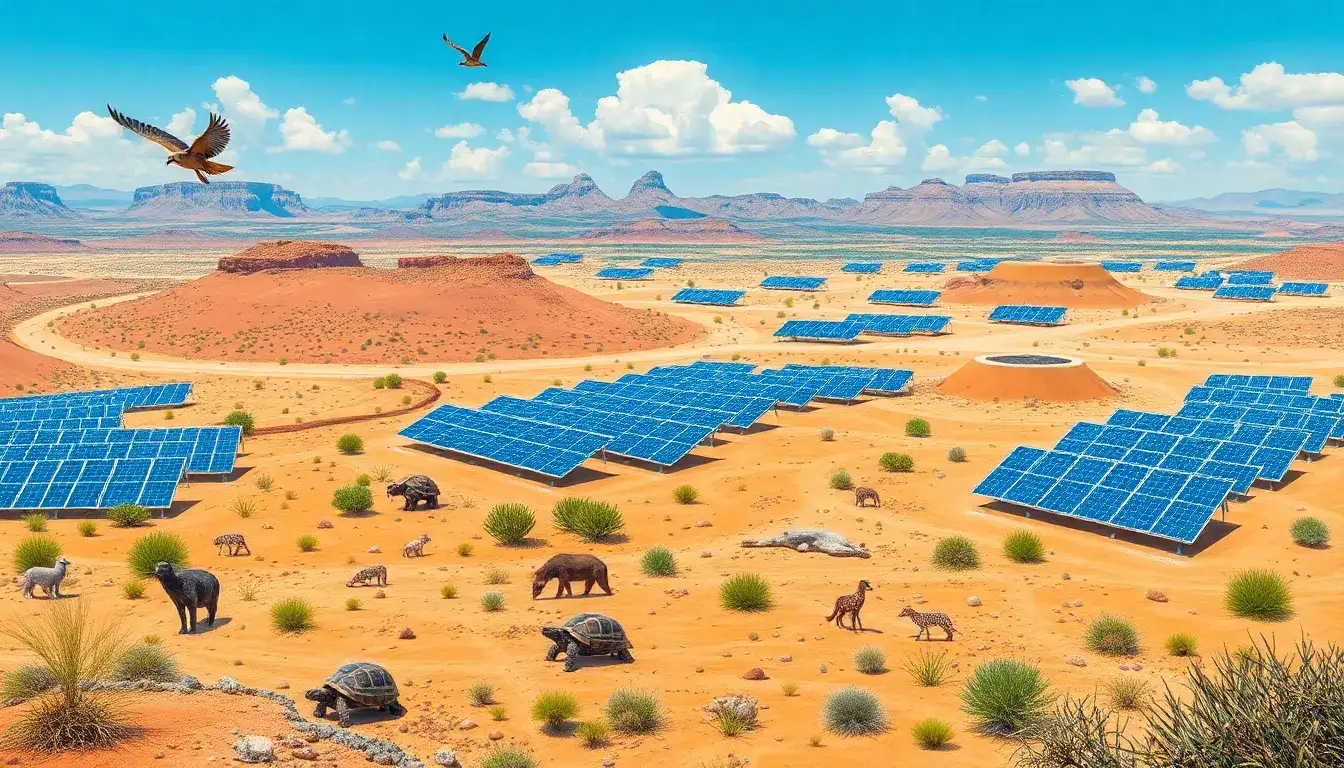
Solar panels have a greater impact on wildlife in specific regions where their installation leads to significant habitat loss, fragmentation, and disruption of local ecosystems. These impacts vary based on geographic location and ecosystem characteristics.
Regions with Greater Wildlife Impact from Solar Panels
- Desert Areas (e.g., Mojave Desert)
- Large-scale solar facilities in desert regions can severely degrade ecosystems that support specialized wildlife such as the Mojave desert tortoise. Construction often clears large undisturbed land areas, disrupting native vegetation and displacing wildlife populations. This alters the ecological balance, affecting migration, breeding, and foraging patterns of species adapted to these habitats.
- Projects in these regions have focused on wildlife-friendly solar designs, such as elevated panels allowing vegetation to grow underneath, spacing panels to reduce disruptive visual effects, and creating wildlife passage openings in fences to maintain habitat connectivity.
- Other Natural and Undisturbed Ecosystems
- Solar installations in undeveloped lands can fragment habitats, creating barriers to wildlife movement, access to food, water, and shelter. Noise, vibrations, and human activity related to construction and maintenance further disturb local fauna causing stress and behavioral changes.
- Loss and fragmentation of habitats can particularly impact migratory birds and other species dependent on continuous natural landscapes.
Key Factors Influencing Impact Severity
- Land Use and Vegetation Clearance
- The magnitude of habitat loss is directly tied to the amount of land cleared. Regions with sensitive or rare ecosystems suffer more because of lack of alternative habitats.
- Solar Panel Design and Layout
- Elevated panels that maintain undergrowth and varied spacing reduce habitat disruption. Wildlife-friendly design elements are more critical in regions with vulnerable species.
- Mitigation Measures
- Temporary relocation of sensitive species (e.g., desert tortoises), wildlife passages in fencing, training of maintenance staff, and restrictions on vehicle speed help reduce impacts in high-risk regions.
Summary
Solar panels tend to have a greater negative impact on wildlife in ecologically sensitive and undisturbed regions like deserts, where installation disrupts critical habitat and specialized species. Conversely, adopting wildlife-friendly designs and mitigation strategies can reduce these impacts. The specific geographic and ecological context shapes how significantly solar energy development affects wildlife.
Original article by NenPower, If reposted, please credit the source: https://nenpower.com/blog/are-there-specific-regions-where-solar-panels-have-a-greater-impact-on-wildlife/

