

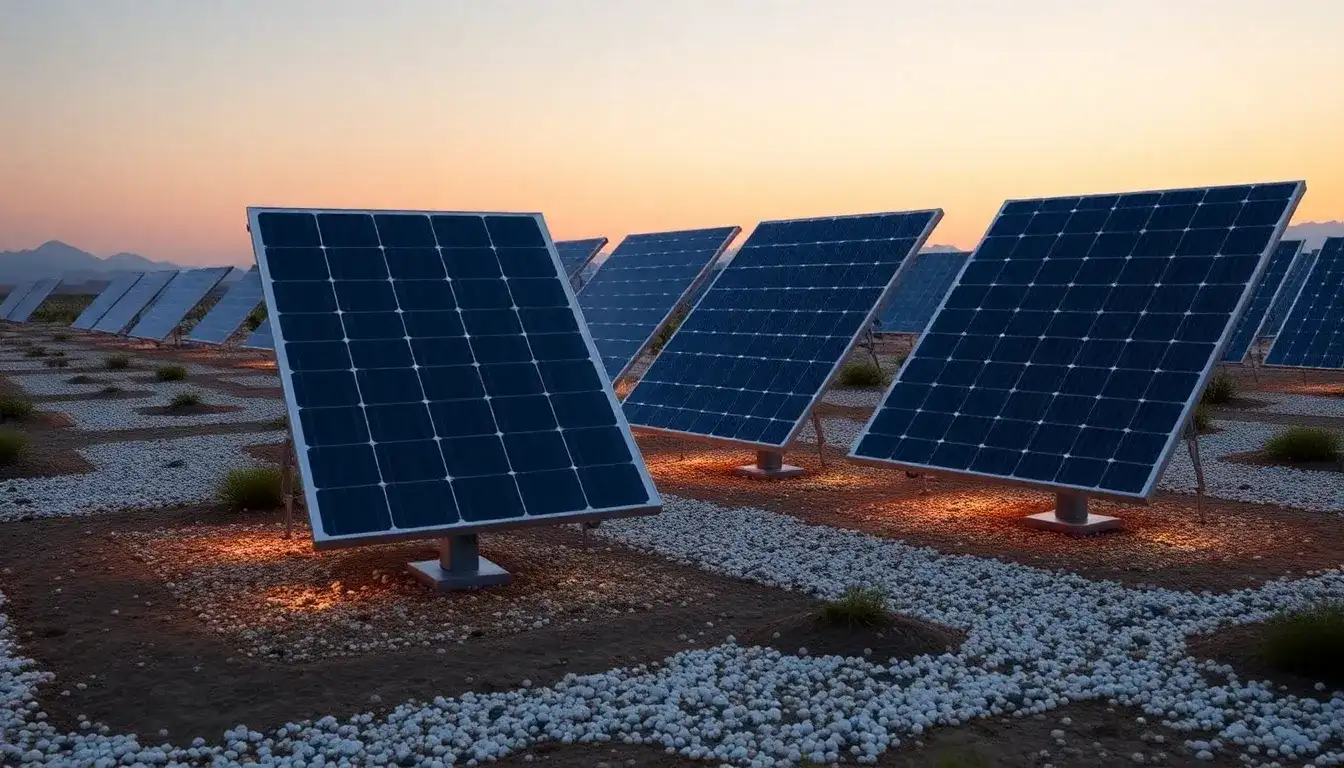
To optimize bifacial solar panel performance in low-light conditions, specific installation practices focus on maximizing light capture and enhancing albedo effectiveness:
1. Elevate Panels for Rear Illumination
Raise panels at least 1 meter (3.3 feet) above surfaces to increase reflected light exposure to the rear side. This minimizes shading and leverages ground-reflected light, critical in low-light environments.
2. Prioritize High-Albedo Surfaces
Install panels over light-colored surfaces (e.g., white roofs, gravel, or water) to boost reflectivity. Avoid dark or absorbent surfaces like asphalt or dense vegetation, as they reduce rear-side gains.
3. Adjust Row Spacing and Tilt
- Spacing: Maintain a ground coverage ratio (GCR) of 0.3–0.5 with row spacing ≥2.5 meters to allow sufficient light reflection between rows.
- Tilt: Use a 20–30° tilt angle (adjusted for latitude) to optimize direct and indirect light capture.
4. Avoid Rear-Side Obstructions
- Mounting: Use portrait orientation and steeper racking angles to reduce self-shading.
- Alignment: Ensure uniform panel spacing and alignment to prevent shading from adjacent rows or structures.
5. Site-Specific Adjustments
- Reflectivity enhancements: Consider temporary or permanent reflective materials (e.g., white membranes) in low-albedo areas during low-light seasons.
- Maintenance: Keep surfaces clean and snow-free to maintain reflectivity in overcast conditions.
By emphasizing light reflection and minimizing shading, these practices enhance bifacial efficiency even in low-light scenarios.
Original article by NenPower, If reposted, please credit the source: https://nenpower.com/blog/are-there-specific-installation-practices-that-optimize-bifacial-panel-performance-in-low-light-conditions/

