

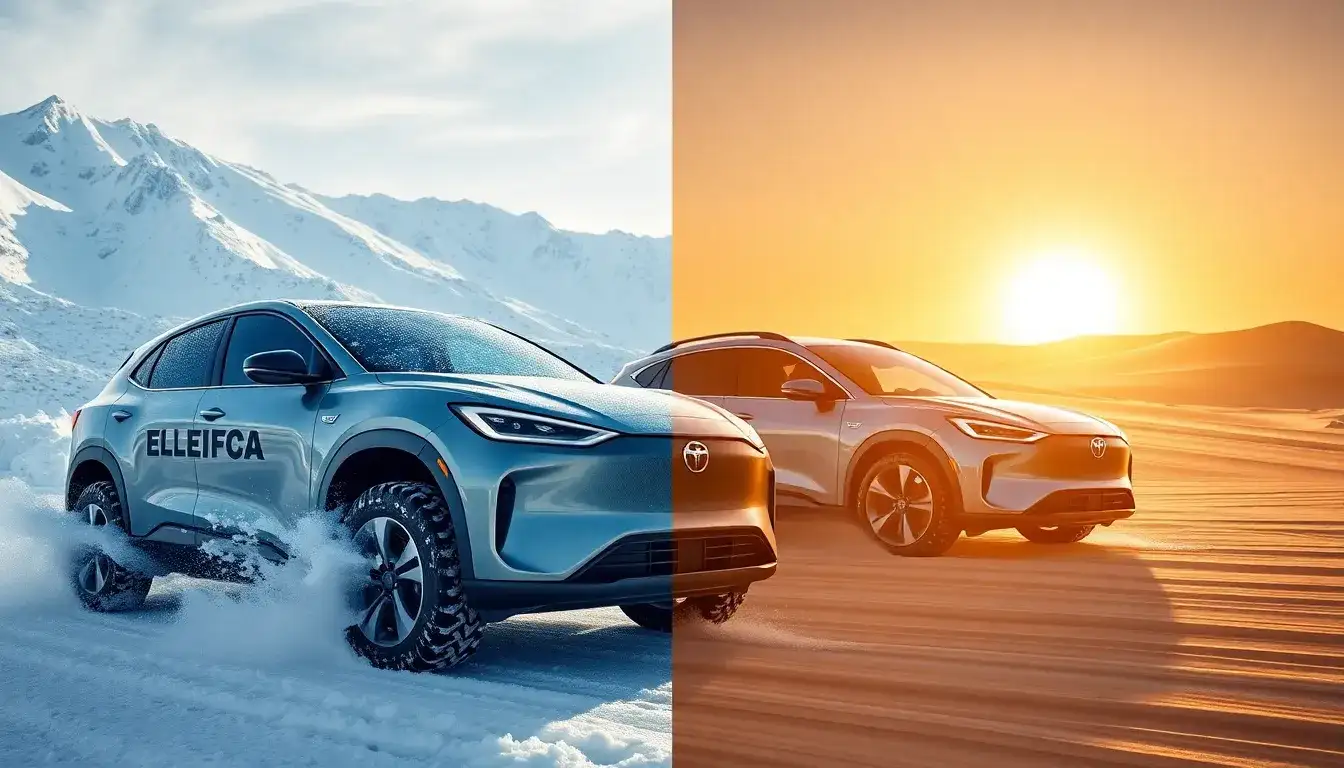
There are indeed differences among electric vehicle (EV) models in how well they perform under extreme weather conditions, particularly in very cold or very hot climates. While all EVs experience some performance impacts from extreme temperatures, certain models and their technologies can mitigate these effects better than others.
Impact of Extreme Weather on EV Performance
- Cold Weather Challenges: In freezing conditions, EV batteries chemically slow down, reducing their ability to hold charge and deliver power efficiently. This can lead to as much as a 50% reduction in driving range at around -4°F (-20°C). Cold weather also increases the energy used by the vehicle’s heating system, which draws power from the same battery that propels the car, further decreasing range. However, EVs can maintain cabin comfort over extended periods even in extreme cold with efficient HVAC and battery thermal management systems.
- Hot Weather Challenges: Extremely hot weather (around 95°F / 35°C or higher) can accelerate battery degradation by causing overheating. It also reduces range due to the energy needed for air conditioning, with studies showing an average range drop of about 17% in such conditions.
EV Models That Perform Better in Extreme Conditions
While the search results do not specify particular EV models by name, several factors contribute to better performance in extreme weather:
- Advanced Battery Thermal Management Systems: EVs with sophisticated active thermal management can better maintain optimal battery temperature in both cold and hot weather, reducing range loss and preventing battery damage. These systems circulate coolant or use heat pumps to warm or cool the battery as needed, helping to preserve battery health and efficiency.
- Efficient HVAC Systems: Models with heat pumps rather than resistive electric heaters use less energy to heat the cabin in cold weather, conserving battery power for driving range. Efficient air conditioning systems also reduce energy consumption in hot climates.
- Battery Chemistry and Design: Newer battery chemistries and higher energy density designs provide more stored energy and better cold-weather performance. Lower-cost, advanced chemistries can also improve range and reduce degradation in extreme conditions.
- Vehicle Features: Some EVs incorporate preconditioning features that allow the cabin and battery to be warmed or cooled while still plugged in, reducing energy drain during driving in extreme temperatures.
Practical Takeaway
- EVs with active thermal management, heat pump HVAC systems, and advanced battery chemistries generally perform better in both extreme cold and hot weather.
- Manufacturers are actively improving these technologies, so newer models tend to handle extreme temperatures better than older ones.
One real-world example highlighted the advantage of EVs in cold, snowy conditions: during a severe snowstorm, an EV was able to maintain cabin warmth intelligently without wasting energy inefficiently, preserving 50 miles of range when stranded overnight, unlike gasoline vehicles running their engines.
In summary, while all EVs experience some performance loss in extreme weather, models equipped with sophisticated thermal and HVAC management systems along with improved batteries demonstrate better resilience and range retention under such conditions. Consumers interested in EVs for extreme climates should seek models with these advanced features.
Original article by NenPower, If reposted, please credit the source: https://nenpower.com/blog/are-there-specific-ev-models-that-perform-better-in-extreme-weather-conditions/

