

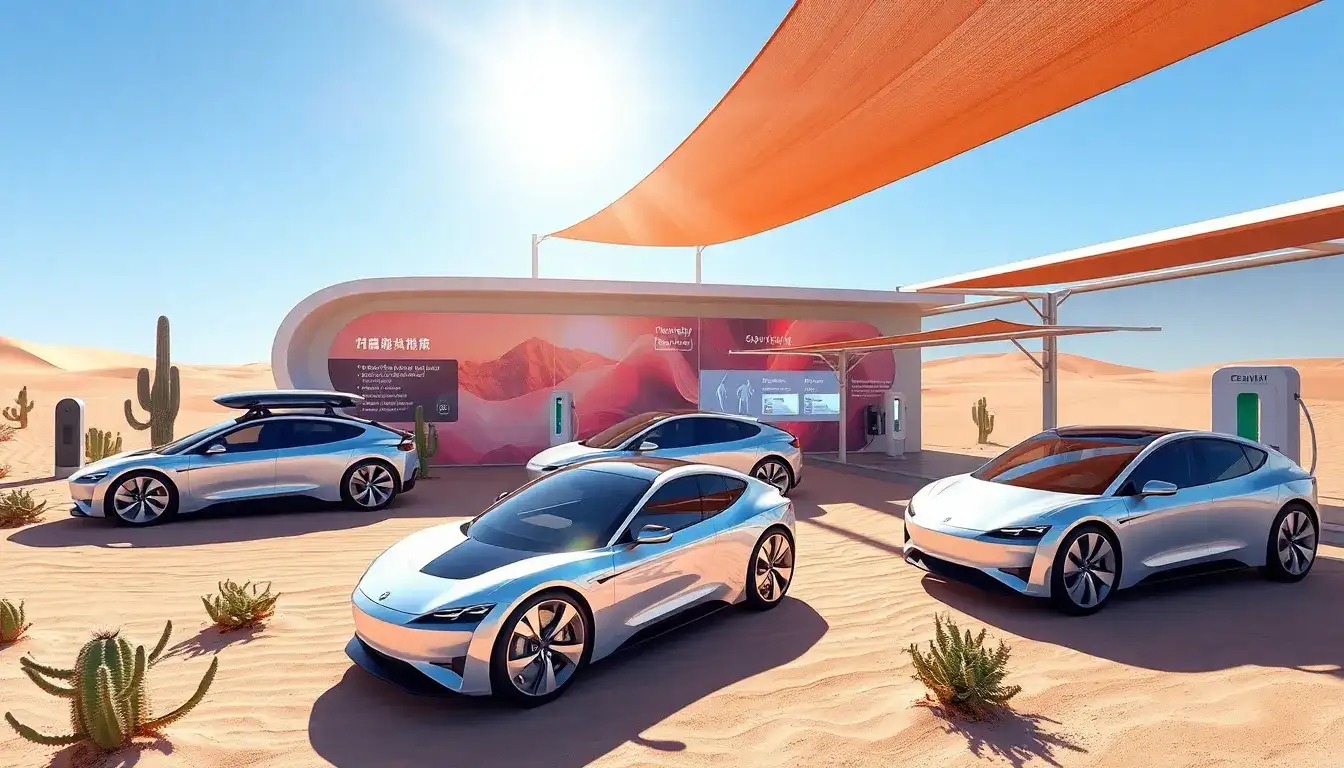
Electric vehicles (EVs) are affected by hot climates primarily because high temperatures increase battery internal resistance, causing longer charge times and reduced driving range. At temperatures around 80°F (27°C), range loss is minor (about 2.8%), but it can rise significantly to 5% at 90°F (32°C) and up to 30% or more at 100°F (38°C) and above.
EV Models Better Suited for Hot Climates
Certain EV models are better equipped to handle hot climates due to advanced thermal management and pre-cooling technologies, which help maintain battery performance and reduce range loss:
- Hyundai Kona EV: This model stands out for exceeding its EPA estimated range even in warm weather, showing only about a 5% range reduction at 90°F (32°C). It offers multiple pre-cooling options that help keep the cabin cool and preserve battery efficiency.
- Ford Mustang Mach-E: Featuring automatic cabin cooling settings, the Mustang Mach-E experiences minimal range loss (around 1%) at 90°F (32°C). However, range loss increases more sharply when temperatures rise above 93°F (34°C).
- Ford F-150 Lightning: This vehicle provides two preconditioning options for cabin cooling and has a similar performance profile with just about 1% range loss at 90°F (32°C). It uses preconditioning to reduce the energy strain of cooling while driving.
- Tesla Models: Tesla EVs have invested heavily in climate control technologies, including heat pumps that efficiently handle both heating and cooling and sophisticated battery cooling systems. Features like “cabin overheat protection” and “dog mode” help keep the cabin temperature from becoming extreme, which conserves range. Tesla models generally maintain better range control in hot climates compared to many competitors.
- Nissan LEAF: While it supports pre-cooling, the Nissan LEAF sees a notable range reduction starting from lower temperatures (~75°F or 24°C), with a steep 22% range loss at 90°F (32°C), partly due to its energy-intensive AC system that can draw up to 3.5 kW initially.
Key Technologies for Hot Climate Performance
EVs better suited for hot climates typically share these features:
- Robust thermal management systems to keep batteries cool and safe.
- Multiple pre-cooling options to prepare the vehicle before driving.
- Efficient air conditioning systems that balance cooling performance with energy consumption.
- Specialized features such as heat pumps (Tesla) and cabin overheat protection to minimize battery energy drain.
Summary
While hot weather reduces EV range across the board, models like the Hyundai Kona EV, Ford Mustang Mach-E, Ford F-150 Lightning, and Tesla vehicles perform better in hot climates due to advanced climate control and thermal management systems. These features help mitigate range loss, making these EVs particularly suited for regions with high temperatures.
In contrast, EVs like the Nissan LEAF experience larger range losses at lower temperatures and are less optimized for hot weather. Users in hot climates should look for EVs with strong preconditioning capabilities and efficient cooling systems to maximize performance and driving range.
Original article by NenPower, If reposted, please credit the source: https://nenpower.com/blog/are-there-specific-ev-models-better-suited-for-hot-climates/

