

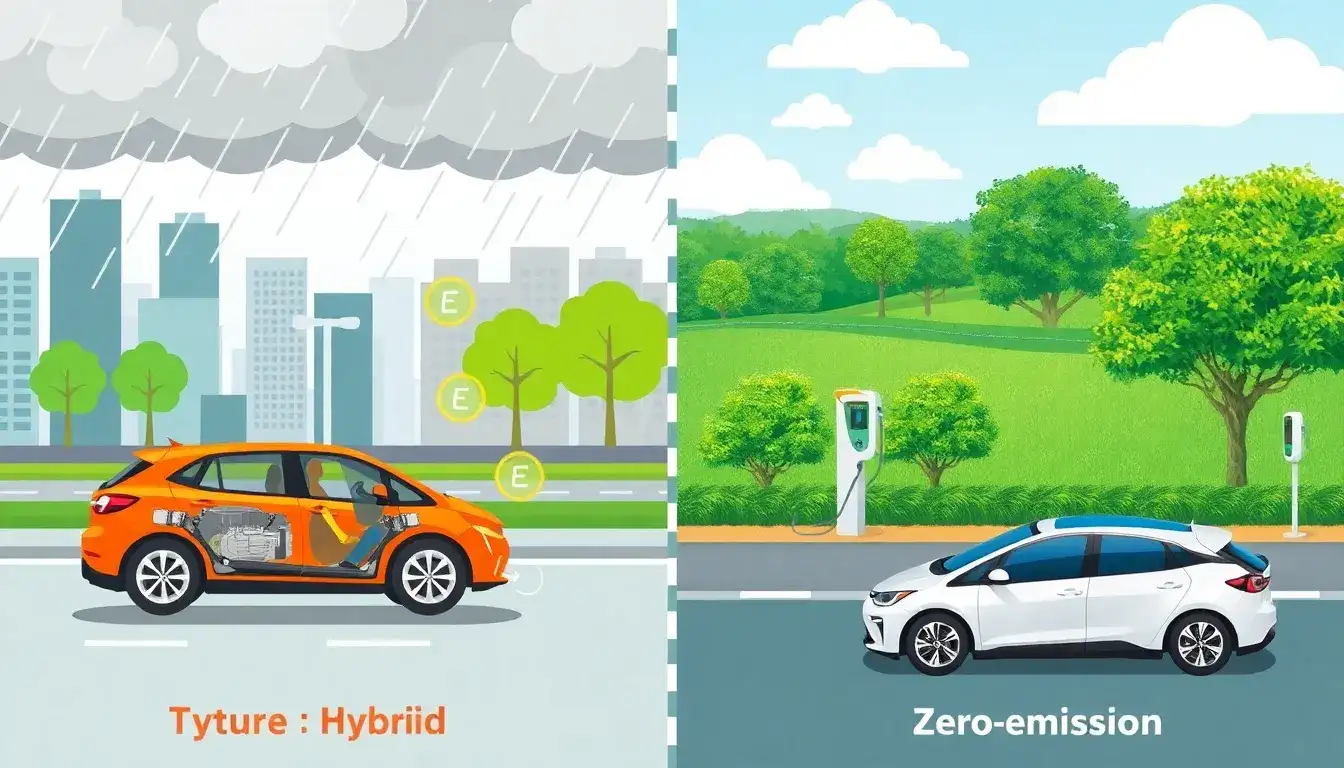
While electric vehicles (EVs) generally offer a cleaner choice due to their zero tailpipe emissions, there are specific driving conditions where hybrids might be more environmentally friendly. Here are some scenarios to consider:
- Energy Mix in Your Area: In regions heavily reliant on coal for electricity, a hybrid vehicle could potentially produce fewer lifecycle emissions compared to an EV. This is because EVs depend on the local electricity grid for charging, which can be dirty if based on fossil fuels.
- Rural or Low-Charge Areas: In rural areas or places with limited charging infrastructure, hybrids can offer consistent performance without relying on electricity. This avoids the higher lifecycle emissions associated with manufacturing EV batteries and producing electricity from fossil fuels in some regions.
- Emissions Reduction in Transition: Hybrids are effective in reducing emissions from traditional gasoline-powered vehicles, offering a transitional solution until wider adoption of cleaner energy sources is achieved.
However, for most driving conditions, especially in urban areas with a cleaner energy mix, EVs still provide the lowest emissions due to their zero tailpipe emissions.
Original article by NenPower, If reposted, please credit the source: https://nenpower.com/blog/are-there-specific-driving-conditions-where-hybrids-might-be-more-environmentally-friendly-than-evs/

