

Climates Where Solar Trackers Are More Beneficial
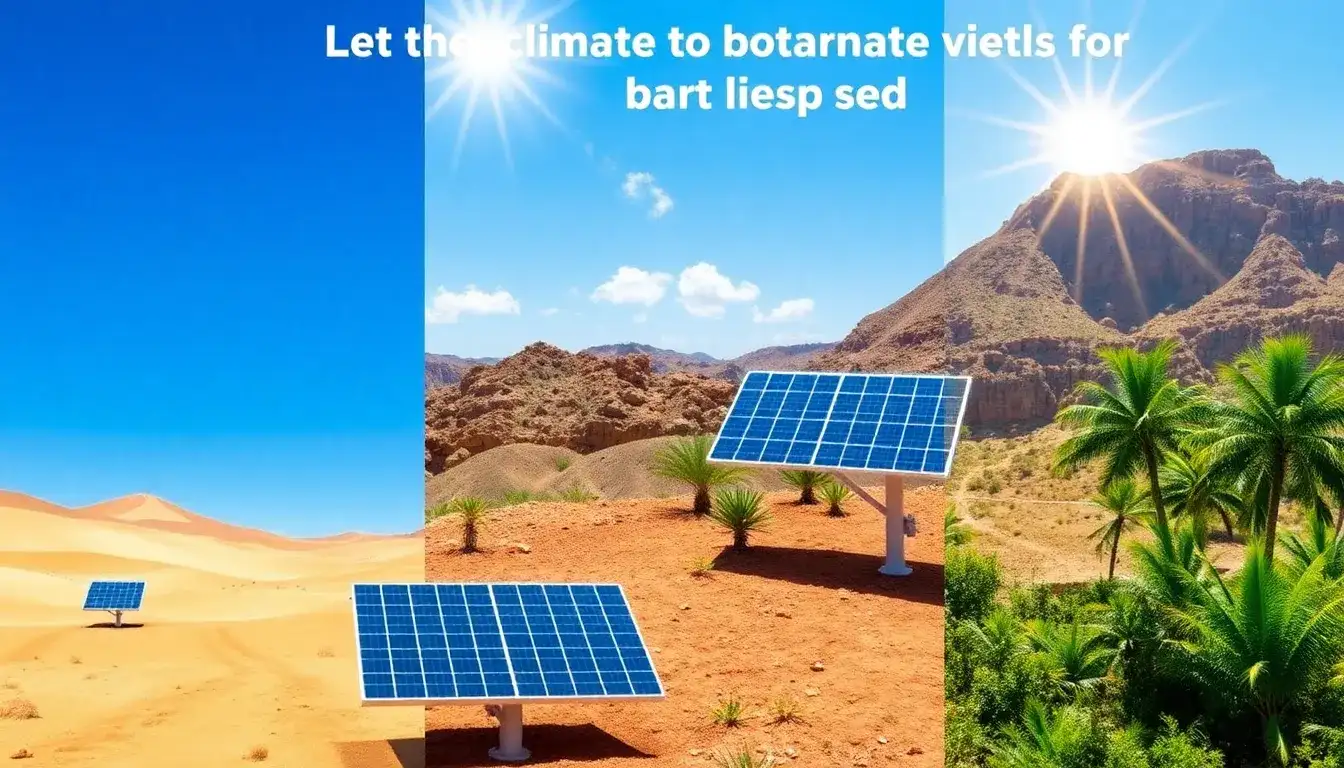
Hot and Sunny Climates
- Solar trackers significantly increase energy production in hot, sunny regions by keeping panels perpendicular to the sun, thus maximizing solar exposure and power output.
- These climates benefit from trackers because they have extended sun hours and minimal cloud cover, which allows the tracker’s dynamic alignment to capture the most direct sunlight.
- However, trackers in hot climates need efficient cooling mechanisms, such as reflective materials and ventilation, to prevent overheating and protect system components.
Regions with Variable Sunlight or Frequent Cloud Cover
- Advanced solar trackers equipped with smart algorithms and machine learning can adapt to intermittent sunlight conditions, adjusting panel angles dynamically to optimize energy capture even on cloudy days.
- This adaptability is crucial in regions with frequent cloud cover or variable weather, enabling continuous energy production despite less-than-ideal sunlight.
Climates Posing Challenges or Reducing Tracker Benefits
Cold and Snowy Climates
- Solar trackers can still be used in snowy regions but require special design adaptations such as:
- Tilting panels to shed snow and prevent heavy accumulation.
- Robust materials that withstand freeze-thaw cycles and low temperatures.
- Overcurrent protections to avoid damage if panels track into hardened snow or ice.
- Despite these adaptations, trackers are generally less effective in snowy or very cold weather due to reduced sunlight hours and the physical challenges snow imposes on tracker movement and maintenance.
Windy or Extreme Weather Conditions
- In areas prone to high winds, hurricanes, hail, or flooding, tracker designs must incorporate strong materials, aerodynamic stow angles, and safety algorithms to protect the system and prevent damage.
- For example, single-axis trackers may stow panels at a 45° angle rather than flat to reduce wind pressure. Dual-axis trackers typically require pole mounts to withstand wind better.
- Flood-prone regions may use elevated posts to avoid submersion. Sensors and automated adjustments help mitigate weather damage.
Summary Table of Climate Suitability
| Climate Type | Tracker Benefits | Key Adaptations / Considerations |
|---|---|---|
| Hot, Sunny | High energy gains, longer sun exposure | Cooling mechanisms to prevent overheating |
| Variable Cloud Cover | Maintains energy yield via smart tracking | Intelligent algorithms, machine learning for angle optimization |
| Cold, Snowy | Moderate benefits with adaptations | Snow shedding tilt, weather resistant materials, overcurrent protection |
| Windy / Extreme Weather | Requires robust design to avoid damage | Aerodynamic stow angles, strong materials, sensors for safety |
| Flood-Prone | Possible with elevated design | Flood sensors, elevated post height |
Conclusion
Solar trackers offer the greatest advantages in hot, sunny climates where they can maximize solar exposure and energy production. In regions with cloud cover, advanced trackers remain beneficial due to adaptive control systems that optimize performance. While trackers can be deployed in cold and snowy or extreme weather climates, they require careful design and maintenance to mitigate environmental challenges, and their efficiency gains may be lower compared to milder climates. Thus, climate-specific adaptations are critical for maximizing the benefits of solar tracking technology in diverse environments.
Original article by NenPower, If reposted, please credit the source: https://nenpower.com/blog/are-there-specific-climates-where-solar-trackers-are-more-beneficial/

