

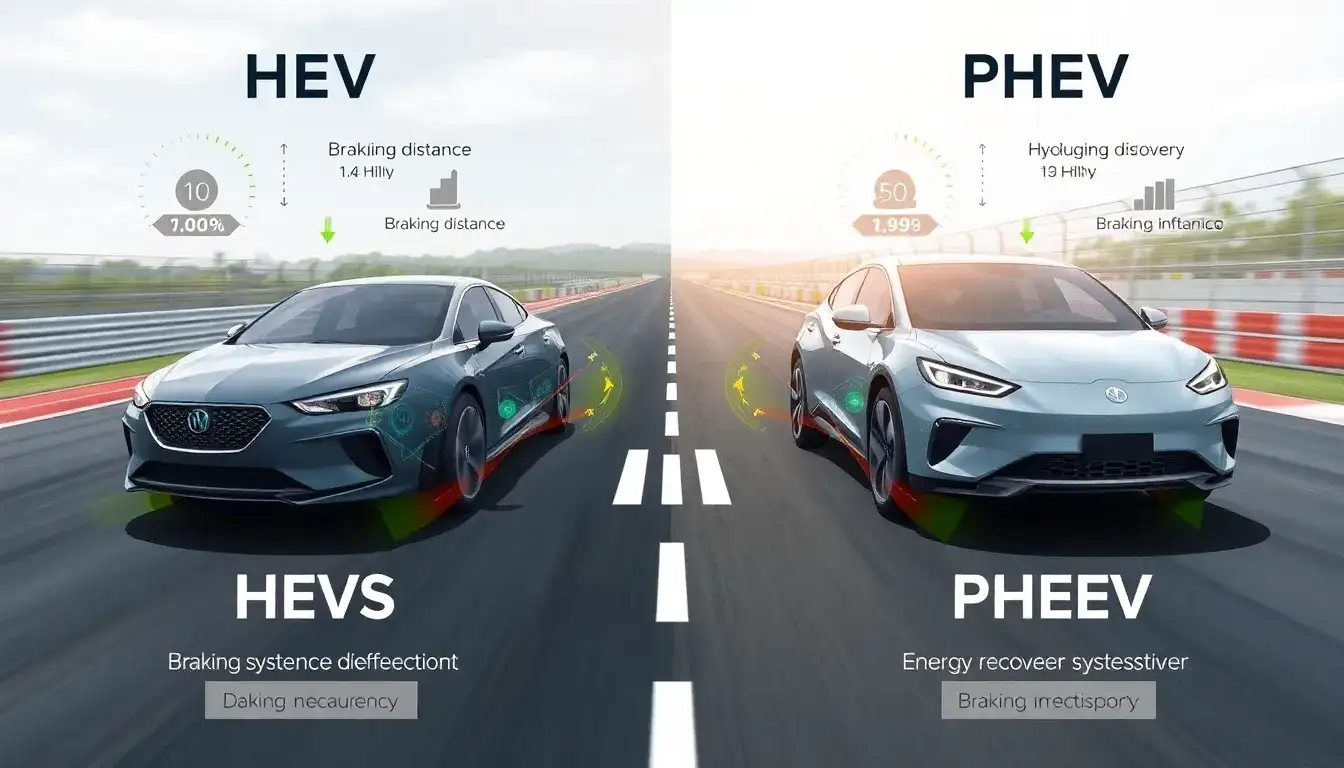
The braking performance between Hybrid Electric Vehicles (HEVs) and Plug-in Hybrid Electric Vehicles (PHEVs) primarily revolves around the regenerative braking system, which is common to both types. Both HEVs and PHEVs use regenerative braking to capture kinetic energy and convert it into electrical energy during deceleration and braking, which helps to recharge their batteries and improve overall efficiency. This system reduces wear on friction brakes, such as rotors and pads, thereby extending their lifespan compared to traditional vehicles that rely solely on friction braking.
Key Differences in Braking:
- Battery Size and Electric Motor Power: PHEVs generally have larger batteries and more powerful electric motors than HEVs, allowing them to operate longer in electric mode. This might potentially provide slightly better regenerative braking capability in PHEVs during electric operation, but it doesn’t fundamentally alter the braking performance compared to HEVs.
- Regenerative Capacity: While both types employ regenerative braking, the difference in electric motor and battery capacity might slightly vary the efficiency and feel of regenerative braking in PHEVs versus HEVs. However, these differences are typically more related to the electric driving capabilities rather than the physical braking performance itself.
In summary, while there are theoretical nuances due to differences in powertrain setup and battery size, the noticeable differences in braking performance between HEVs and PHEVs due to regenerative braking are generally minimal and not significant in practical terms. Both types offer improved brake longevity compared to conventional vehicles, thanks to regenerative braking.
Original article by NenPower, If reposted, please credit the source: https://nenpower.com/blog/are-there-noticeable-differences-in-braking-performance-between-hevs-and-phevs/

