

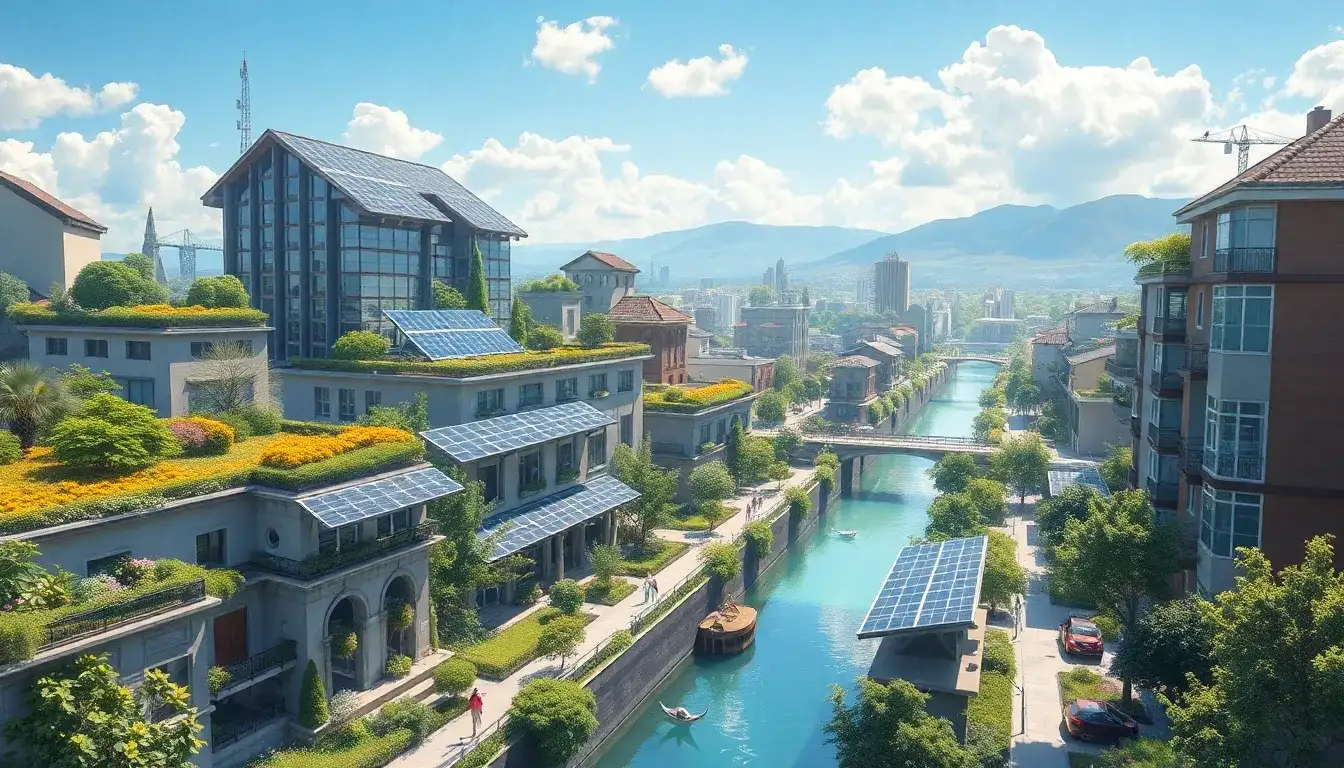
Yes, there are several technologies and strategies that aim to reduce the land use needed for solar farms. Here are some of them:
- High-Density Solar: This approach involves laying solar panels flat on the ground instead of using traditional racking systems. By doing so, it reduces land use by two-thirds and is cheaper and faster to build.
- Agrivoltaics and Dual-Use Solar: These practices combine solar energy generation with other land uses such as agriculture or ecological conservation. By growing crops or maintaining habitats under or between solar panels, they maximize land use efficiency.
- Efficient Solar Cells: Advances in solar cell technology, such as heterojunction cells, improve energy conversion efficiency, allowing more power to be generated from a smaller area.
- Ground Cover Management: Using native plants as ground cover in solar farms not only reduces maintenance costs but also enhances biodiversity and supports local ecosystems. This approach can make solar farms more sustainable without expanding their footprint.
- Upward-Facing Solar Panels: Designs that use space efficiently, such as vertical or elevated panels, can reduce the ground space needed while still allowing for agricultural activities or other uses beneath.
These strategies help make solar energy more efficient and reduce conflicts over land use.
Original article by NenPower, If reposted, please credit the source: https://nenpower.com/blog/are-there-any-technologies-that-reduce-the-land-use-needed-for-solar-farms/

