

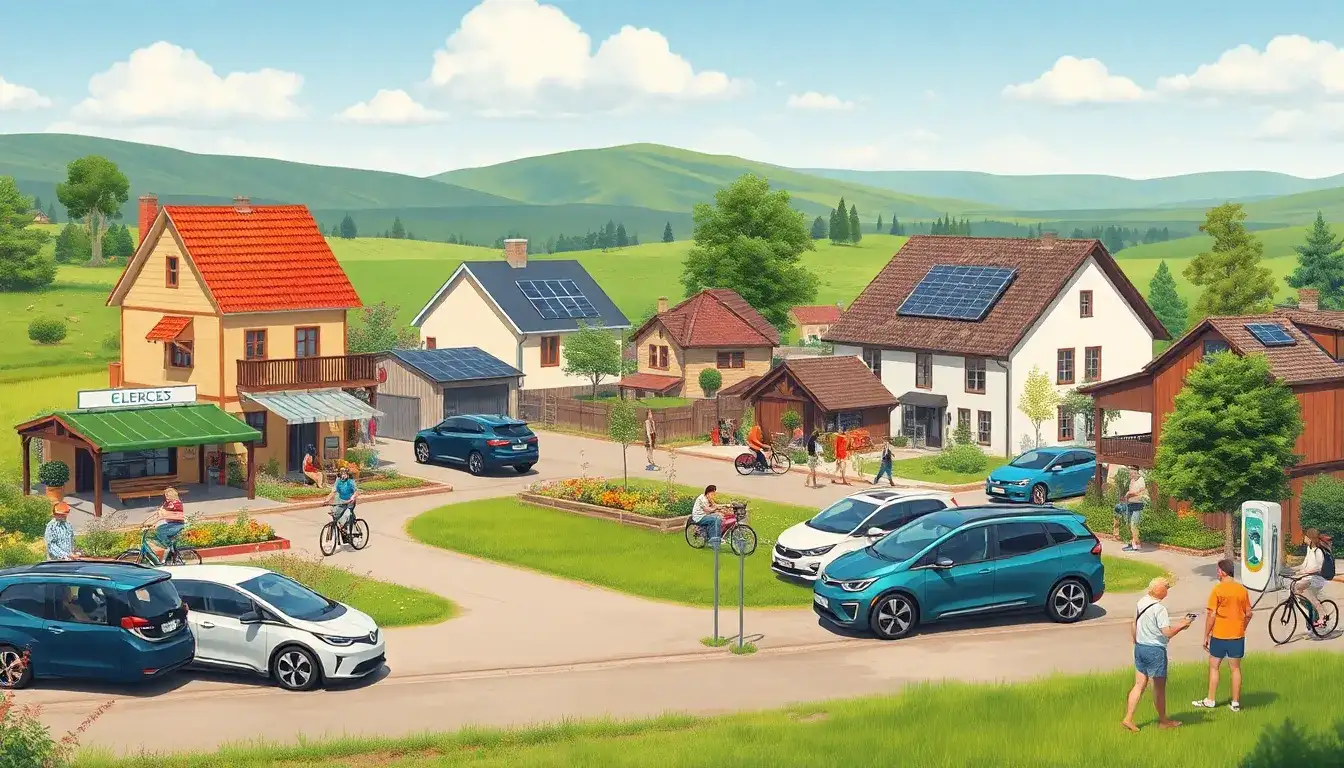
Yes, there are successful case studies of rural areas with high electric vehicle (EV) adoption rates, often driven by careful planning, infrastructure development, and community engagement.
Notable Rural EV Adoption Case Studies
Moretonhampstead, Central Devon, United Kingdom
This picturesque rural town demonstrates a successful model of EV adoption through innovative infrastructure planning. Urban innovation company DG Cities analyzed the town’s parking and charging needs, especially considering the high volume of out-of-town tourists. They strategically installed EV chargers in public car parks to serve approximately 225 households, roughly one-fourth of the 2,000 residents, balancing the town’s vintage charm with modern infrastructure. The model highlights the importance of data-driven placement of chargers both inside and just outside town limits to serve residents and transient visitors alike. This example illustrates how rural areas can maintain character while supporting EV use through tailored infrastructure solutions.
Boulder County, Colorado, USA
Though more suburban than strictly rural, Boulder County’s case study shows that point-of-sale incentives like rebates and grants significantly increase EV adoption, especially among low-income residents. This approach could be adapted for rural communities to overcome economic barriers to EV purchases.
Key Strategies and Insights for Rural EV Adoption
- Infrastructure Planning: Developing a community plan to prioritize publicly accessible EV charging stations based on travel patterns is essential. This includes choosing the appropriate level of charging (Level 1, Level 2, or DC fast charging) and locating chargers to serve residents, commuters, and public fleets.
- Addressing Barriers: Common rural barriers include upfront vehicle costs, lack of public charging infrastructure, concerns about battery performance in cold climates, and the need for vehicles suitable for rural driving conditions (e.g., all-wheel drive, higher clearance). Programs must target these concerns with education, incentives, and targeted infrastructure investments.
- Economic and Environmental Benefits: Installing EV chargers in rural areas can drive economic development by attracting travelers and boosting local businesses. It also promotes environmental sustainability by reducing emissions and supporting renewable energy, enhancing energy independence for rural communities.
- Community and Stakeholder Engagement: Successful programs often involve collaboration among local leaders, businesses, utilities, and residents to ensure infrastructure meets real needs and is widely accepted.
Summary
While widespread rural EV adoption faces challenges, examples like Moretonhampstead show that innovative, data-driven infrastructure planning combined with community collaboration can result in high adoption rates. Complementing infrastructure with incentives and education enhances success, and rural areas can also benefit economically and environmentally from EV integration.
Original article by NenPower, If reposted, please credit the source: https://nenpower.com/blog/are-there-any-successful-case-studies-of-rural-areas-with-high-ev-adoption-rates/

