

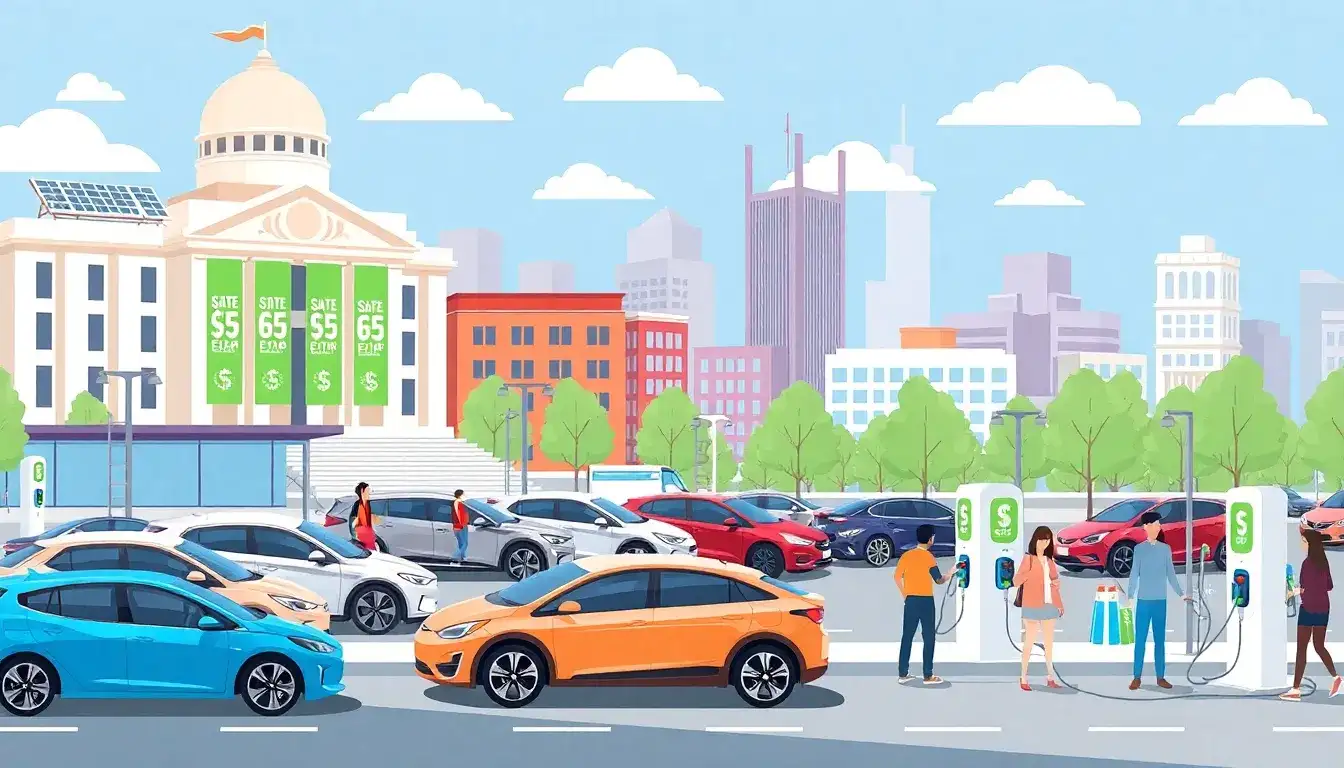
The federal EV tax credit of up to $7,500 for new EVs and $4,000 for used EVs remains the primary incentive program, but additional state or local incentives often exist to reduce upfront costs. While your cited sources focus on federal credits, here’s a general overview of common state/local incentives:
Typical State/Local EV Incentives
- Tax Credits/Rebates: States like California, Colorado, and New York offer additional rebates (e.g., California’s Clean Vehicle Rebate Project historically provided up to $7,500 for income-qualified buyers).
- Sales Tax Exemptions: Some states waive sales tax for EV purchases (e.g., New Jersey exempts EVs from state sales tax).
- HOV Lane Access: States like Arizona allow EVs to use HOV lanes without passenger requirements.
- Utility Discounts: Local utilities often provide rebates for home charger installations or off-peak charging discounts.
- Registration Fee Reductions: States like Ohio offer reduced registration fees for EVs.
Note: Incentives vary widely by location and EV model eligibility. For precise details, check resources like the U.S. Department of Energy’s Alternative Fuels Data Center (AFDC) or state-specific EV incentive programs. The federal purchase credit can now be applied as a point-of-sale rebate at dealerships, which may stack with state/local offers.
Your provided sources do not explicitly list state incentives, so consult local agencies for updated 2025 programs.
Original article by NenPower, If reposted, please credit the source: https://nenpower.com/blog/are-there-any-state-or-local-incentives-that-can-reduce-the-upfront-cost-of-an-ev/

