

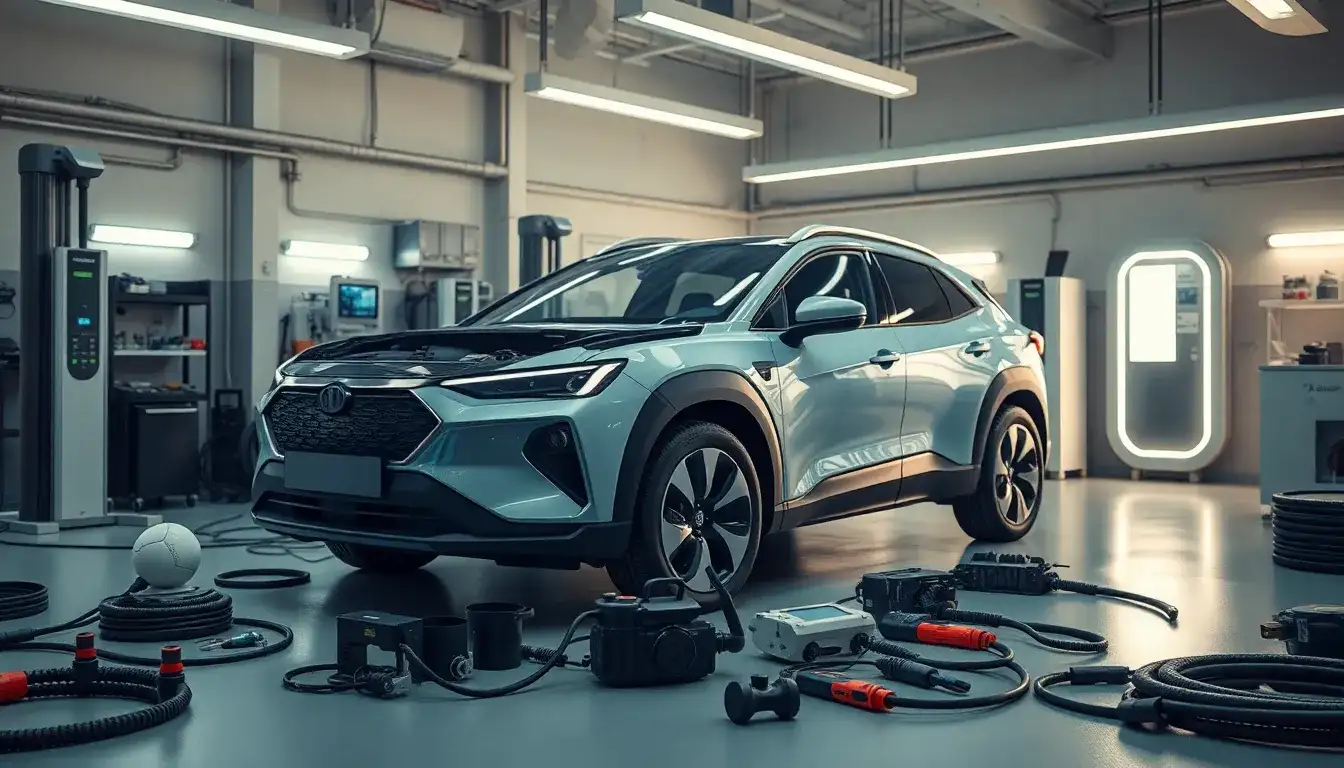
For maintenance of Plug-in Hybrid Electric Vehicles (PHEVs), specific and specialized tools are indeed required to handle the unique hybrid systems safely and effectively. These tools mainly focus on the high-voltage battery, electrical components, and safety during servicing. Key tools needed include:
- Insulated hand tools: These are essential to safely work around high-voltage electrical systems, preventing electric shocks.
- Battery analyzers: Used to inspect and diagnose the health of the hybrid battery cells.
- Diagnostic scan tools: For reading and clearing fault codes specific to hybrid systems, as well as monitoring hybrid-specific parameters.
- Thermal imaging cameras: To detect overheating components and ensure proper thermal conditions of batteries and electrical parts.
- Leak detectors and voltage meters: Specialized instruments that help inspect battery cells safely and check voltages, ensuring adherence to safety standards.
- Temperature measurement tools (infrared thermometers): Important for monitoring battery and inverter temperatures during maintenance to prevent damage or hazards.
- Tools and equipment for high-voltage shutdown and reinitialization: This includes zero-voltage measurement devices, equipotential bonding testers, and insulation resistance testers, critical for safe disconnection and reconnection during servicing.
In addition to these tools, maintenance for PHEVs also involves checking specific components such as the hybrid battery, inverter coolant, hybrid air filter, and regenerative braking system, which may require particular inspection tools and procedures.
In summary, the maintenance of PHEVs requires a combination of traditional automotive tools and a set of specialist electrical and diagnostic tools designed with safety and efficiency in mind, especially to handle the high-voltage battery systems safely.
Original article by NenPower, If reposted, please credit the source: https://nenpower.com/blog/are-there-any-specific-tools-needed-for-phev-maintenance/

