

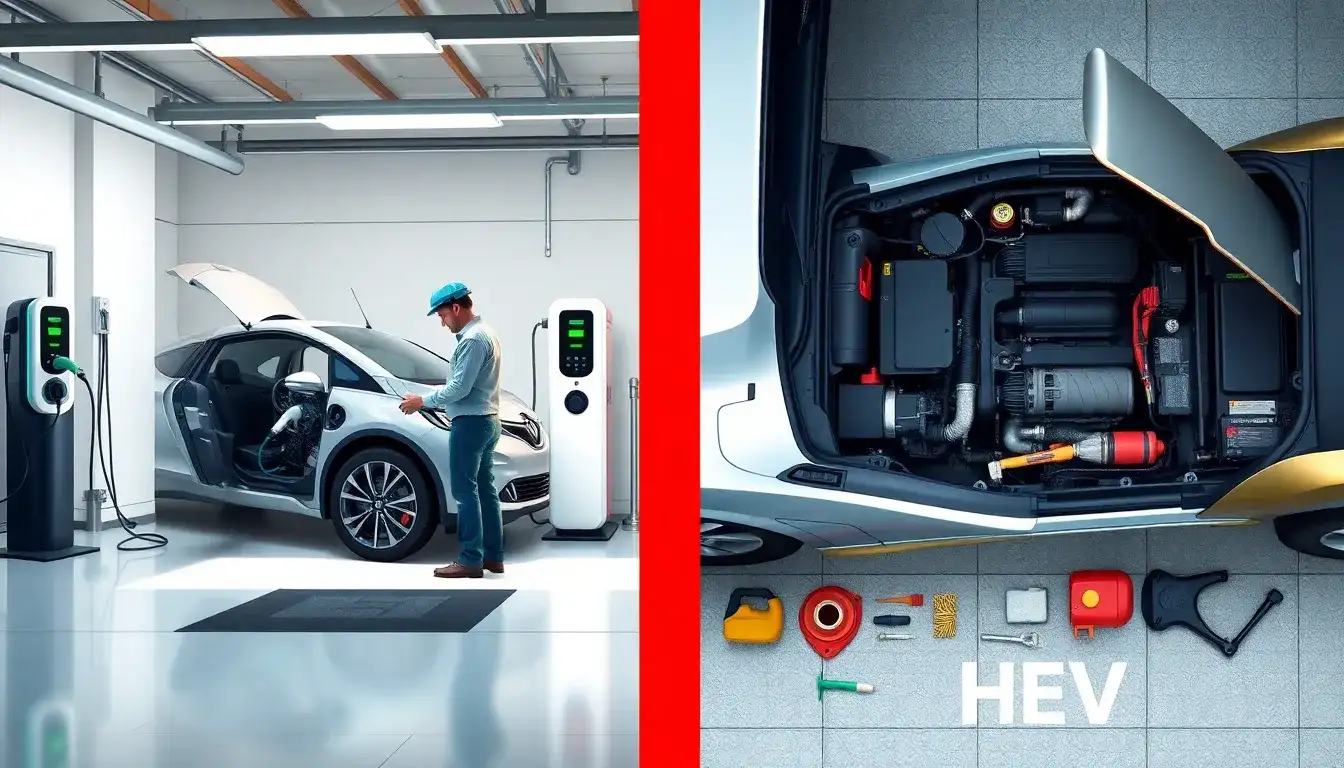
Maintenance Differences Between PHEVs and HEVs
While PHEVs (Plug-in Hybrid Electric Vehicles) and HEVs (Hybrid Electric Vehicles) both combine internal combustion engines (ICE) with electric drivetrains, their maintenance profiles differ slightly due to design variations:
Shared Maintenance Requirements
Both require ICE-related upkeep such as:
- Engine oil and filter changes
- Transmission fluid replacements
- Cooling system maintenance for the ICE and hybrid components
- Brake inspections, though wear is reduced due to regenerative braking
Key Differences
- Battery Systems:
- PHEVs use larger-capacity batteries than HEVs to support extended electric-only driving, which may increase the frequency of coolant checks for thermal management systems.
- HEV batteries rely solely on regenerative braking and ICE charging, reducing external charging-related wear.
- Charging Components:
PHEVs include charging hardware (e.g., onboard chargers, charging ports) absent in HEVs, requiring occasional electrical component inspections. - Engine Usage:
PHEVs prioritize electric mode for short trips, potentially reducing ICE wear compared to HEVs in urban driving. However, HEVs may still incur comparable ICE maintenance over time due to mixed usage patterns.
Cost Considerations
While both types have lower maintenance costs than conventional vehicles, PHEVs may incur marginally higher expenses related to battery cooling systems and charging infrastructure. Both benefit from extended warranties on hybrid components, including batteries and powertrains.
For owners, diagnostics for high-voltage systems and adherence to manufacturer-specific maintenance schedules are critical for both vehicle types.
Original article by NenPower, If reposted, please credit the source: https://nenpower.com/blog/are-there-any-specific-maintenance-differences-between-phevs-and-hevs/

