

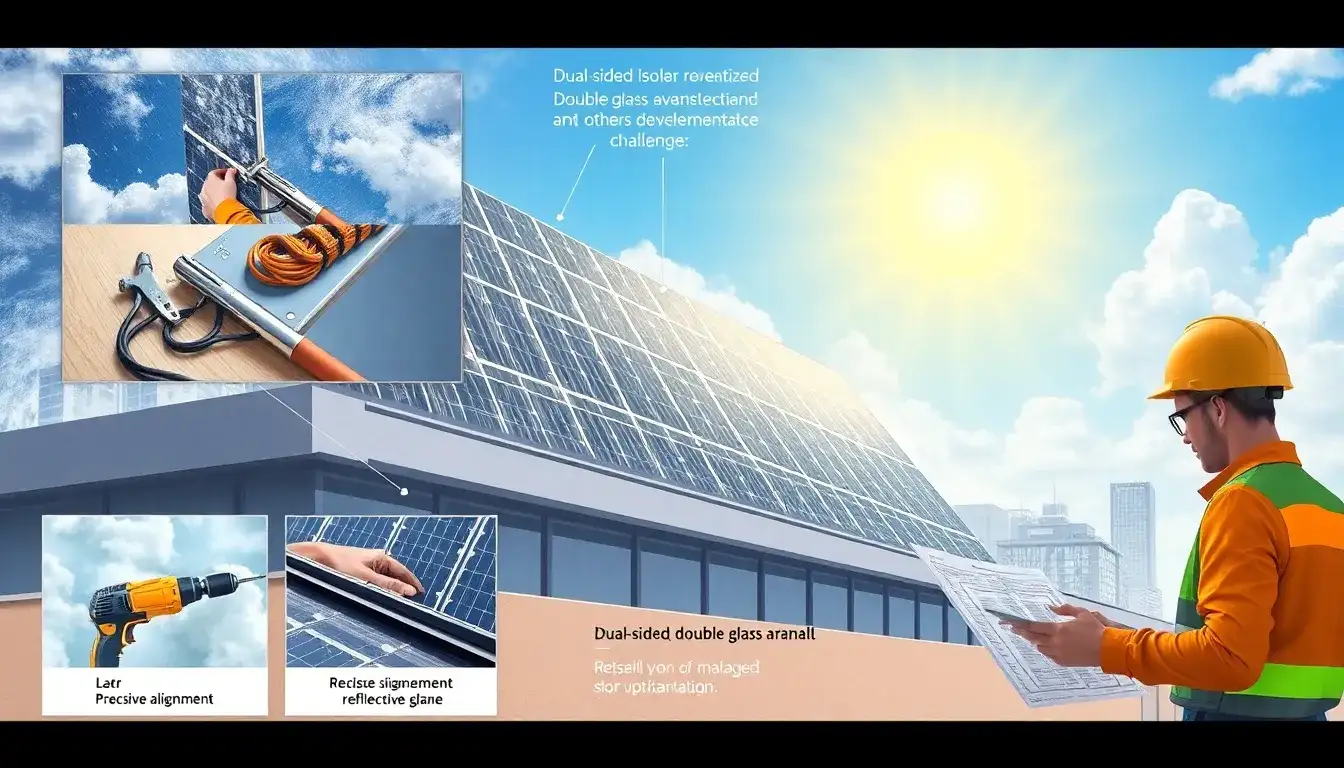
Double-glass bifacial solar panels present specific installation challenges primarily due to their increased weight, mounting requirements, and the need to optimize light capture from both sides.
Installation Challenges of Double-Glass Bifacial Solar Panels
1. Increased Weight and Handling Difficulty
Double-glass panels are heavier than traditional single-glass or glass-backsheet panels, typically adding an extra 5 to 10 pounds per module. This higher weight can lead to installer fatigue and slower installation rates, especially when working with many panels daily. Installers must be prepared for physically demanding work and may need additional labor or equipment to handle the heavier modules safely.
2. Mounting System Requirements
These panels require specially designed mounting systems that can support the extra weight and prevent physical issues such as panel bowing in the middle. Traditional mounts may need to be adjusted or replaced with more robust options to maintain structural integrity and panel longevity.
3. Elevation and Tilt Optimization
Since bifacial panels generate power from light reflected onto their rear side, installation height and tilt angle need careful optimization to maximize energy capture. Panels are often mounted elevated off the ground or roof surface (e.g., around 42.5 inches off the ground in snowy regions) allowing reflected light to reach the rear side effectively. The tilt usually ranges from 20 to 30 degrees but depends on geographic location and reflective surface conditions. This precision adds complexity to the installation process.
4. Site-Specific Considerations
Site assessment becomes more critical. Installers must consider shading from nearby structures or trees, surface reflectivity (albedo), and ground cover to maximize the bifacial effect. Surfaces like snow, sand, or light-colored gravel enhance rear-side irradiation, but dark or non-reflective surfaces reduce performance. This necessitates planning and potentially modifying the site to improve reflectivity, complicating installation.
5. Higher Installation Complexity and Costs
Due to these factors, bifacial double-glass panels have a more complex setup than standard monofacial panels. The need for specialized mounting, precise positioning, and handling heavier modules often leads to higher labor costs and longer installation times.
In summary, the main installation challenges with double-glass bifacial solar panels include managing their heavier weight, ensuring robust and appropriate mounting systems, optimizing tilt and elevation for rear light capture, and thorough site-specific planning to enhance reflectivity. Installers must adapt their methods and equipment to address these challenges for safe and effective deployment.
Original article by NenPower, If reposted, please credit the source: https://nenpower.com/blog/are-there-any-specific-installation-challenges-associated-with-double-glass-bifacial-solar-panels/

