

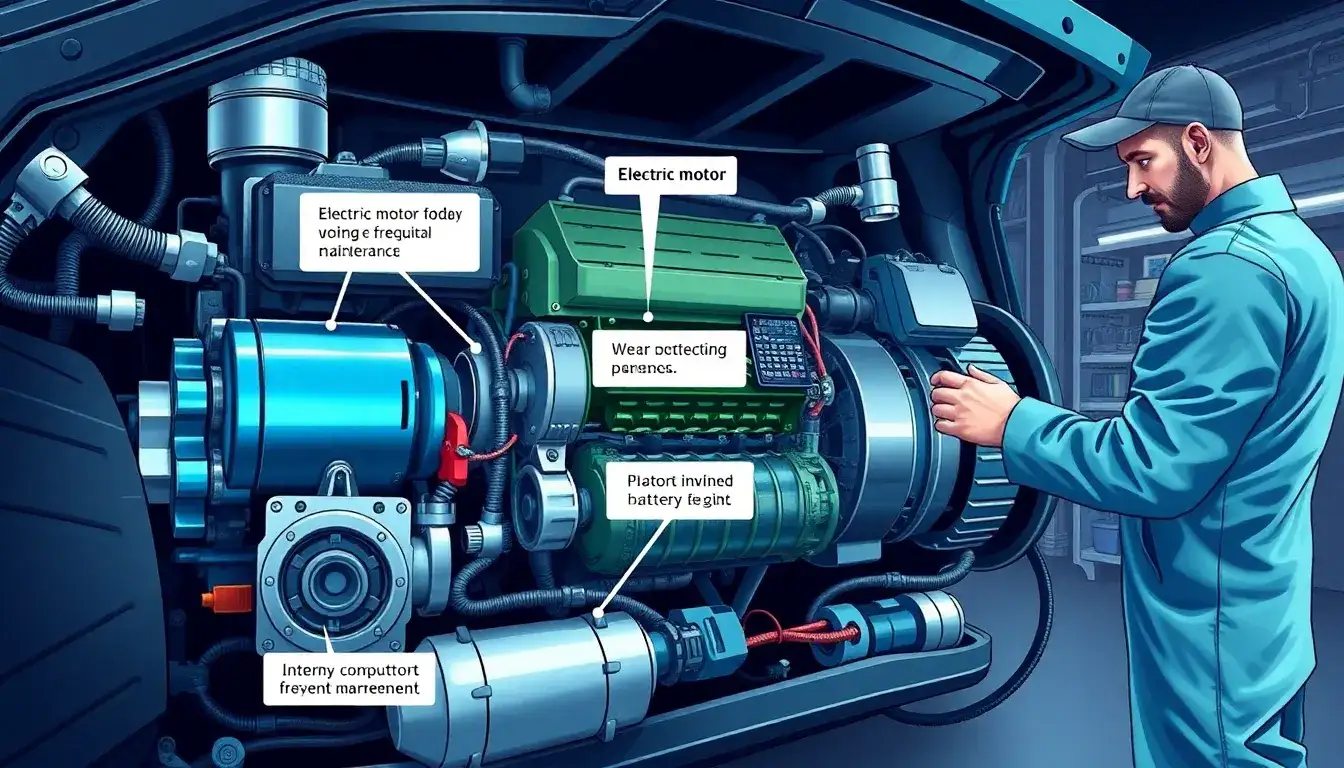
Plug-in hybrid electric vehicles (PHEVs) have unique components that require maintenance attention more frequently or specifically compared to conventional vehicles due to their dual power sources—an internal combustion engine (ICE) and an electric drivetrain. The key components that require regular or specialized maintenance in PHEVs include:
Internal Combustion Engine (ICE) Components
- Engine oil and filter changes: Similar to conventional vehicles, PHEVs need regular oil changes to keep the ICE running smoothly. This should be done according to the manufacturer’s recommended intervals, typically every 3,000 to 5,000 miles or as specified in the owner’s manual.
- Transmission fluid changes and cooling system maintenance: Both the ICE and electric components have cooling systems that require inspection and servicing to prevent overheating and maintain efficiency.
Electric Drivetrain Components
- Hybrid battery health monitoring: Although the battery typically requires minimal direct maintenance, it is recommended to monitor its state of health regularly to ensure optimal performance and longevity. Battery care includes avoiding extreme charge levels (not letting it reach 0% or 100% regularly) and avoiding charging in extreme temperatures.
- Inverter coolant checks: The inverter, which converts DC battery power to AC motor power, uses coolant that needs inspection and replacement as needed to prevent overheating and damage.
- Charging port inspections: The external charging port should be checked for damage or debris to ensure safe and efficient charging.
Brake System
- Brake inspection and maintenance: PHEVs use regenerative braking, which reduces wear on traditional brake components, potentially extending the lifespan of brake pads and discs. However, brake systems still require regular inspection to prevent binding and ensure safety.
Other Maintenance Considerations
- Cooling systems for both ICE and electric components: These systems must be maintained to prevent overheating. This includes regular inspection of coolant levels and potential replacement.
- Software updates and electrical system checks: Battery management, vehicle control systems, and software updates help maintain efficiency and safety.
Summary
PHEVs require a combination of traditional ICE maintenance (oil, filters, transmission fluid) and specialized checks for hybrid components such as battery health, inverter coolant, charging ports, and brake systems. While the electric components generally need less frequent maintenance, regular inspections and preventive measures are vital for reliable operation.
Maintenance frequency typically aligns with conventional car schedules (e.g., oil changes every 3,000-5,000 miles, or annually), but hybrid-specific components like battery health and inverter coolant should be checked periodically as recommended by the manufacturer.
This blend of maintenance tasks makes it important for PHEV owners to follow their vehicle’s service schedule closely and seek specialized hybrid servicing when required.
Original article by NenPower, If reposted, please credit the source: https://nenpower.com/blog/are-there-any-specific-components-in-phevs-that-require-more-frequent-maintenance/

