

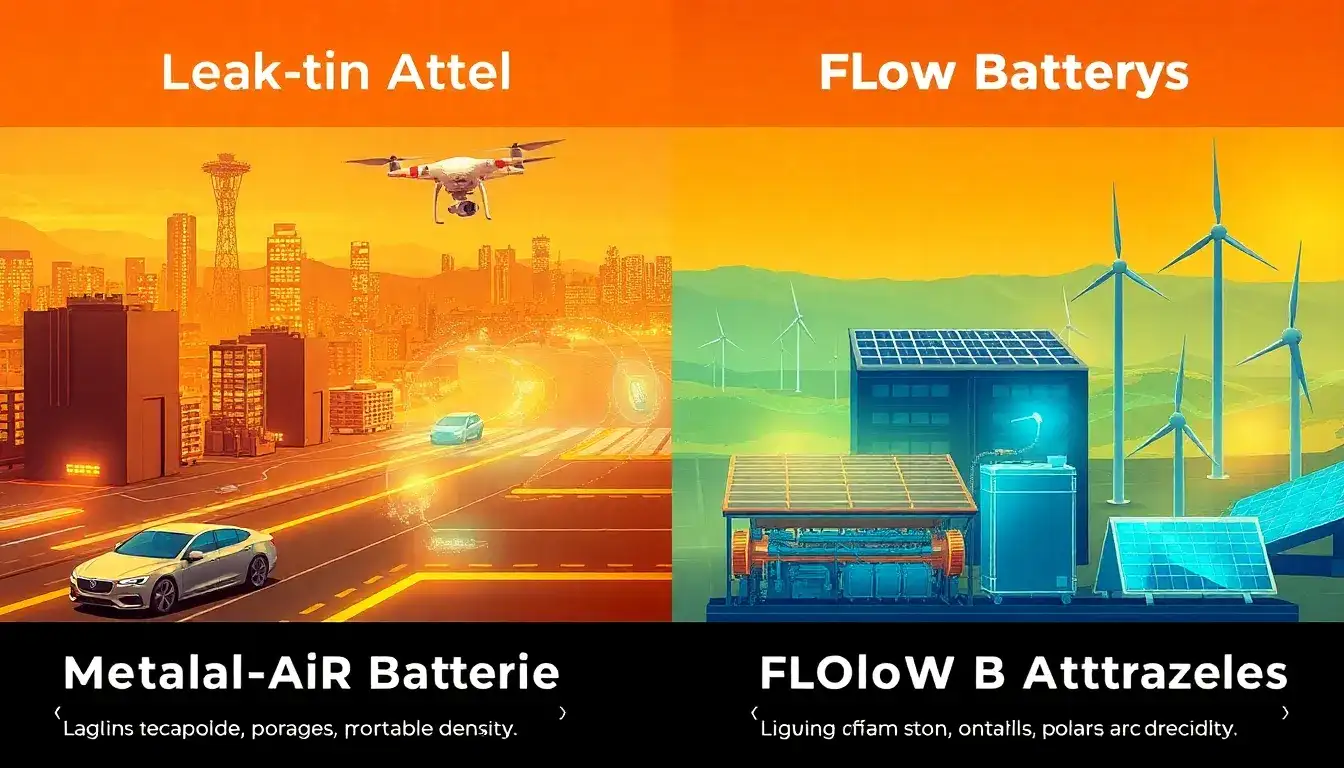
While flow batteries offer advantages in terms of efficiency and versatility, metal-air batteries, particularly iron-air batteries, have specific scenarios where they outperform or are better suited than flow batteries:
Applications Where Metal-Air Batteries Outperform Flow Batteries
- Long-Duration Storage:
- Metal-air batteries are ideal for long-duration energy storage, often capable of storing energy for several days. This makes them better suited for balancing the intermittent supply of renewable energy sources like wind and solar.
- Flow batteries, while efficient for shorter durations, have been challenged to achieve long-duration capacities similar to metal-air batteries.
- Scalability and Energy Density:
- Metal-air batteries benefit from the high energy density inherent in metal-air chemistry, which can be advantageous for large-scale applications where space and weight are considerations.
- Flow batteries are scalable, but their efficiency and complexity can limit their cost-effectiveness for very long durations.
- Cost and Simplified Chemistry:
- Metal-air batteries use ambient air as one reactant, potentially simplifying the system and reducing costs compared to flow batteries, which require specialized electrolytes.
- This simplicity can be beneficial for applications where cost and operational complexity are major factors.
Summary
Metal-air batteries excel in scenarios requiring long-duration energy storage with the potential for high energy density and lower operational costs. However, they typically suffer from lower round-trip efficiency compared to flow batteries. The choice between metal-air and flow batteries often depends on the specific requirements of the application, such as the need for efficiency versus the need for long-duration storage.
Original article by NenPower, If reposted, please credit the source: https://nenpower.com/blog/are-there-any-specific-applications-where-metal-air-batteries-outperform-flow-batteries/

