

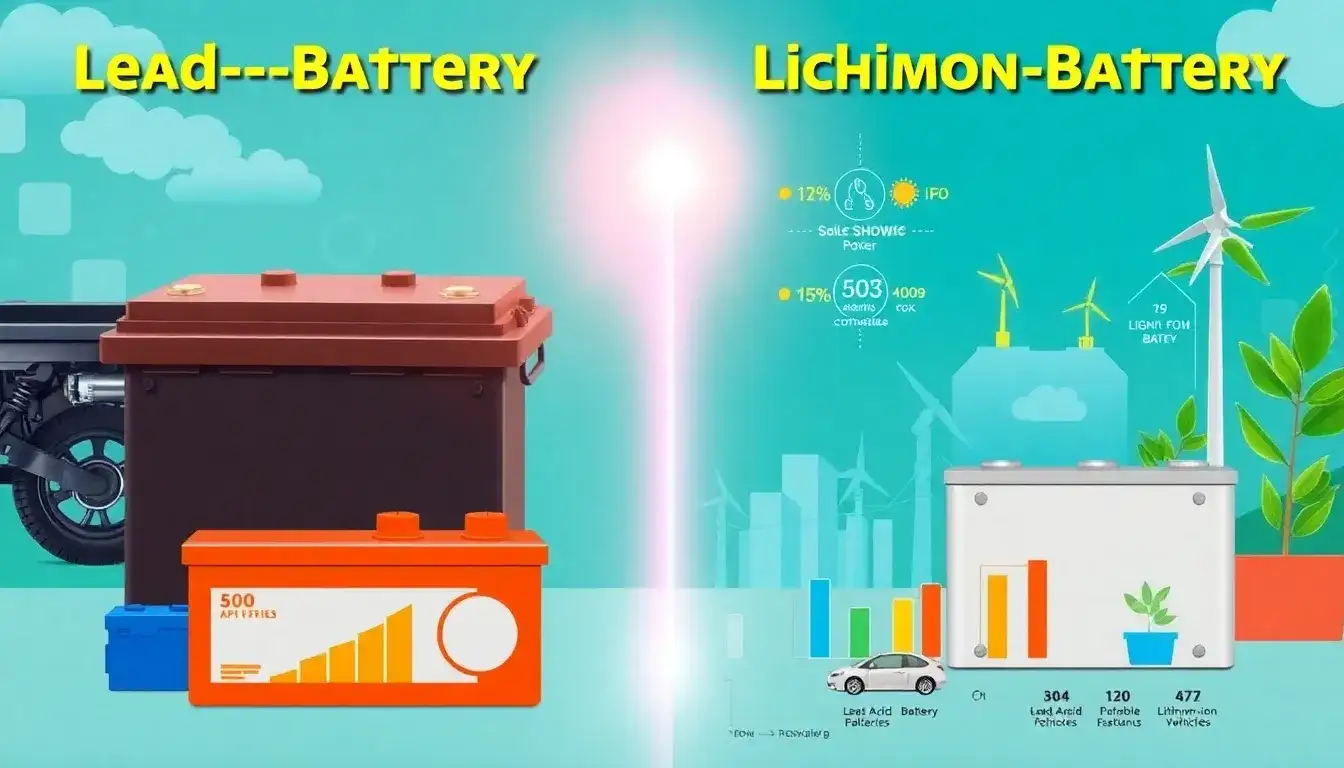
Lead-acid batteries are still preferred over lithium-ion batteries in several specific applications due to their cost-effectiveness, robustness, and suitability for certain operating conditions:
- Critical Power Applications: Lead-acid batteries are traditionally used in critical power systems due to their reliability, cost-effectiveness, and ability to handle deep discharge cycles without significant performance degradation. They are often chosen for backup power needs in industries such as data centers and emergency lighting.
- Backup Power Systems: In applications like uninterruptible power supplies (UPS) for computers and inverters, lead-acid batteries are a popular choice because they are cost-effective and widely available. They provide a reliable backup power source without the need for high energy density or fast charging capabilities.
- Cold Climates: Lead-acid batteries perform better in cold temperatures compared to lithium-ion batteries, which can struggle to charge and discharge efficiently in sub-zero conditions. This makes lead-acid batteries more suitable for use in colder regions or applications where temperature extremes are common.
- Low-Cost, Short-Term Applications: In scenarios where the upfront cost is a primary concern and long-term efficiency is not critical, lead-acid batteries are preferred due to their lower initial cost. They are often used in older renewable energy systems or small-scale backup power applications.
- Marine and Emergency Power: Historically, lead-acid batteries have been used onboard ships as emergency power backup due to their reliability and cost factors. However, lithium-ion batteries are increasingly being adopted for marine use due to their performance advantages.
Original article by NenPower, If reposted, please credit the source: https://nenpower.com/blog/are-there-any-specific-applications-where-lead-acid-batteries-are-still-preferred-over-lithium-ion-batteries/

