

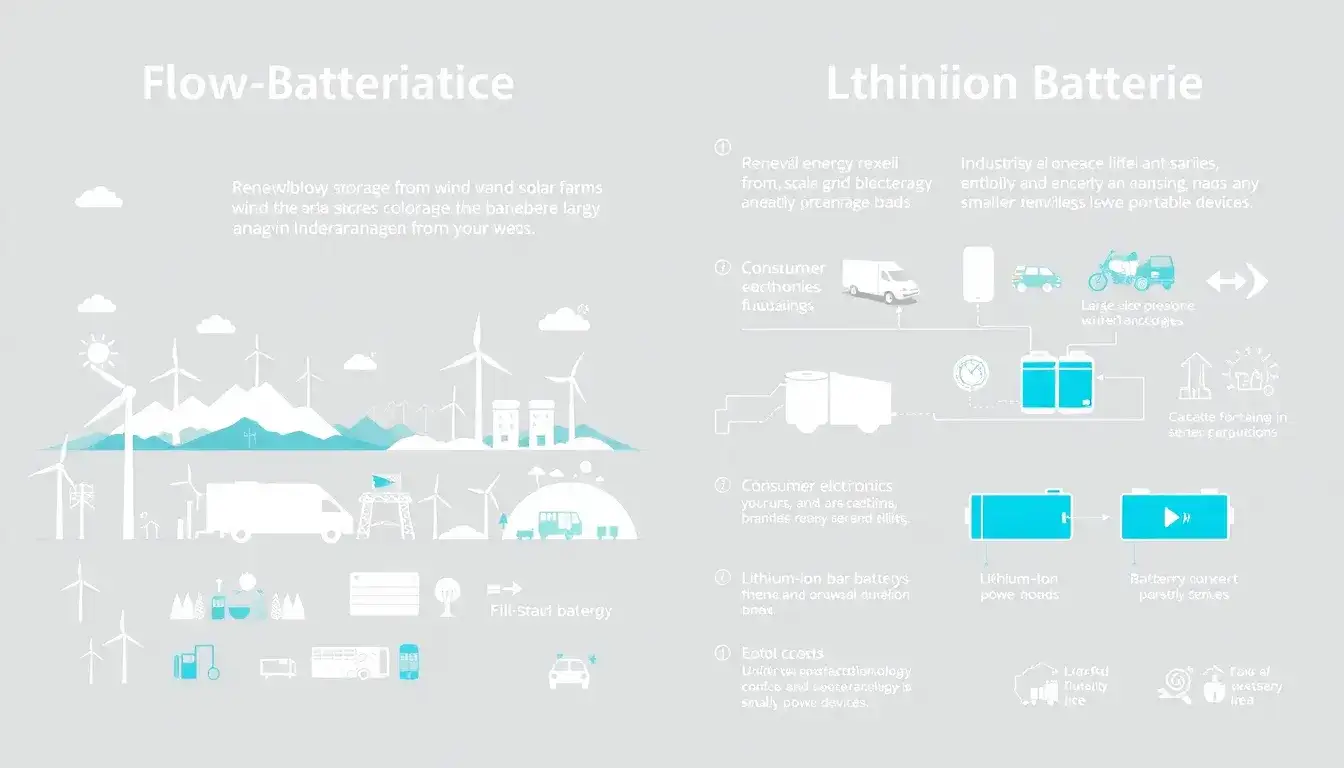
Flow batteries are more cost-effective than lithium-ion batteries in specific applications, particularly those requiring long-duration energy storage. Here are some scenarios where flow batteries may be more advantageous:
- Grid-scale storage: Flow batteries are ideal for storing large amounts of energy over extended periods, which is crucial for grid stability when using renewable sources like solar and wind. They allow for the independent scaling of power and energy capacity, making them highly adaptable for grid applications.
- Telecom backup power systems: In telecommunications, especially in off-grid locations or areas with frequent power outages, flow batteries like vanadium redox flow batteries offer improved reliability and longer lifespan compared to traditional lead-acid or lithium-ion batteries. This reduces maintenance and replacement costs.
- Industrial and utility-scale applications: Flow batteries can store and supply large amounts of electricity cost-effectively, making them suitable for industrial and power utility applications. Their ability to charge and discharge thousands of times without significant capacity loss is a crucial advantage over lithium-ion batteries in these scenarios.
In contrast, lithium-ion batteries are generally favored for shorter-duration applications due to their lower upfront costs and established supply chains, although they do not scale as well for long-duration energy needs.
Original article by NenPower, If reposted, please credit the source: https://nenpower.com/blog/are-there-any-specific-applications-where-flow-batteries-are-more-cost-effective-than-lithium-ion-batteries/

