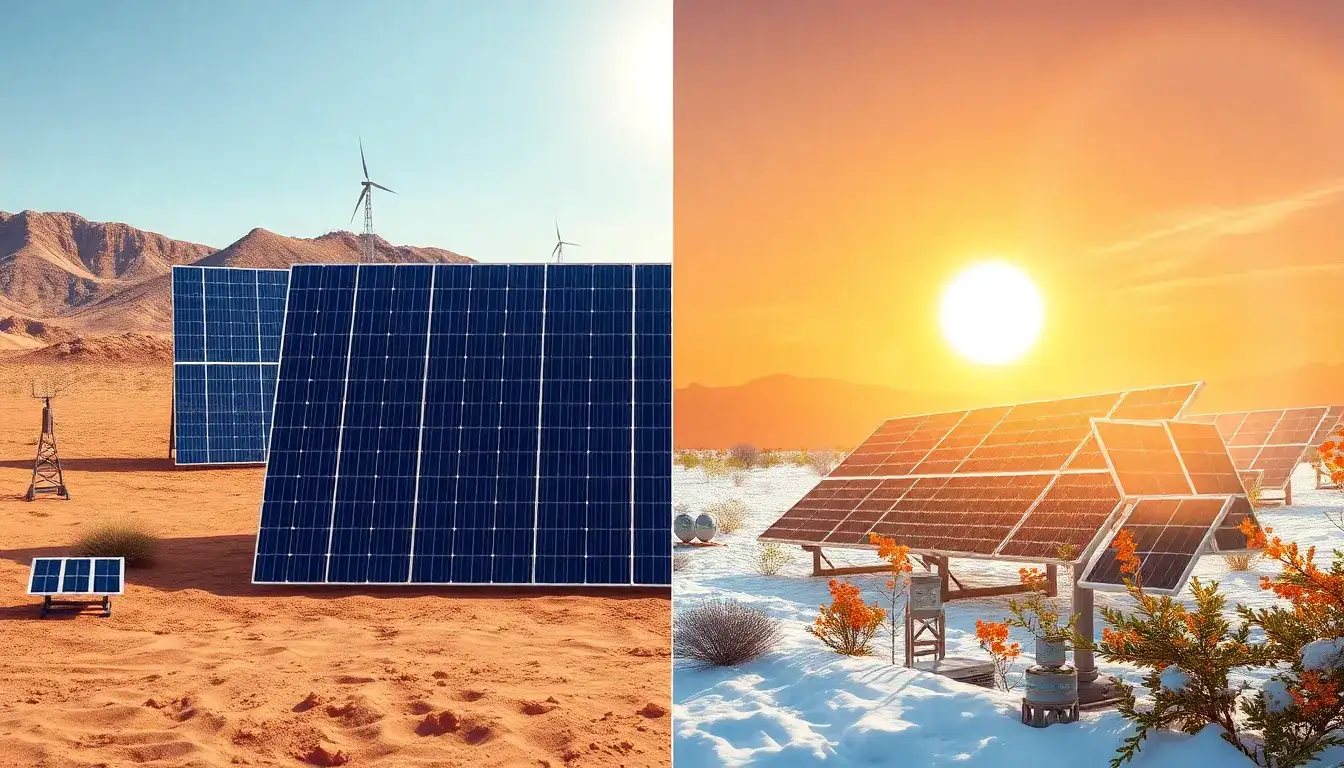
Yes, there are solar panels designed to perform well in both hot and cold temperatures. While all solar panels are affected by temperature, some materials and designs are more resilient to these variations.
Factors Affecting Solar Panel Efficiency in Various Temperatures
- Temperature Coefficient: This is a measure of how much a solar panel’s efficiency decreases with each degree of temperature increase above 25°C (77°F). Panels with low temperature coefficients perform better in hot conditions.
- Material and Design: High-efficiency solar panels, such as bifacial modules, can offer superior performance in both hot and cold conditions. Bifacial panels, for example, can utilize reflected light from snow or light surfaces, improving efficiency in cold environments.
- Cooling Systems: Implementing cooling systems can help mitigate the effects of high temperatures by reducing panel temperature, thus increasing efficiency in hot environments.
Panels for Hot Conditions
- Low Temperature Coefficient: Look for panels with a lower temperature coefficient (-0.3% to -0.5% per °C) to minimize efficiency loss in hot temperatures.
- Efficient Cooling: Some installations use evaporative cooling or other methods to reduce panel temperatures and maintain efficiency.
Panels for Cold Conditions
- Bifacial Panels: These panels can capture reflected light from snow or ice, increasing efficiency in cold conditions.
- Optimal Angling: Panels installed at an angle facilitate snow shedding, ensuring continuous exposure to sunlight.
Balanced Performance
While no solar panels are completely immune to temperature effects, selecting panels with a balanced performance across temperatures and using techniques like proper installation, ventilation, and cooling can help maximize efficiency in both hot and cold climates.
Original article by NenPower, If reposted, please credit the source: https://nenpower.com/blog/are-there-any-solar-panels-that-perform-well-in-both-hot-and-cold-temperatures/