

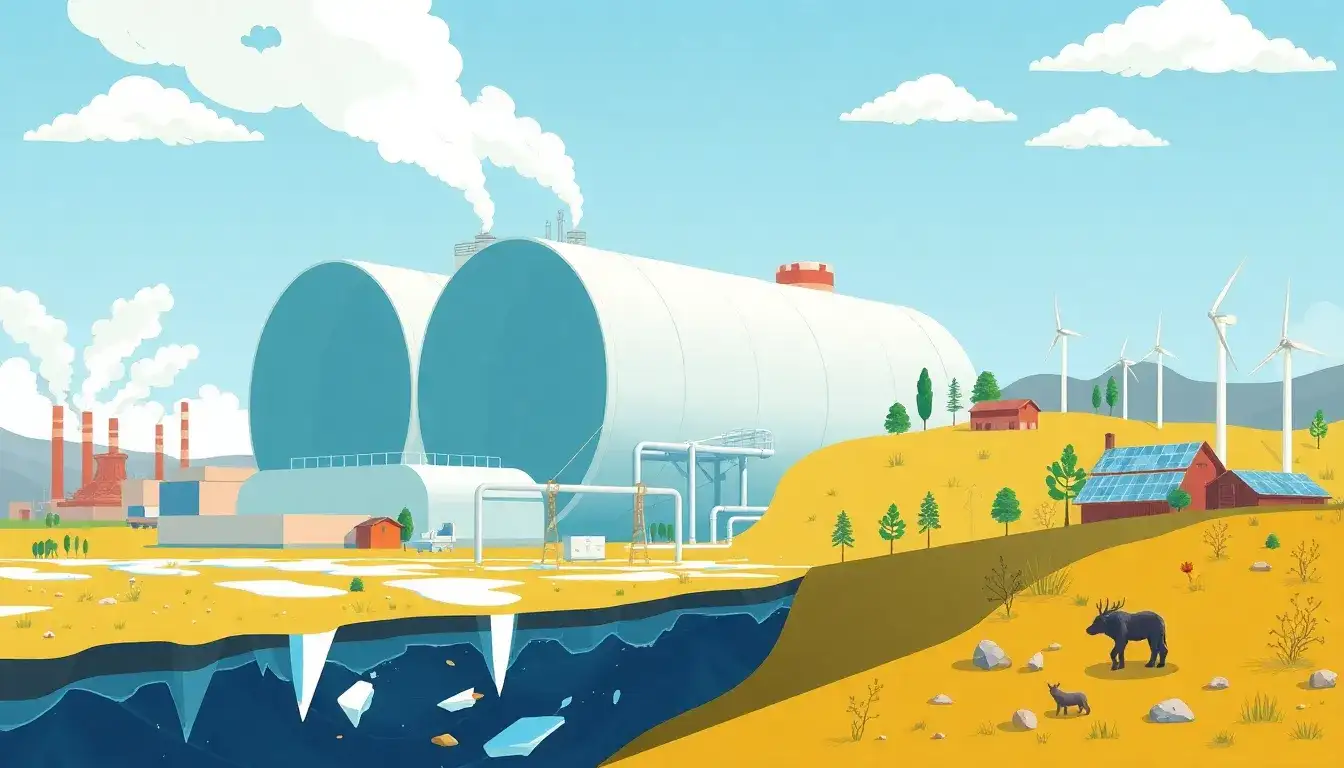
Thermal energy storage (TES) offers significant environmental benefits, such as reducing greenhouse gas (GHG) emissions and air pollutants by enabling more efficient use of renewable energy and lowering reliance on fossil fuel backups. However, TES technologies also come with several notable environmental drawbacks and challenges:
Environmental Drawbacks and Challenges of Thermal Energy Storage
1. Material Concerns and Potential Toxicity
- Some TES systems, especially latent heat storage using phase change materials like molten salts, can involve substances that are corrosive or toxic, posing risks to safety and the environment if leaks or failures occur.
- Material degradation over time can reduce thermal storage capacity, potentially leading to the need for replacement and disposal, which carries environmental impacts.
2. Heat Loss and Efficiency Issues
- Thermal energy tends to dissipate because heat naturally flows from hot to cooler areas, making long-term heat storage inefficient and contributing to wasted energy if insulation is imperfect.
- The conversion of stored thermal energy back into electricity or useful heat is typically less than 100% efficient, causing further energy loss and reducing the overall environmental benefit of TES systems.
3. Large Physical Footprint and Resource Use
- Sensible heat storage systems often require large volumes and physical space due to low energy density of storage materials, which can be impractical in constrained locations and may cause increased land use.
- Life cycle assessments show land use for TES systems is roughly similar to alternative configurations, but large-scale TES installations still have material and land resource demands that must be considered.
4. Water Usage
- TES systems in Concentrated Solar Power (CSP) plants can involve some water use for cooling and thermal management, comparable to natural gas backup systems. Although water use per unit energy is not significantly higher than alternatives, it remains a consideration especially in water-scarce regions.
5. Economic and Operational Limitations with Environmental Impacts
- The need for large storage capacities and complex systems can lead to higher upfront material and energy inputs, with associated manufacturing emissions.
- Maintenance and potential system failures can increase operational emissions and environmental footprint over the lifecycle of TES technologies.
Summary of Environmental Trade-offs
- TES can reduce life cycle GHG emissions by up to 7% compared to no storage and dramatically (up to 210%) compared to natural gas backup in solar thermal applications.
- TES helps reduce power plant emissions, including NOx and CO2, significantly contributing to improved air quality. For instance, in California, TES could save hundreds of thousands of tons of CO2 and tons of NOx annually.
- However, challenges like heat loss, material toxicity, and inefficiency in thermal-to-electricity conversion present ongoing environmental drawbacks. These must be managed with improved materials, better insulation technology, and careful system design.
Conclusion
While thermal energy storage is generally environmentally favorable due to its potential to integrate renewables and reduce fossil fuel use, it is not free from environmental drawbacks. Key concerns include material toxicity and degradation, heat losses, large spatial requirements, water use, and the efficiency of energy conversion. Addressing these issues is critical to maximizing TES’s environmental benefits as the technology develops.
Overall, TES provides an important tool for sustainable energy systems but requires ongoing innovation to mitigate its environmental impacts effectively.
Original article by NenPower, If reposted, please credit the source: https://nenpower.com/blog/are-there-any-significant-environmental-drawbacks-to-thermal-energy-storage/

