

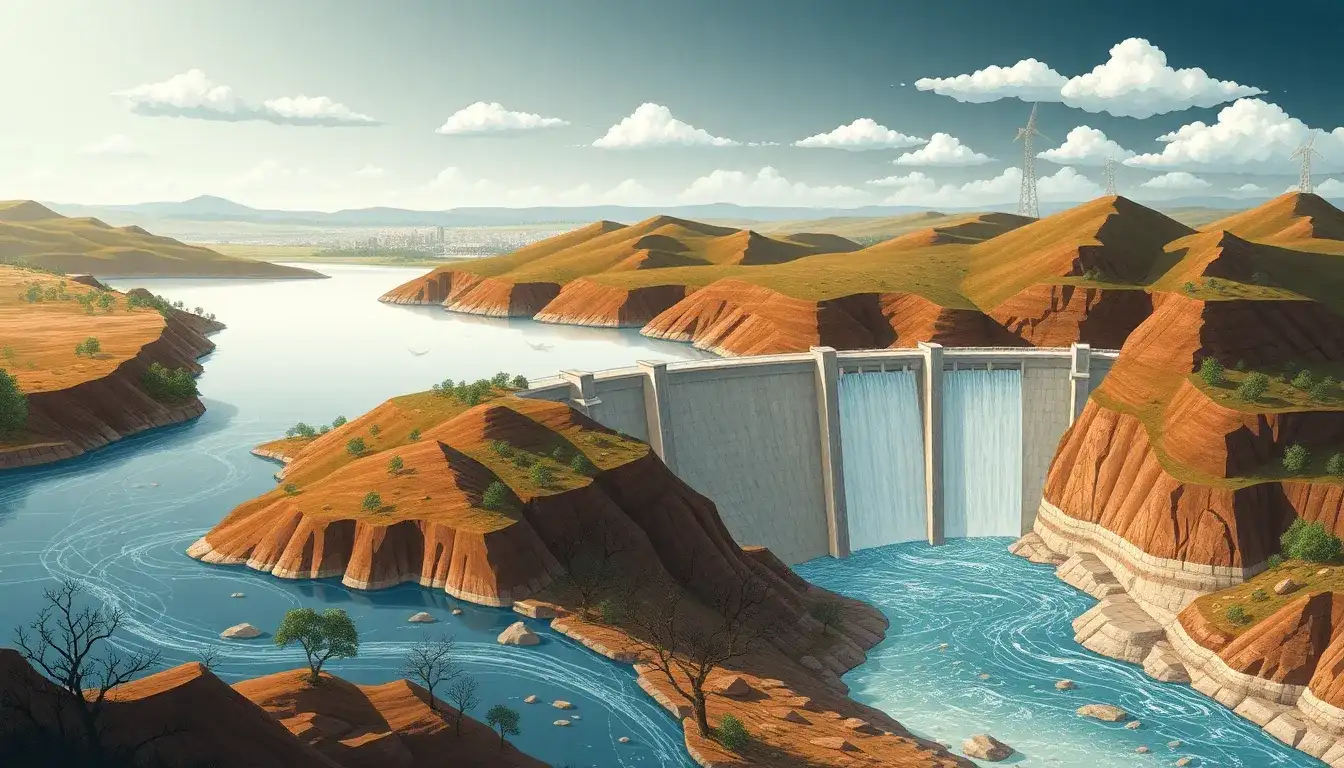
Pumped hydroelectric energy storage (PHES) offers significant benefits as a renewable energy storage solution, but it also has notable environmental drawbacks primarily associated with its infrastructure and operation.
Significant Environmental Drawbacks of Pumped Hydroelectric Energy Storage
- Ecosystem Alteration and Habitat Disruption
The construction of reservoirs and dams needed for pumped hydro storage can considerably alter local ecosystems. Water flow changes caused by dams and the creation of reservoirs can disrupt riverine and aquatic environments, leading to loss or fragmentation of wildlife habitats and affecting biodiversity in the area. These changes may influence fish migration patterns, aquatic species populations, and terrestrial ecosystems around the reservoirs. - Water Diversion and Quality Issues
Pumping water between reservoirs may require diverting natural watercourses, which can affect downstream water availability and quality. This diversion can impact aquatic life and local water users. Additionally, sediment accumulation in reservoirs over time reduces storage capacity and can impact water quality, necessitating ongoing maintenance. - Regulatory and Community Challenges Related to Environmental Concerns
Environmental concerns over ecosystem disruption and habitat loss often lead to rigorous regulatory scrutiny. Such projects can face delays or blocking due to environmental impact assessments and community opposition concerned with preserving local ecosystems and waterways. - High Initial Environmental Footprint
While PHES is a green energy storage method, the initial construction phase involves extensive land use and disturbance of natural landscapes, which can cause soil erosion, vegetation loss, and changes in local hydrology. - Greenhouse Gas Emissions Context
It is worth noting that despite these environmental drawbacks, pumped storage hydropower generally produces far lower greenhouse gas emissions over its lifecycle compared to fossil fuel-based energy storage technologies or generation, making it a relatively clean option for large-scale energy storage.
Mitigation Efforts
Environmental impacts can be partially mitigated by employing closed-loop systems (where reservoirs are isolated from natural waterways) rather than open-loop systems, reducing direct impacts on river ecosystems. Careful site selection, environmental management during construction, and ongoing ecological monitoring are crucial for minimizing adverse effects.
In summary, the major environmental drawbacks of pumped hydroelectric energy storage arise from its physical infrastructure impacting local ecosystems, aquatic habitats, and water flows, alongside sediment management challenges and regulatory hurdles. However, its overall carbon footprint is comparatively low among energy storage methods, and technological and design innovations continue to improve its environmental compatibility.
Original article by NenPower, If reposted, please credit the source: https://nenpower.com/blog/are-there-any-significant-environmental-drawbacks-to-pumped-hydroelectric-energy-storage/

