

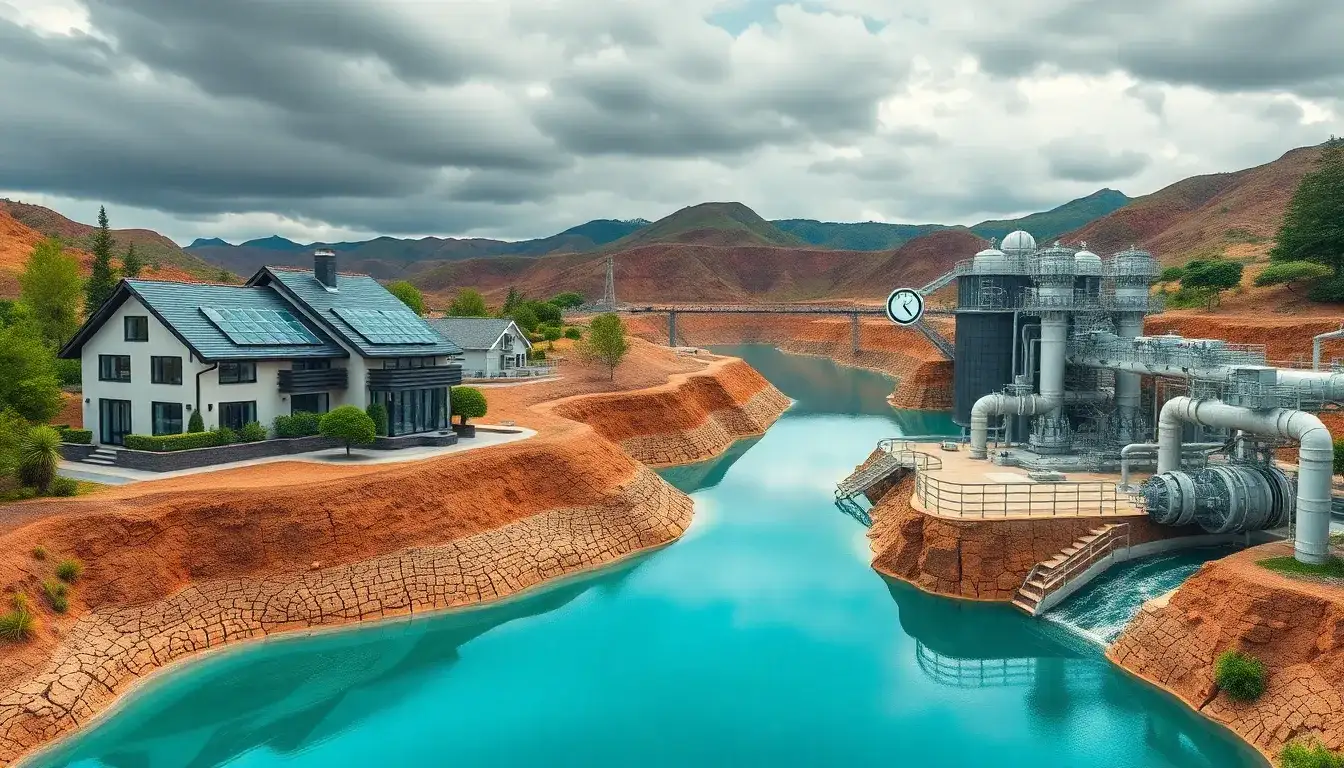
Pumped hydro storage (PHS) is a highly efficient method of energy storage, particularly suited for large-scale applications, but it faces several significant drawbacks when considered for residential energy needs:
- Scale and Cost:
- Practicality: PHS requires a substantial elevation difference between two reservoirs, making it impractical for small-scale residential use.
- Cost: The initial capital costs for constructing such facilities are extremely high, typically ranging from $1 billion to $3 billion for large projects. This is far beyond the scale of residential needs.
- Geographical Constraints:
- PHS necessitates specific terrain, such as hilly or mountainous areas, which limits where these facilities can be built. Most residential areas do not offer the required geography.
- Energy Loss:
- While PHS is efficient with a cycle efficiency of about 80-90%, it still incurs energy losses during the pumping cycle, which is a drawback compared to other storage methods like batteries.
- Environmental Impact:
- Large-scale PHS facilities can have significant environmental impacts, including altering natural water flows and affecting local ecosystems. For residential use, these impacts would need to be minimized or managed.
- Operational Complexity:
- PHS involves complex infrastructure, including large reservoirs and turbines, which require regular maintenance to ensure efficiency. This complexity is not well-suited for residential settings.
Given these constraints, pumped hydro storage is not feasible for individual residential energy needs. Instead, it serves as a key component in grid-scale energy storage, supporting larger communities and balancing supply and demand across entire regions.
Original article by NenPower, If reposted, please credit the source: https://nenpower.com/blog/are-there-any-significant-drawbacks-to-using-pumped-hydro-storage-for-residential-energy-needs/

