

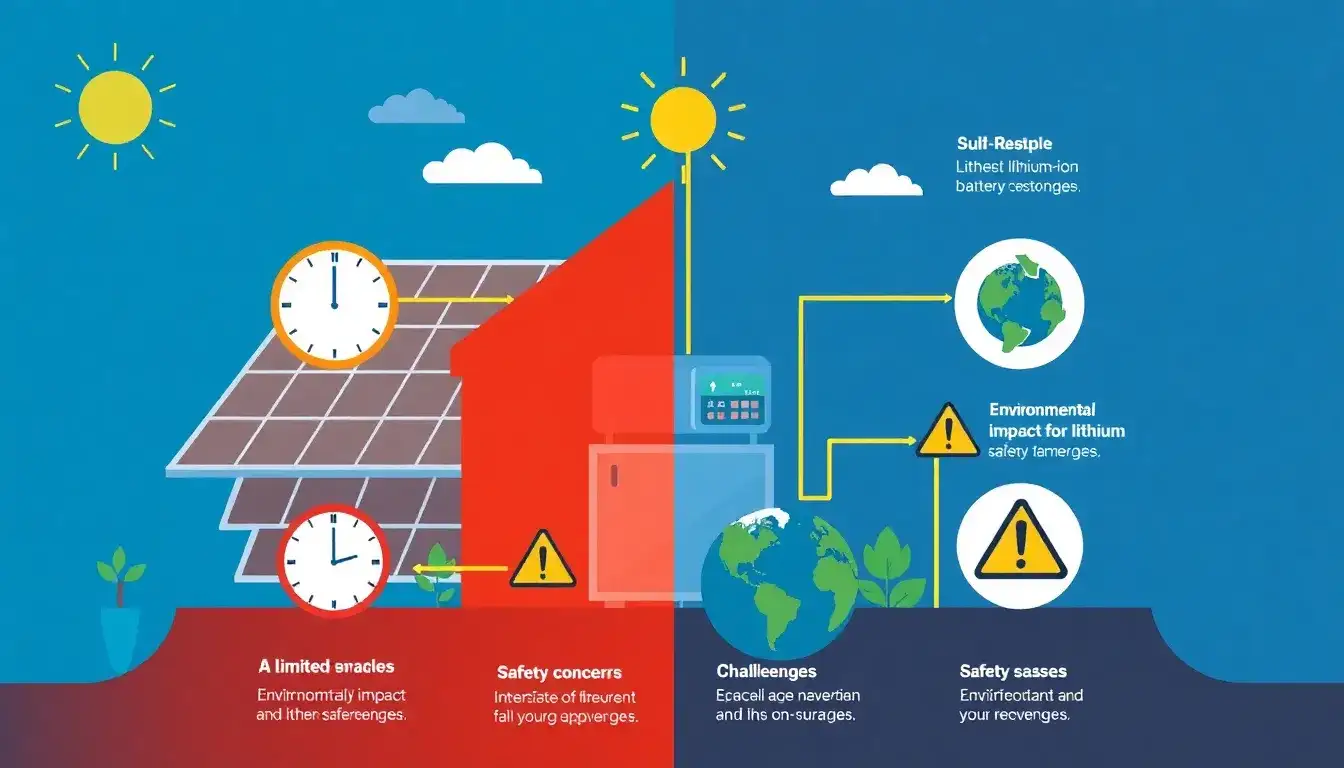
Lithium-ion batteries are a popular choice for solar energy storage, but there are several significant drawbacks to consider:
- High Upfront Costs: Lithium-ion battery storage systems tend to be expensive to purchase and install, which adds substantially to the overall cost of a solar power setup.
- Degradation Over Time: These batteries naturally degrade as they age, typically lasting for 500 to 1000 charge cycles. This limits their long-term storage capacity and necessitates eventual replacement.
- Safety Risks: Lithium-ion batteries are susceptible to thermal runaway, which can lead to rapid ignition or violent explosions in worst-case scenarios. Such incidents can cause serious financial and safety risks.
- Space and Maintenance Requirements: They require dedicated space for installation and involve more complex system design and maintenance compared to simpler storage options.
- Size and Installation Complexity: Larger capacity needs mean physically bigger batteries, which can be cumbersome and require professional installation to ensure proper integration with home electrical systems.
In summary, while lithium-ion batteries offer efficient energy storage for solar power, their drawbacks include high costs, finite lifespan due to degradation, safety hazards, space needs, and system complexity.
Original article by NenPower, If reposted, please credit the source: https://nenpower.com/blog/are-there-any-significant-drawbacks-to-using-lithium-ion-batteries-for-solar-energy-storage-2/

