

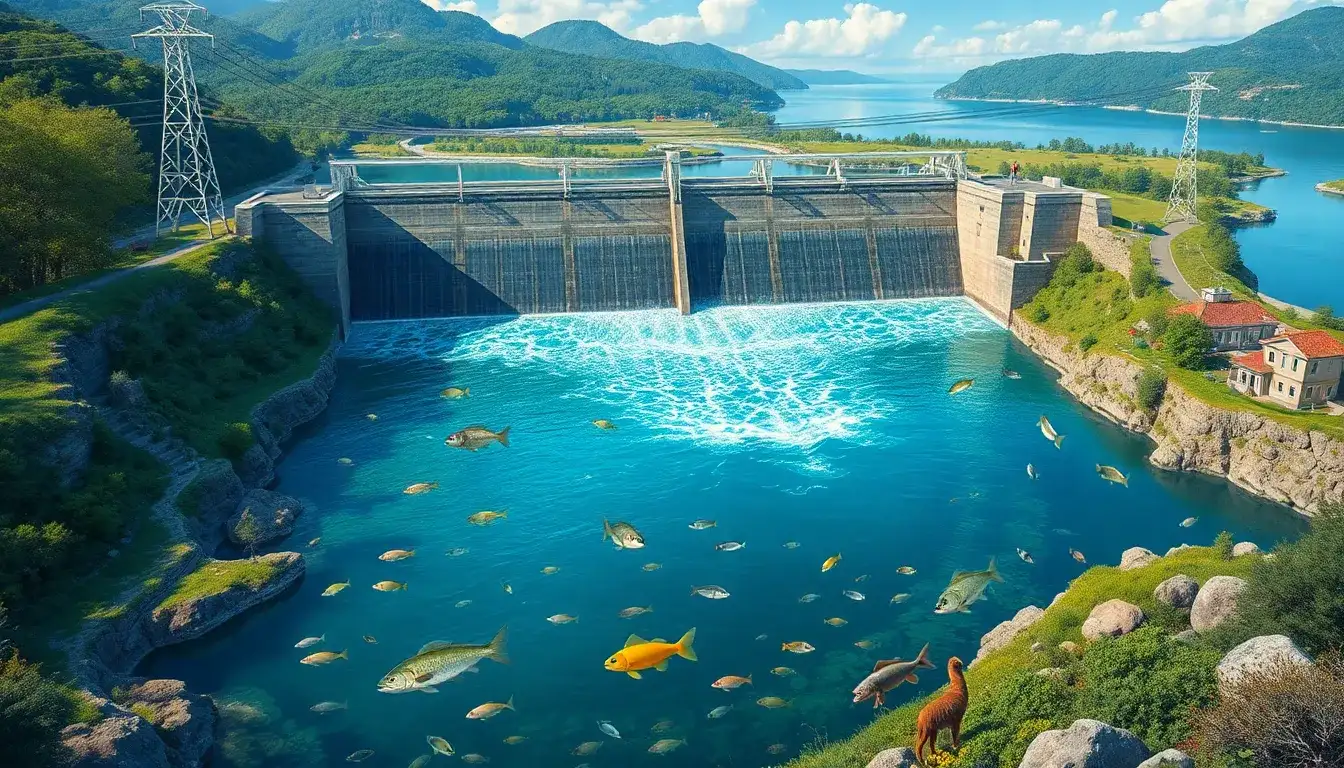
Pumped hydroelectric storage (PHS) can have several significant aquatic impacts, mainly related to the construction and operation of reservoirs and dams used in the system. These impacts vary depending on whether the system is an open-loop or closed-loop configuration.
Key Aquatic Impacts of Pumped Hydroelectric Storage
1. Ecosystem Alterations and Habitat Disruption
The creation of reservoirs and dams alters local aquatic ecosystems by changing water flow regimes and habitats. This disruption can affect the abundance, distribution, and community structure of aquatic organisms, including plankton, invertebrates, fish, and aquatic mammals. The alteration of natural water flow and habitat fragmentation can lead to changes in species composition and ecosystem functioning.
2. Fish Passage and Migration Barriers
PHS facilities can act as physical barriers to fish movement, disrupting migratory routes and spawning behavior. This can result in fragmented fish populations and reduced genetic connectivity. Specialized fish passage technologies like ladders and bypass channels are often needed to mitigate these effects.
3. Water Quality Changes
Changing water levels and reservoir operations can lead to increased sedimentation, turbidity, and nutrient loading. These factors can modify water temperature and dissolved oxygen levels, potentially harming aquatic life. Deep water withdrawals during pumping can also affect the thermal and chemical stratification of connected water bodies, influencing water quality.
4. Differences Between Open-Loop and Closed-Loop Systems
- Open-loop PHS systems are directly connected to natural flowing water bodies, leading to more extensive and longer-lasting environmental impacts on aquatic ecosystems.
- Closed-loop PHS systems are isolated from natural water bodies, typically having more localized and temporary aquatic impacts since they operate off-stream. However, closed-loop systems that rely on groundwater may have greater impacts on geology, soils, and groundwater quality than open-loop systems. Closed-loop systems also offer greater siting flexibility, which can help avoid ecologically sensitive aquatic areas.
5. Potential for Invasive Species
Reservoirs created for PHS can provide new habitats that invasive species might colonize, potentially disrupting native ecosystem balance.
6. Mitigation and Management
Research and operational strategies aim to reduce negative aquatic impacts, such as optimizing pulsed flow regimes to support fish spawning and recruitment, developing fish passage solutions, and employing rigorous monitoring of water quality and invasive species. Mathematical and ecological modeling is frequently used to predict impacts and guide mitigation planning.
In summary, pumped hydroelectric storage can significantly impact aquatic ecosystems primarily through habitat alteration, water quality changes, and barriers to fish movement. Open-loop systems tend to have broader environmental effects than closed-loop designs, which are emerging as a way to minimize aquatic impacts. Careful site selection, design, and operational management are critical to reducing ecological damage associated with PHS projects.
Original article by NenPower, If reposted, please credit the source: https://nenpower.com/blog/are-there-any-significant-aquatic-impacts-from-pumped-hydroelectric-storage/

