

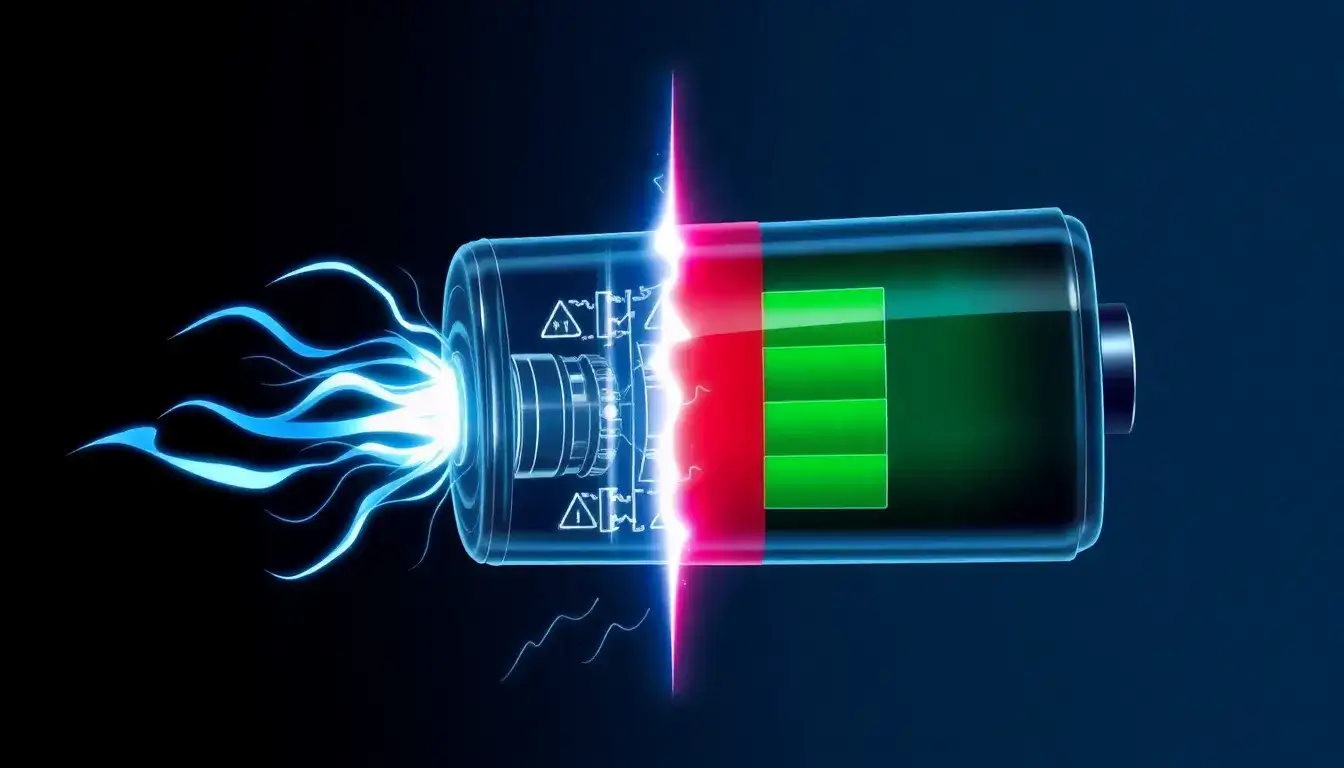
Frequent partial discharges on lithium-ion batteries are generally beneficial for battery health rather than harmful. Partial discharges reduce stress on the battery and help prolong its life compared to full discharges. Cycling within a mid-state-of-charge range, avoiding deep discharges, and maintaining partial discharge cycles can greatly increase the cycle life of lithium-ion batteries. For example, a 10% depth of discharge (DoD) can yield up to 6,000 to 15,000 cycles, whereas a full 100% DoD results in significantly fewer cycles (~300 to 600 for common chemistries).
However, risks associated with discharging usually arise from complete or deep discharges, not partial ones. Fully discharging a lithium-ion battery below its safe voltage threshold can cause several damage mechanisms such as:
- Electrode damage from unwanted chemical reactions due to lack of lithium ions.
- Increased internal resistance, reducing efficiency and making charging harder.
- Physical deformation of the battery casing, increasing the risk of leakage or failure.
- Performance degradation including reduced capacity, unstable voltage output, and longer charging times over repeated full discharges.
In summary:
- Frequent partial discharges reduce battery stress and extend cycle life.
- Full or deep discharges pose significant risks to battery health and safety.
- Avoiding full discharge cycles and keeping the battery between about 50% and 100% charge maximizes longevity.
- Elevated temperature and high current loads remain important factors that degrade battery health independently of discharge patterns.
Therefore, frequent partial discharges are not only safe but beneficial for lithium-ion battery health, while frequent deep or full discharges increase risks of degradation and failure.
Original article by NenPower, If reposted, please credit the source: https://nenpower.com/blog/are-there-any-risks-associated-with-frequent-partial-discharges-on-battery-health/

