

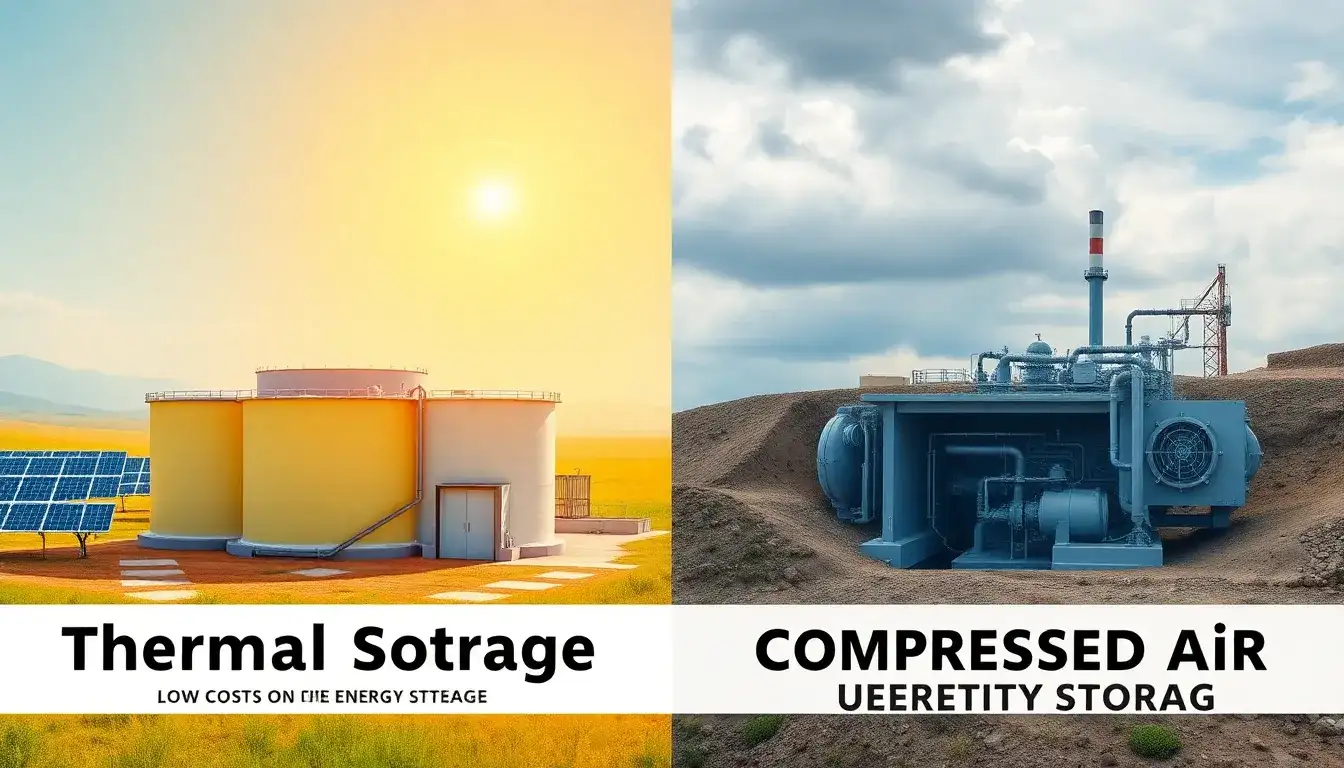
Thermal energy storage (TES) generally has a lower global average installed capital expenditure (capex) cost than compressed air energy storage (CAES), with figures around $232/kWh for TES versus $293/kWh for CAES, according to BloombergNEF’s 2024 report on long-duration energy storage (LDES) systems. However, this cost advantage varies significantly by region.
Regional Cost Differences and China’s Role:
- China stands out as a region where both TES and CAES have substantially lower capex costs compared to the rest of the world. This cost reduction is attributed mainly to large-scale deployment, favorable policies, and advanced commercialization in China, especially for compressed air energy storage systems.
- Outside of China, costs for thermal energy storage systems are about 54% higher, and compressed air storage costs are approximately 68% higher compared to their costs within China. This indicates that TES tends to remain cheaper than CAES globally but the price gap narrows significantly in China due to the maturity and scale of CAES projects there.
Summary:
- Globally, TES is cheaper than CAES on average.
- In China, due to large-scale projects and policy support, CAES costs come down significantly, narrowing the TES versus CAES cost difference.
- Outside China, TES remains more cost-effective than CAES by a noticeable margin.
Therefore, regions like China represent cases where CAES is much more cost-competitive, narrowing the cost difference with TES, although TES generally maintains a cost advantage worldwide.
In conclusion, yes—China is a key region where compressed air energy storage approaches the cost levels of thermal energy storage, thanks to local factors reducing CAES costs substantially, while TES generally remains cheaper than CAES in most other regions.
Original article by NenPower, If reposted, please credit the source: https://nenpower.com/blog/are-there-any-regions-where-thermal-energy-storage-is-significantly-cheaper-than-compressed-air-storage/

