

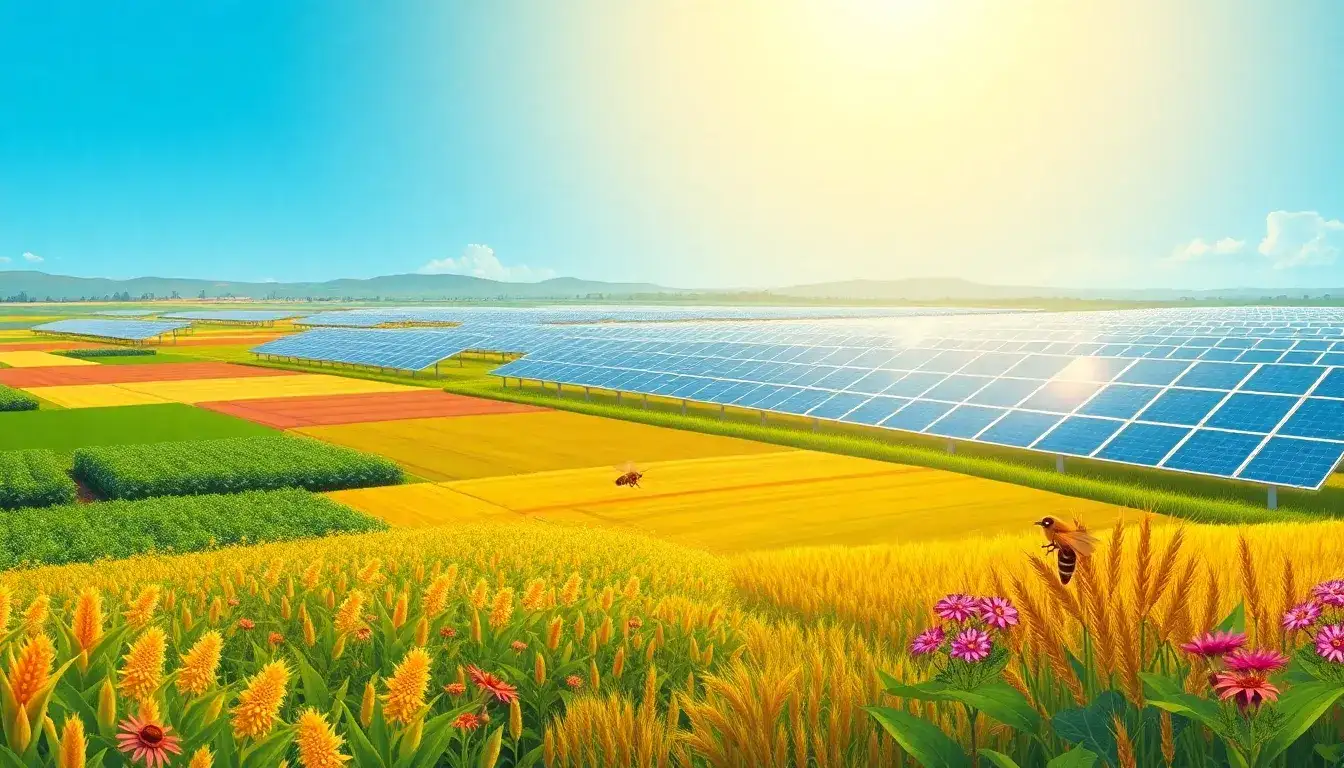
While solar farms generally do not significantly impact agricultural land usage overall, there are regions and specific conditions under which their impact might be more pronounced. Here are some key observations:
Regional Differences
- Midwest and West: In the Midwest, solar farms are more likely to be installed on cropland compared to the West, where they are more often located on pasture-rangeland. This could imply that regions with more cropland, like the Midwest, might face a higher potential for agricultural land conversion due to solar farms.
- Impact on Rich Soils: The Midwest is particularly affected because solar operations are increasingly targeting the region due to cheaper land rents and favorable policies. This shift can displace farmland, especially on the richest soils used for food and crop production.
Specific Factors
- Conversion Rates: While wind turbines have a minimal impact on land cover (less than 1% conversion), solar farms see a slightly higher rate of land conversion, with 15% of agricultural land being used for non-agricultural purposes after installation. This suggests areas with high solar farm presence might experience more land use changes.
- Leasing and Remediation Concerns: Even when land is leased for solar farms, there are concerns about long-term soil degradation, which can affect farmland productivity. Remediation efforts might take decades, potentially impacting agricultural land quality.
Overall, while the impact of solar farms is generally limited, regions like the Midwest are more susceptible to significant effects due to the value of the land and the policies driving solar development.
Original article by NenPower, If reposted, please credit the source: https://nenpower.com/blog/are-there-any-regions-where-solar-farms-have-a-higher-impact-on-agricultural-land/

