

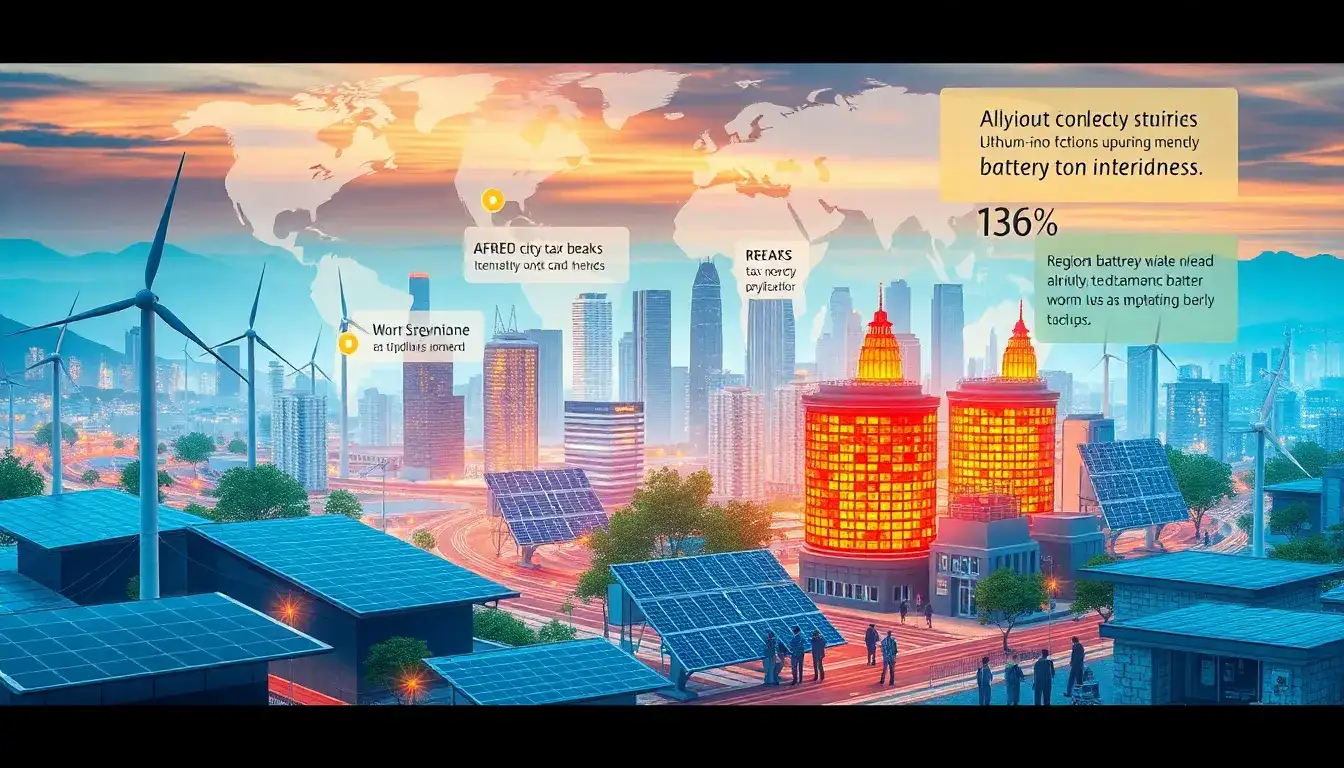
Yes, there are regional incentives that can reduce the cost of lithium-ion battery systems, particularly in North America and Europe. Here are some examples:
United States
- Inflation Reduction Act (IRA): The IRA provides significant incentives for battery manufacturing, including production tax credits and supply-side subsidies. For domestically produced battery cells, a tax credit of $35 per kilowatt-hour (kWh) is available, while for modules, it is $10/kWh. These credits can significantly lower the production costs for manufacturers.
- Consumer and Fleet Incentives: The IRA also includes demand-side incentives such as the 30D clean vehicle tax credit for consumers and the 45W credit for commercial fleets, promoting the adoption of electric vehicles.
Canada
- Clean Technology Investment Tax Credit (ITC): Canada has introduced a refundable tax credit of up to 30% on machinery and equipment investments related to clean technologies, including battery production. This is intended to attract more battery manufacturing investments into Canada.
Regional Differences
- North America vs. Europe: North America has become the fastest-growing region for new battery factory investments, largely due to the U.S. IRA incentives. Europe faces challenges like high energy prices, leading to delays and cancellations of some projects.
- State-Level Incentives: States like New York, Massachusetts, and California offer various energy storage incentives and demand response programs that can further reduce costs for lithium-ion battery systems.
These incentives can help reduce the cost of lithium-ion battery systems by providing tax credits, subsidies, and other financial support mechanisms.
Original article by NenPower, If reposted, please credit the source: https://nenpower.com/blog/are-there-any-regional-incentives-that-can-reduce-the-cost-of-lithium-ion-battery-systems/

