

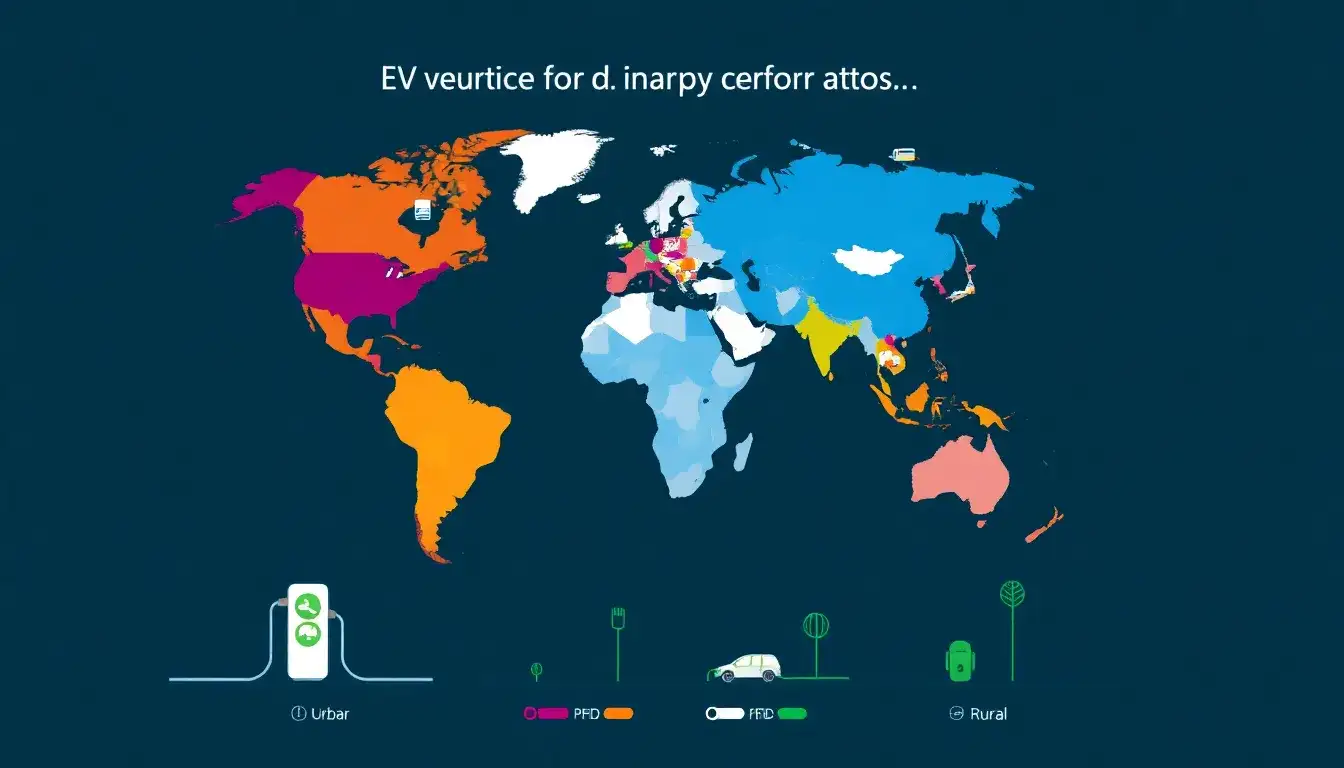
Regional Differences in Payment Methods for EV Charging
- Ownership and Access Models Vary by Region
In some areas, utilities are prohibited from owning charging stations, leading to ownership by charge point operators or private companies such as those operating in hotels or shopping centers. This influences how payments are handled, with some stations being free, others requiring access devices like key fobs, and many requiring electronic payments via credit cards or digital wallets. - Payment Types and Pricing Models Differ by Location
Some regions charge by the kilowatt-hour (kWh) transferred, while others base fees on the charging time. For example, in parts of the United States, fees are per minute of charging, often varying with the power level accepted by the vehicle and the station’s location.
– In California, for instance, Electrify America charges by the minute, with rates adjusted by power capacity (e.g., $0.99/min for 350 kW) and a session fee, with discounted rates available through membership plans.
– EVgo also varies prices by region; in Los Angeles, standard pay-as-you-go Level 3 charging costs $0.27 per minute, with discounted member rates available. - Payment Methods Differ in Technology and Convenience
Across regions, payment methods include contactless credit/debit cards, RFID tags, mobile apps, or digital wallets. The variety reflects local provider preferences and user convenience, with some locations requiring pre-registration or membership to access discounts. - Urban vs. Rural and Geographical Variations
Urban areas generally experience higher public charging fees than rural or suburban areas, reflecting demand, infrastructure costs, and local economics.
Summary
| Aspect | Examples / Notes | Region Impact |
|---|---|---|
| Ownership | Utilities, private companies, network operators | Some regions prohibit utility ownership, affecting payment systems |
| Pricing Type | Per kWh vs. per minute | Varies by state/area; e.g., California uses per minute pricing tiers |
| Payment Methods | Contactless cards, RFID tags, apps, key fobs | Different stations/regions offer different options |
| Pricing Levels and Fees | Session fees, idle fees, membership discounts | Rates and fees vary widely, with memberships offering discounts |
| Urban vs Rural Costs | Higher costs in urban public charging stations | Urban stations tend to be more expensive |
In conclusion, regional differences in EV charging payments stem largely from ownership rules, local regulations, and market structures, resulting in varying payment methods (card, app, RFID), pricing models (per kWh or per minute), and fees across different geographic locations.
Original article by NenPower, If reposted, please credit the source: https://nenpower.com/blog/are-there-any-regional-differences-in-payment-methods-for-ev-charging/

