

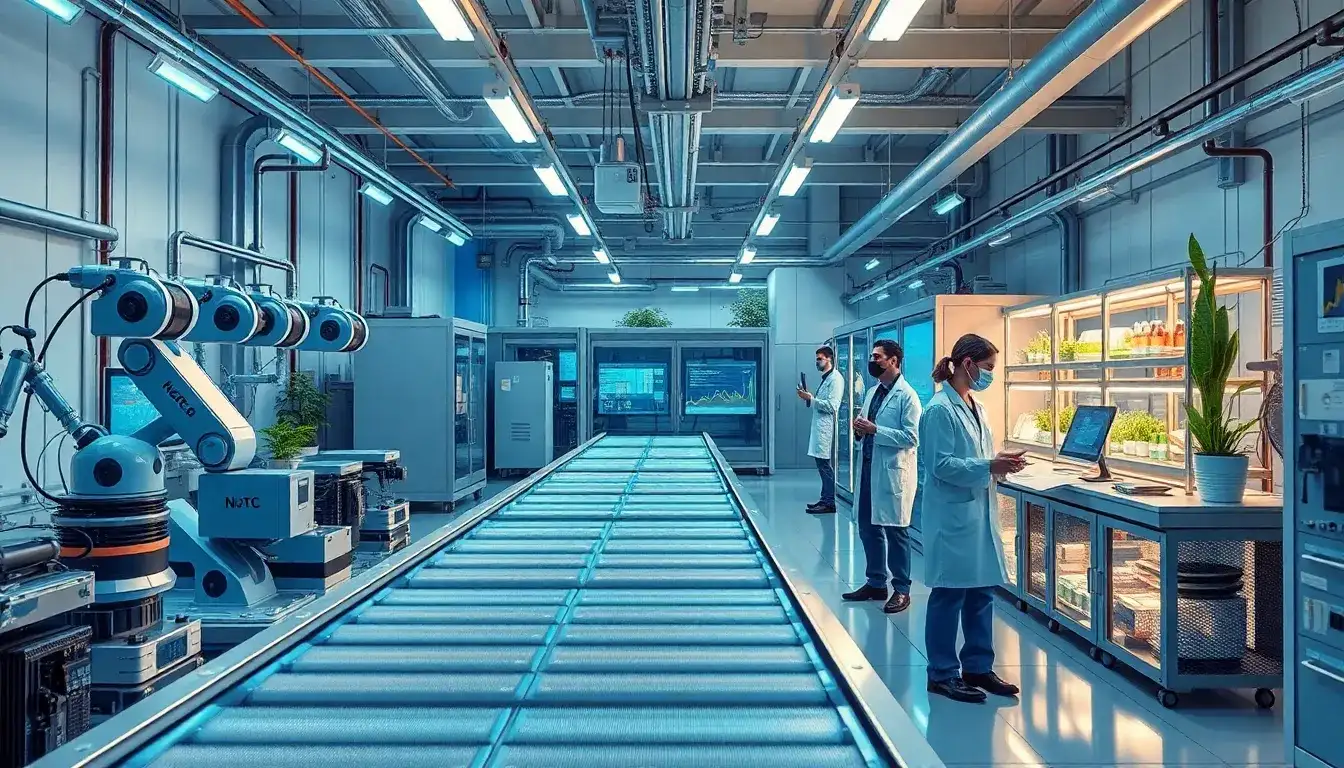
There are indeed new technologies being developed to improve the recycling efficiency of lithium-ion batteries, focusing on sustainability, cost-effectiveness, and higher material recovery rates.
New and Emerging Technologies in Lithium-Ion Battery Recycling
1. Battery Recycling and Water Splitting (BRAWS) Technology
A team at the U.S. Department of Energy Ames National Laboratory has developed BRAWS technology, a novel recycling process that uses only water and carbon dioxide, eliminating the need for harmful chemicals or high-temperature processes. This method recovers more lithium from spent batteries compared to traditional methods. BRAWS aims to combine the advantages of the three main existing recycling methods—hydrometallurgical, pyrometallurgical, and direct recycling—while avoiding their disadvantages.
2. Vacuum-Drying and Hydrometallurgical Processes by Duesenfeld
Duesenfeld, a German innovator, uses a vacuum-drying process to remove solvents from batteries at low temperatures, which prevents the production of toxic hydrogen fluoride gas that typically arises during high-temperature shredding. After this, a hydrometallurgical process extracts valuable materials—including metal sulfates, lithium carbonate, and graphite. This combined approach enables the recovery of about 91% of the mass of all battery materials. Duesenfeld operates a demonstration plant and is scaling to commercial operations.
3. Low-CO2 Industrial-Scale Processes
Companies like Fortum deploy industrial-scale processes that prioritize low CO2 emissions while efficiently recovering lithium, cobalt, manganese, and nickel from spent batteries to reuse in new battery production. These processes integrate environmentally friendlier methods to reduce the carbon footprint of recycling.
4. Hybrid and Advanced Chemical Methods
Recent research shows ongoing exploration of advanced hydrometallurgical and hybrid methods that combine chemical and thermal steps to optimize recovery of critical metals, particularly from cathodes, given the high value of cobalt, nickel, and lithium. Hydrometallurgy leads slightly in research and patenting activity, focusing on developing novel, cost-effective, and eco-friendly chemical processing techniques.
In summary, cutting-edge lithium-ion battery recycling technologies are moving towards more sustainable, chemical-free or low-chemical, lower-temperature processes with higher recovery rates for lithium and other valuable metals. These innovations address the drawbacks of traditional hydrometallurgical and pyrometallurgical methods, aiming for increased efficiency, safety, and environmental friendliness. Notable examples include the water and CO2-based BRAWS method, vacuum drying combined with hydrometallurgy by Duesenfeld, and industrial low-CO2 methods by companies like Fortum.
Original article by NenPower, If reposted, please credit the source: https://nenpower.com/blog/are-there-any-new-technologies-being-developed-to-improve-the-recycling-efficiency-of-lithium-ion-batteries/

