

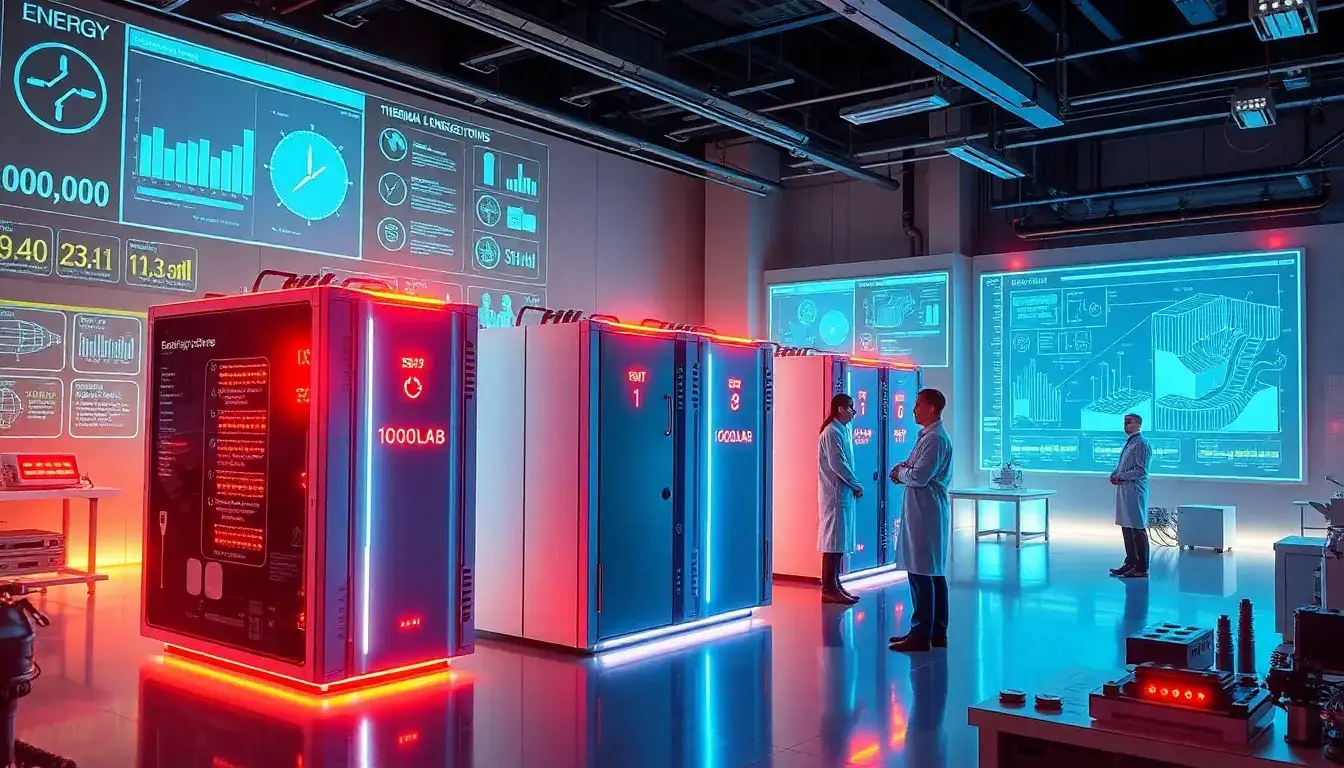
New technologies are actively being developed to improve the energy density of thermal energy storage (TES), aiming to make it more cost-effective, scalable, and suitable for demanding industrial applications and grid needs.
Emerging Technologies and Approaches
Electrically-conductive firebricks:
A recent innovation by Electrified Thermal Solutions involves electrically conductive firebrick that can store heat without the need for embedded wires. This improves scalability and lowers costs while enabling the storage of large amounts of thermal energy suitable for high-temperature industrial process heat applications, such as cement, iron, and glass manufacturing.
Material innovations:
Thermal energy storage is evolving beyond traditional molten salt and concrete-based approaches to include a variety of materials such as silicon-based, carbon-based, composite materials, and phase change materials (PCMs). These materials offer improved heat capacity, durability, and energy density.
Sensible, latent, and thermochemical storage:
- Sensible storage stores heat in the temperature change of solids/liquids like molten salts, concrete, rocks, or sand.
- Latent heat storage employs phase-change materials that store/release large amounts of heat during melting/freezing, enhancing energy density by using latent heat.
- Thermochemical storage captures heat in reversible chemical bonds, offering potentially very high energy density and long-duration storage capabilities suitable for seasonal applications.
Advanced raw materials:
New advanced thermal energy storage systems are being designed with abundant, low-cost raw materials to meet growing demands for thermal capacity in energy-efficient buildings and industrial sectors, which improves both energy density and economic viability.
Integration with clean electricity and decarbonization:
These emerging TES technologies are being developed to leverage clean electricity for process heat in sectors that are traditionally hard to decarbonize. This integration is driving the need for higher energy density storage to provide heat on demand, reducing reliance on fossil fuels.
Summary Table of Key Technologies
| Technology Type | Energy Density Benefit | Application/Advantages |
|---|---|---|
| Electrically-conductive firebrick | Scalable, cost-effective heat storage | Industrial process heat (cement, iron) |
| Phase Change Materials (PCMs) | High latent heat storage capacity | Compact thermal storage, building HVAC |
| Thermochemical Storage | Very high long-duration energy density | Seasonal storage, long-term storage |
| Silicon/Carbon-based composites | Enhanced heat capacity and durability | High-temperature industrial processes |
In conclusion, ongoing research and development efforts are focusing on novel materials (like electrically conductive bricks, PCMs, and thermochemical compounds) and optimized thermal mechanisms to significantly improve the energy density and cost-effectiveness of thermal energy storage. These advances are critical for enabling large-scale decarbonization and the flexible use of clean energy in demanding sectors.
Original article by NenPower, If reposted, please credit the source: https://nenpower.com/blog/are-there-any-new-technologies-being-developed-to-improve-the-energy-density-of-thermal-energy-storage/

