

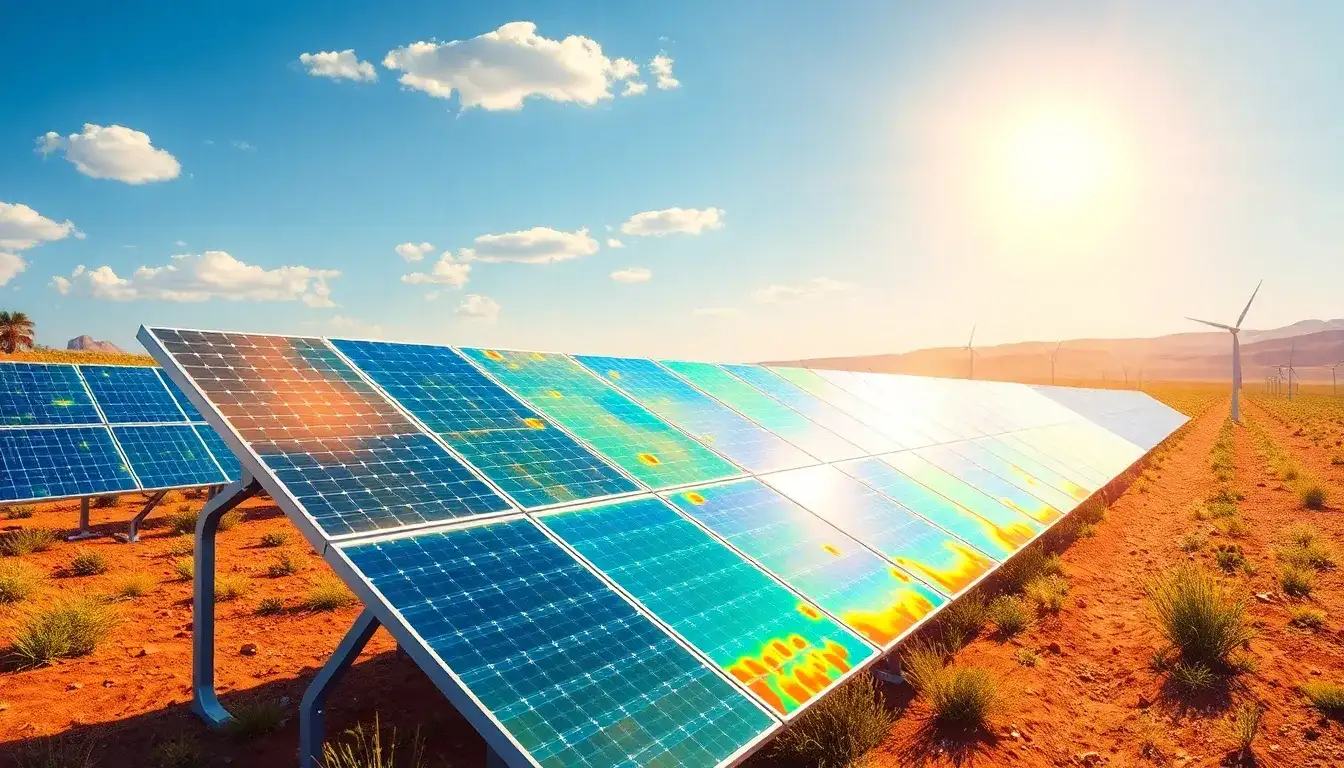
While the search results do not explicitly address new advancements in solar panel technology specifically designed to reduce the impact of high temperatures, several emerging technologies offer potential benefits in this area:
- Thin-Film Solar Panels: These panels are less affected by high temperatures compared to traditional panels, making them more suitable for sunny climates. Their lightweight and flexible nature also opens up possibilities for installations on vehicles and other unconventional surfaces.
- Perovskite Solar Cells: Although perovskites are primarily noted for their efficiency improvements, ongoing research aims to enhance their stability under various environmental conditions, including heat. However, perovskites currently face challenges related to moisture and oxygen exposure.
- Smart Energy Systems: While not directly reducing high temperature impacts, smart systems optimize energy usage and storage, which can indirectly help manage how solar panels perform under high temperatures by adjusting energy production and storage strategies.
- Bifacial Solar Panels: Although they focus on increasing energy output by capturing light from both sides, bifacial panels may benefit from improvements in cooling systems that can be integrated with advanced solar tracking systems, potentially mitigating temperature effects.
For specific temperature mitigation, advancements in cooling technologies or materials that reduce thermal stress would be critical. These are not detailed in the current search results but are important areas for future research and development.
Original article by NenPower, If reposted, please credit the source: https://nenpower.com/blog/are-there-any-new-advancements-in-solar-panel-technology-that-reduce-the-impact-of-high-temperatures/

