

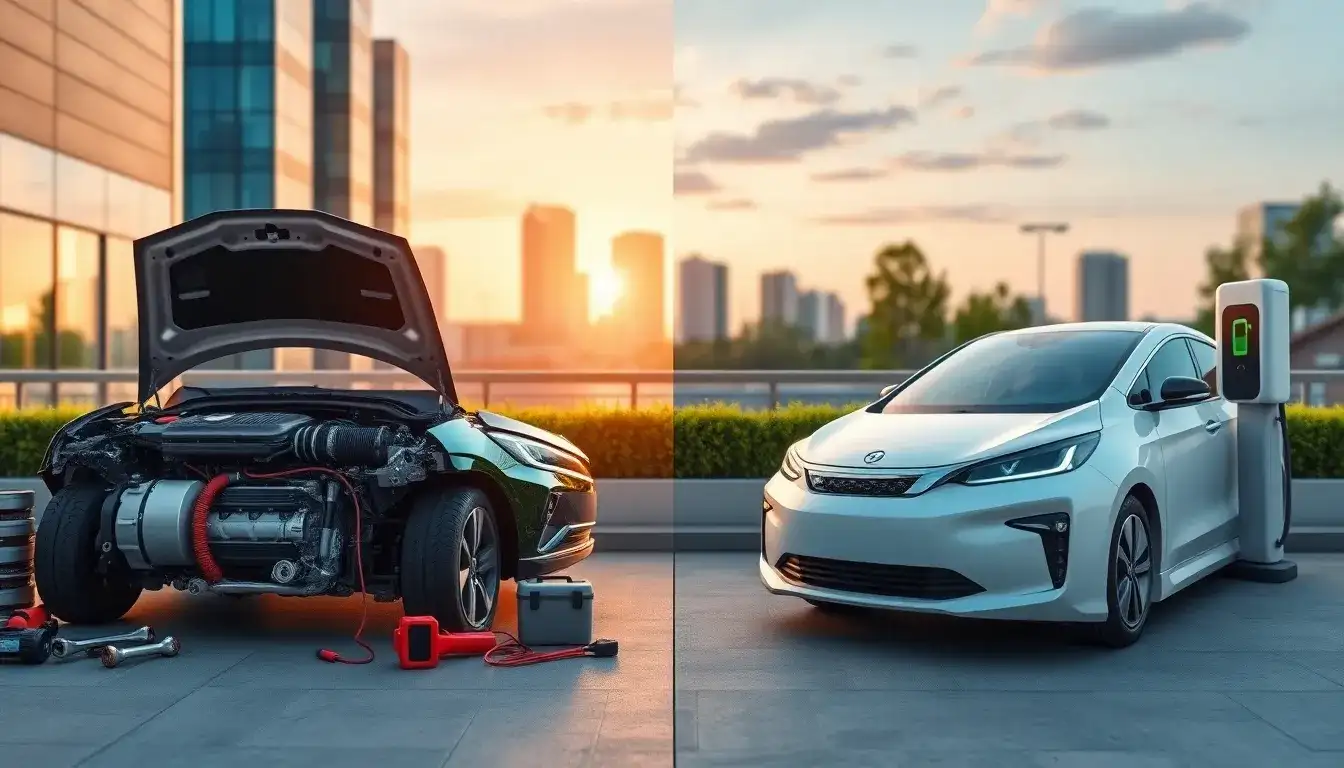
Hybrids do not offer long-term maintenance benefits over electric vehicles (EVs); in fact, EVs generally have lower maintenance needs over time.
Key points on maintenance differences between hybrids and EVs:
- Electric Vehicles (EVs): They have fewer moving parts since they rely solely on electric motors, without an internal combustion engine or related components. This results in no oil changes, fewer fluids, and generally less maintenance overall. Scheduled maintenance costs for EVs are lower, around $0.07 per mile, reflecting their simpler mechanical design (no engine oil changes, fewer wear parts).
- Hybrids: They combine an internal combustion engine with an electric motor, so hybrids still require many of the same maintenance tasks as gasoline vehicles, such as oil changes, engine maintenance, and fluid replacements. While the electric motor and regenerative braking can reduce wear on some components (e.g., brake pads last longer), hybrids still have a more complex drivetrain than EVs. This complexity typically means maintenance costs are similar to or slightly higher than conventional gas cars, and higher than EVs in the long run.
- Brake maintenance: Both hybrids and EVs benefit from regenerative braking, which decreases traditional brake wear and maintenance, but this benefit is common to both, not unique to hybrids.
In summary, while hybrids reduce some gas engine wear and can have similar maintenance costs to gasoline cars, they do not surpass EVs in long-term maintenance advantages. EVs have the edge due to fewer moving parts and fluids, leading to generally lower maintenance needs and costs over the vehicle’s lifespan. Therefore, hybrids do not have long-term maintenance benefits over electric vehicles.
Original article by NenPower, If reposted, please credit the source: https://nenpower.com/blog/are-there-any-long-term-maintenance-benefits-for-hybrids-over-electric-vehicles/

