

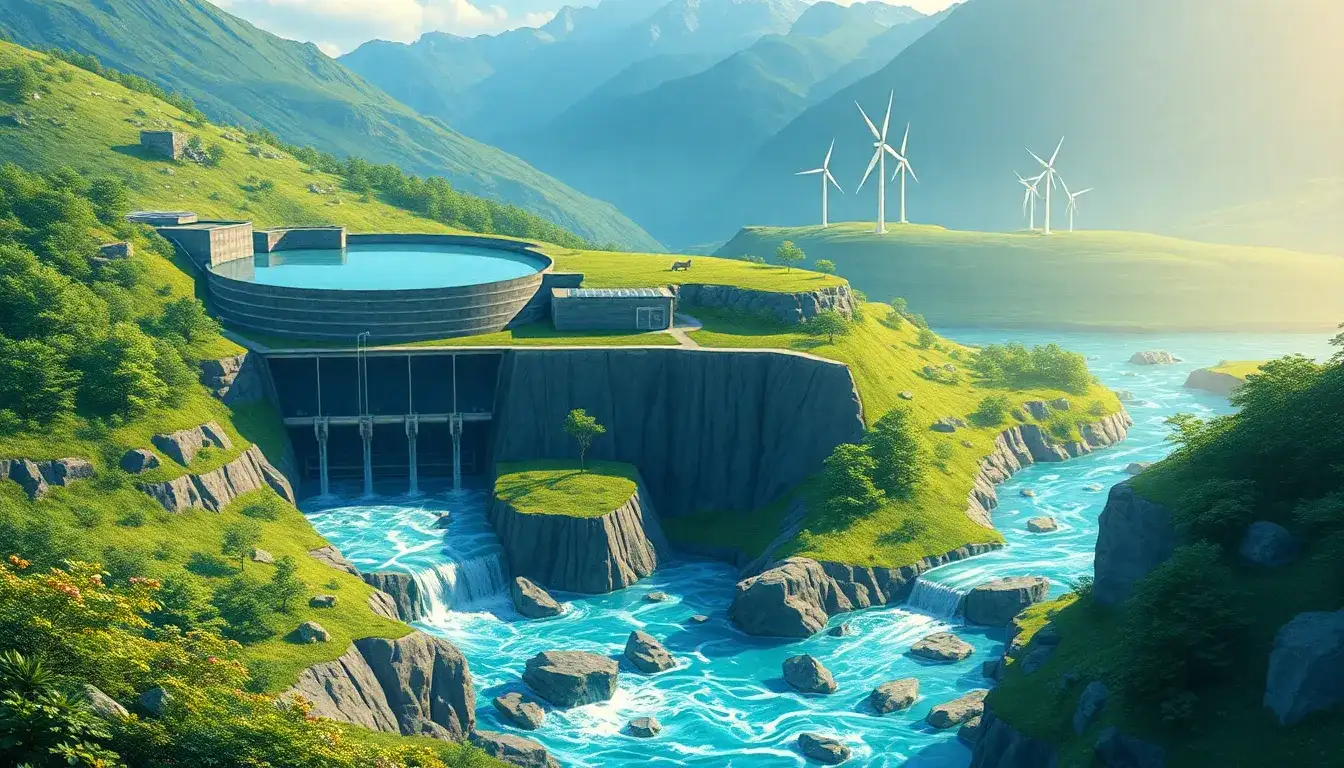
Pumped hydroelectric energy storage (PHES) systems have several long-term environmental risks associated with their operation, largely stemming from their infrastructure and effects on local ecosystems.
Key Long-Term Environmental Risks
1. Ecosystem and Habitat Disruption
- The construction of reservoirs and dams causes significant alterations to local ecosystems. This includes the inundation of land which displaces wildlife and can disrupt existing habitats, sometimes leading to ecological imbalances.
- Water level fluctuations in reservoirs can affect aquatic and riparian ecosystems downstream, potentially harming fish populations and other aquatic life due to changes in flow regimes, temperature, and water quality.
- Large reservoirs may also lead to the displacement of local communities and wildlife, further exacerbating habitat loss and fragmentation.
2. Water Resource Impacts
- Reservoirs induce water evaporation, especially in arid regions, leading to water loss which affects the system’s efficiency and availability of water for other uses. This evaporation can be a significant environmental concern in water-scarce areas.
- Closed-loop PHES systems, which do not continuously connect to natural water bodies, may alleviate some impacts on local water sources but still require water sourcing that can delay projects and affect water availability.
3. Energy and Resource Use
- Although PHES is a renewable technology, it is not 100% efficient and entails energy loss during pumping and generation cycles. This inefficiency means more electricity input is required than generated, indirectly influencing environmental impact through the electricity source used for pumping.
- The long development time and substantial materials needed for construction also contribute to environmental footprints, including greenhouse gas emissions during construction phases, though PHES generally has lower life cycle emissions compared to other storage technologies.
4. Maintenance and Operational Challenges
- Regular maintenance required for turbines and generators adds operational impacts and costs, including possible disturbances to local environments during maintenance activities.
- Limited flexibility post-construction means significant structural or capacity changes to mitigate newly discovered environmental impacts can be expensive or infeasible.
Special Considerations for Closed-Loop Systems
Closed-loop pumped storage, which is isolated from natural water bodies, tends to have lower environmental impacts compared to open-loop systems but still requires thorough environmental review and mitigation planning. They represent a promising approach to reduce some long-term environmental risks, particularly those related to natural watercourse disruption and water quality changes.
Overall, while pumped hydroelectric energy storage is a critical technology for renewable energy grid stabilization with relatively low greenhouse gas emissions over its lifecycle, its long-term environmental risks primarily involve ecosystem disruption, habitat loss, water resource impacts, and the sustainability of construction and operational practices. Comprehensive environmental assessments and careful site selection are essential to manage these risks effectively.
Original article by NenPower, If reposted, please credit the source: https://nenpower.com/blog/are-there-any-long-term-environmental-risks-associated-with-the-operation-of-pumped-hydroelectric-energy-storage-systems/

