

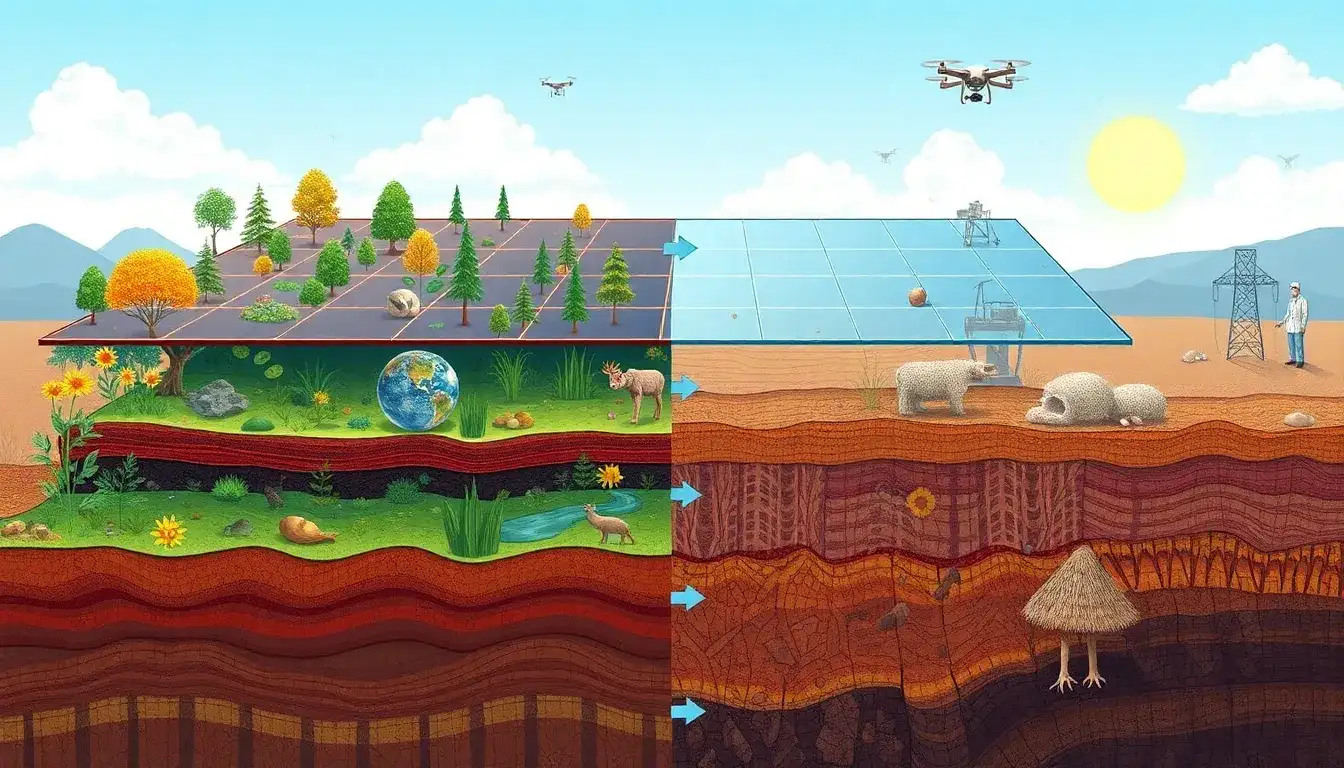
Perovskite solar panels, while promising high efficiency and low manufacturing costs, do pose some long-term environmental impacts that are not immediately apparent, primarily related to their material composition and lifecycle management.
Key Long-Term Environmental Concerns
1. Lead Content and Toxicity Risks
Most perovskite solar cells (PSCs) contain lead, which raises significant environmental and health concerns. If modules are damaged, lead can leach into the soil and groundwater, potentially contaminating ecosystems and posing risks to nearby communities. This lead contamination can occur during the use phase (if panels are broken), at disposal, or if panels catch fire, releasing toxic substances into the environment. This risk makes proper handling, end-of-life management, and recycling critical for minimizing environmental harm.
2. Environmental Impact Beyond Lead
- Production of perovskite-on-silicon tandem modules can have higher impacts in categories like global warming potential, freshwater consumption, fossil fuel depletion, and metal depletion compared to traditional silicon modules, although the increase is relatively small and often offset by higher energy generation over the panel’s lifetime.
- The highest environmental burdens, however, often come from the silicon wafer production rather than the perovskite layer itself.
3. Material Sustainability and Circular Economy Challenges
- The use of scarce or precious metals such as silver, gold, and indium in perovskite modules raises concerns about resource depletion. Researchers are exploring alternatives like aluminum, copper, or nickel to replace these metals for sustainability.
- Fluorine-tin oxide is preferred over scarcer indium-tin oxide for front electrodes to reduce environmental impact.
- The specialized glass used in perovskite panels is crucial but presents recycling challenges; establishing effective recycling pathways for this glass material will be important as deployment scales up.
4. Recycling and End-of-Life Management
Currently, standardized recycling programs for perovskite solar panels are lacking, unlike silicon or cadmium telluride (CdTe) panels. Developing recycling processes to recover and safely manage lead and other materials is essential to prevent long-term environmental contamination.
5. Lower Carbon Footprint and Energy Payback
Despite these concerns, perovskite solar panels show environmental benefits such as lower energy payback times (0.35 years for perovskite tandems versus 1.52 years for silicon panels) and lower lifetime carbon emissions (about 43% of silicon panels’ emissions), which supports their role in decarbonization efforts. However, these benefits do not eliminate the need to address toxicity and recycling issues.
Summary
While perovskite solar panels offer environmental advantages in terms of energy efficiency and carbon footprint, long-term environmental impacts primarily stem from lead toxicity risks, challenges in sustainable material sourcing, and the lack of established recycling infrastructure. These impacts are not immediately apparent at deployment but could become significant if panels are damaged or improperly disposed of. Addressing these issues requires robust recycling programs, safer material alternatives, and circular economy strategies integrated from the design stage onward.
In conclusion, perovskite solar panels have promising potential for sustainable energy but must overcome critical environmental challenges linked to lead management, material sustainability, and end-of-life recycling to avoid hidden, long-term environmental impacts.
Original article by NenPower, If reposted, please credit the source: https://nenpower.com/blog/are-there-any-long-term-environmental-impacts-of-perovskite-solar-panels-that-are-not-immediately-apparent/

