

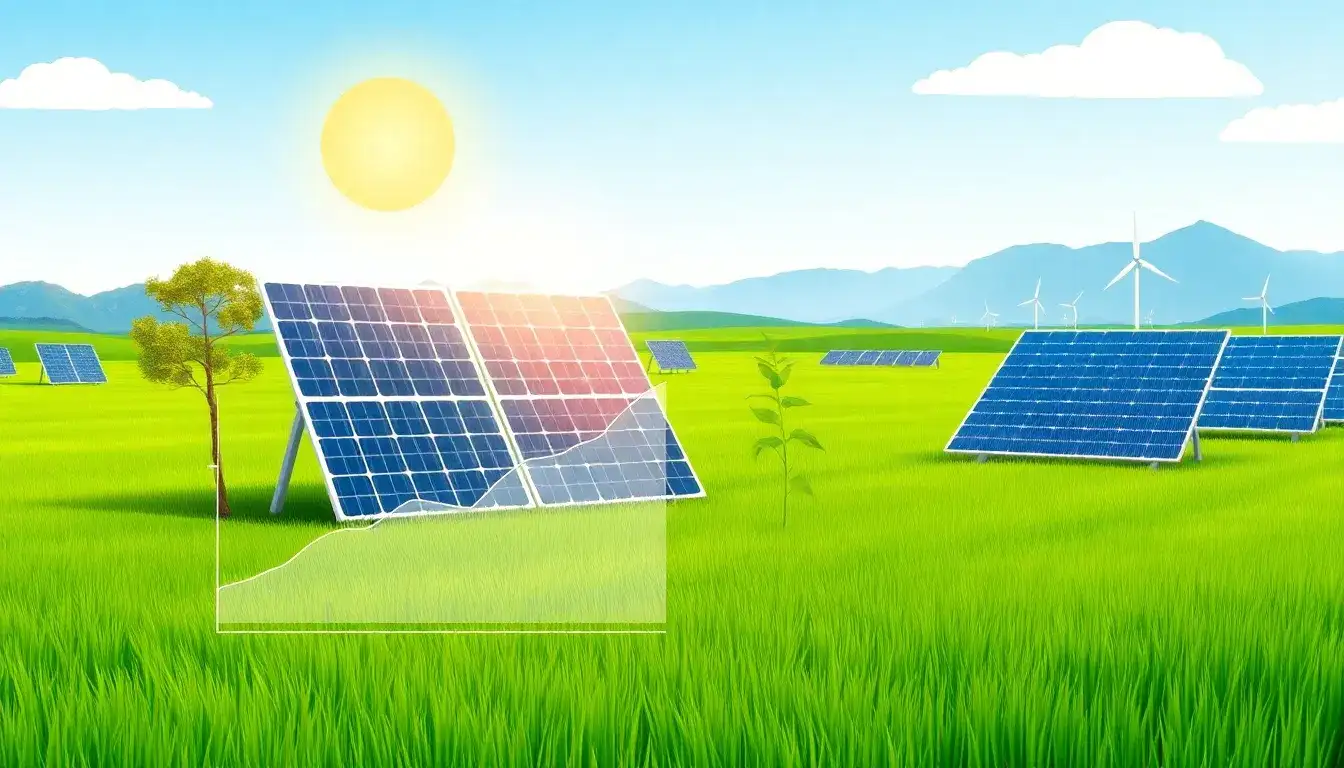
Bifacial solar panels have a higher upfront cost compared to traditional monofacial panels, but they offer several long-term benefits that can offset this initial investment:
Long-Term Benefits of Bifacial Solar Panels
1. Increased Energy Production
Bifacial solar panels capture sunlight on both their front and back surfaces, enabling them to generate up to 30% more energy than traditional panels. This is particularly effective in environments with reflective surfaces like snow, sand, or concrete, which bounce light onto the rear side of the panels, enhancing overall output.
2. Higher Lifetime Energy Yield
Due to their dual-sided light absorption and enhanced efficiency, bifacial panels provide a greater total energy yield over their operational lifetime. This means more electricity is generated per installed panel, improving the return on investment and lowering the levelized cost of energy (LCOE) over time.
3. Durability and Longevity
Bifacial panels typically feature robust glass-on-glass construction, making them more resistant to harsh weather, UV exposure, and mechanical stresses. Their durable design often leads to longer lifespans and extended warranties (sometimes up to 30 years), which reduces maintenance and replacement costs.
4. Reduced Potential-Induced Degradation (PID)
The double-glass construction and absence of a metal frame in many bifacial designs reduce PID, a common degradation mode in solar cells. This stability helps maintain panel performance over a longer time.
5. Versatility and Aesthetics
Bifacial panels can be installed in various configurations—flat, tilted, vertical—and in different settings including rooftops, ground mounts, and solar carports. Their transparent backsheets and frameless options also provide a modern, aesthetically pleasing look, adding value in architectural applications.
6. Efficient Land Use and Environmental Benefits
Because they generate more power per unit area, bifacial panels make more efficient use of available space, reducing the need for additional land in solar farms. This contributes to lower environmental impacts and supports sustainability goals.
7. Lower Long-Term Cost per kWh
While the initial cost is higher, the increased energy generation and durability translate into a lower cost per kilowatt-hour over the system’s lifetime, making bifacial panels a cost-effective choice in the long run.
Summary Table of Benefits vs. Upfront Cost
| Benefit | Description | Impact on Cost/Value |
|---|---|---|
| Increased Energy Production | Up to 30% more electricity from front + back light absorption | More electricity for same footprint → better ROI |
| Higher Lifetime Yield | More cumulative energy over panel lifespan | Greater long-term value |
| Durability | Double-glass design resists weather and damage | Reduced maintenance and replacement cost |
| Reduced PID | Less performance degradation over time | More stable energy output |
| Installation Versatility | Adaptable to multiple environments and mounting options | Optimizes site usage and aesthetics |
| Efficient Land Use | Higher output per area lowers land/resource needs | Environmental and economic benefits |
| Lower Cost per kWh | Increased output reduces energy cost over time | Offsets initial higher investment |
In conclusion, although bifacial solar panels cost more initially, their enhanced energy yield, longer lifespan, durability, and reduced degradation provide significant long-term economic and environmental benefits that often outweigh the higher upfront cost, particularly in suitable installation conditions such as reflective environments or large-scale projects.
Original article by NenPower, If reposted, please credit the source: https://nenpower.com/blog/are-there-any-long-term-benefits-that-offset-the-higher-upfront-cost-of-bifacial-solar-panels/

