

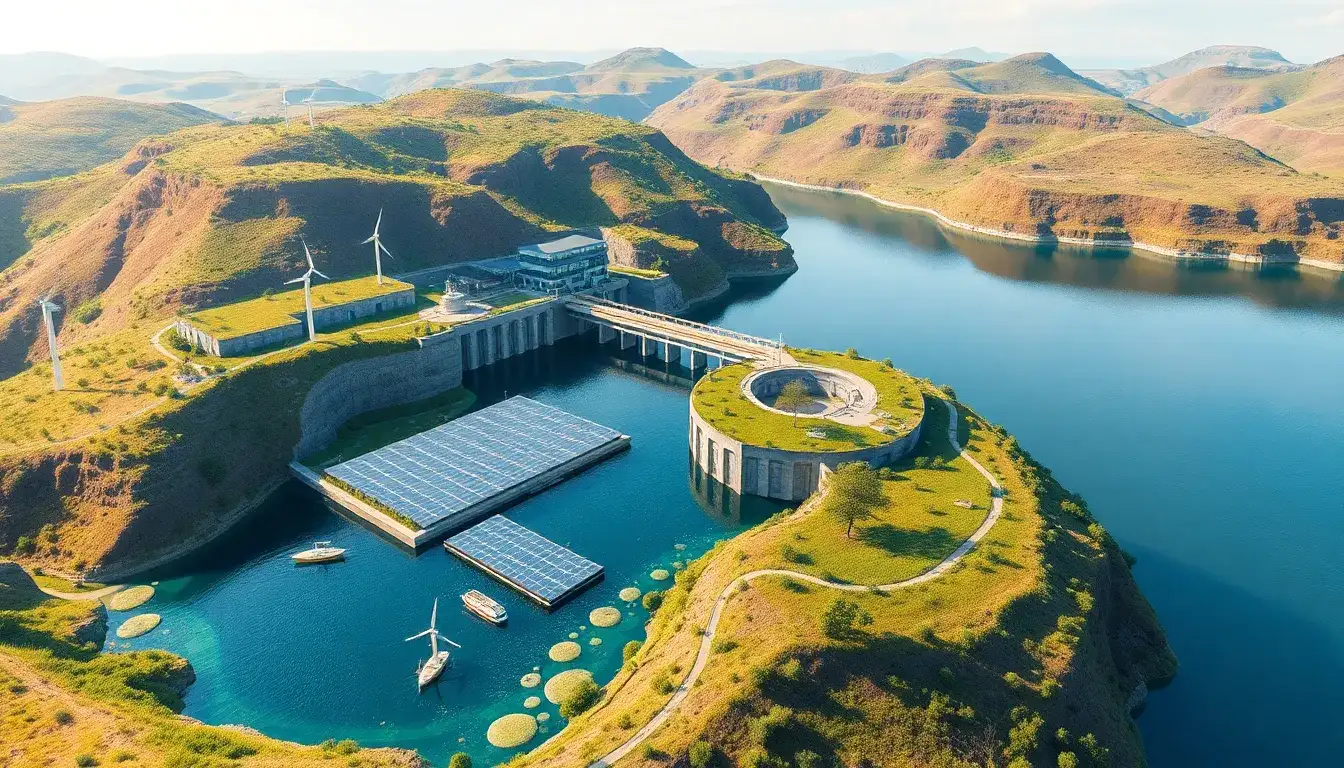
There are several innovative solutions being developed to reduce the environmental footprint of pumped hydroelectric energy storage (PHS), focusing especially on closed-loop systems, hybridization with renewable sources, and advanced operational technologies.
Closed-Loop Pumped Hydro Storage
Closed-loop pumped hydro storage systems operate independently of natural river systems, which significantly minimizes ecological disruption. Since they are not connected to existing river networks, they avoid many environmental issues such as habitat disturbance, water quality impacts, and fish migration problems. Moreover, closed-loop plants can be sited away from natural waterways, allowing placement in areas that better support grid needs without harming natural ecosystems. This approach represents a major innovation aimed at reducing the environmental footprint.
Enhanced Operational Flexibility and Digitalization
Innovative operational strategies are also being implemented to improve PHS environmental and grid benefits. This includes:
- Flexible operation enabled by advanced digital controls and retrofit technologies that allow plants to operate efficiently over a range of timescales (seconds to days), improving grid stability and better integration with variable renewable energy (VRE) sources like wind and solar.
- Digitalization and smart control systems improve efficiency and responsiveness, reducing energy losses and improving resource use.
Hybrid Systems and Renewable Integration
PHS is increasingly combined with variable renewable energy (VRE) sources to enhance renewable integration and reduce curtailment:
- Projects combining wind power and pumped hydro storage have demonstrated the capability to support 100% renewable power generation for extended periods (e.g., 24 days on El Hierro, Canary Islands).
- These hybrid systems allow load shifting, frequency regulation, and capacity firming, optimizing the use of renewable energy and minimizing reliance on fossil fuels.
Long Lifetime and Multi-Functional Benefits
Pumped hydro storage plants have a very long operational lifetime (40+ years for electromechanical equipment and up to 100 years for dams), which improves sustainability by reducing the frequency of resource-intensive rebuilding and construction. Additionally, some plants offer multi-functional water management benefits, such as irrigation control and water distribution that can complement environmental stewardship.
Summary Table of Innovations Reducing Environmental Footprint in PHS
| Innovation Area | Description | Environmental Benefit |
|---|---|---|
| Closed-Loop Systems | Operate without connecting to natural rivers; flexible siting | Minimal impact on ecosystems and water bodies |
| Digitalization & Retrofit | Advanced control for flexible, efficient operation | Reduced energy waste, better resource utilization |
| Hybrid PHS + VRE | Coupling with wind/solar for renewable firming and extended storage | Enhances renewable energy use, reduces curtailment |
| Long Plant Lifetimes | Durable infrastructure reducing need for frequent rebuilds | Lower long-term resource use and disturbance |
| Multi-functional Uses | Water management benefits such as irrigation support | Supports sustainable water stewardship |
In conclusion, innovations like closed-loop designs, digital control upgrades, and hybrid renewable integration are actively reducing the environmental footprint of pumped hydroelectric storage, while improving grid reliability and renewable energy utilization.
Original article by NenPower, If reposted, please credit the source: https://nenpower.com/blog/are-there-any-innovative-solutions-being-developed-to-reduce-the-environmental-footprint-of-pumped-hydroelectric-energy-storage/

