

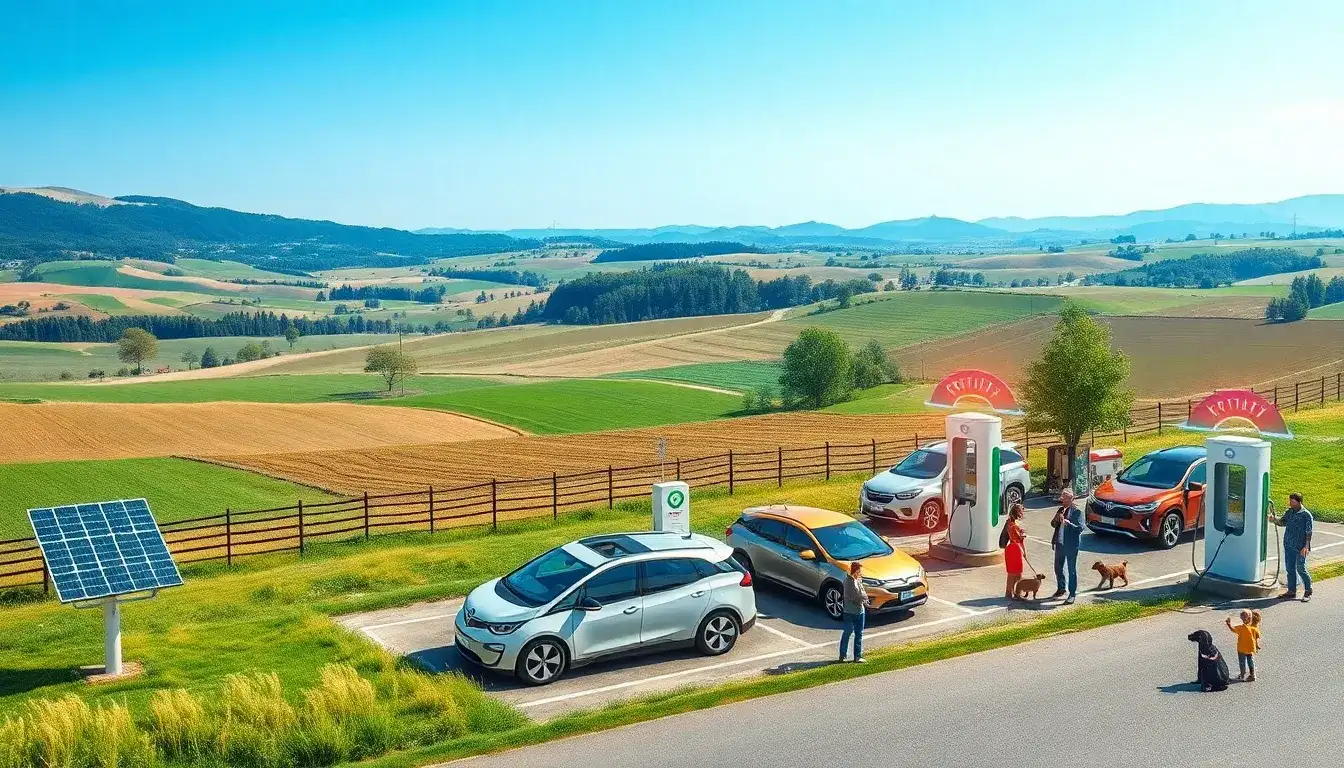
Currently, there are several incentives and programs that can benefit rural EV owners, although specific rewards for increasing charging frequency might not be explicitly outlined. Here are some relevant programs and incentives:
- Utility Company Incentives: In Kentucky, for example, Farmers Rural Electric Cooperative Corporation offers a $0.02 per kWh credit for charging during off-peak hours. This can encourage more frequent charging in rural areas by reducing costs.
- National and Local Funding Programs: The U.S. Department of Agriculture (USDA) provides loans and grants for rural areas to develop EV charging infrastructure through programs like the Rural Economic Development Loans and Grants Program and the Rural Business Development Grants Program. While these programs don’t directly incentivize frequent charging, they support the expansion of charging infrastructure in rural areas, which could indirectly encourage more frequent charging.
- Federal Funding and Tax Incentives: The Bipartisan Infrastructure Law and other federal initiatives provide funding for EV charging infrastructure. Additionally, the Inflation Reduction Act offers tax credits for installing EV charging equipment, which could benefit rural areas by promoting the installation of more charging stations.
To date, there are no specific incentives directly targeting rural EV owners for increasing charging frequency. However, these programs improve charging accessibility and affordability, which can naturally lead to more frequent usage.
Original article by NenPower, If reposted, please credit the source: https://nenpower.com/blog/are-there-any-incentives-specifically-for-rural-ev-owners-to-increase-charging-frequency/

