

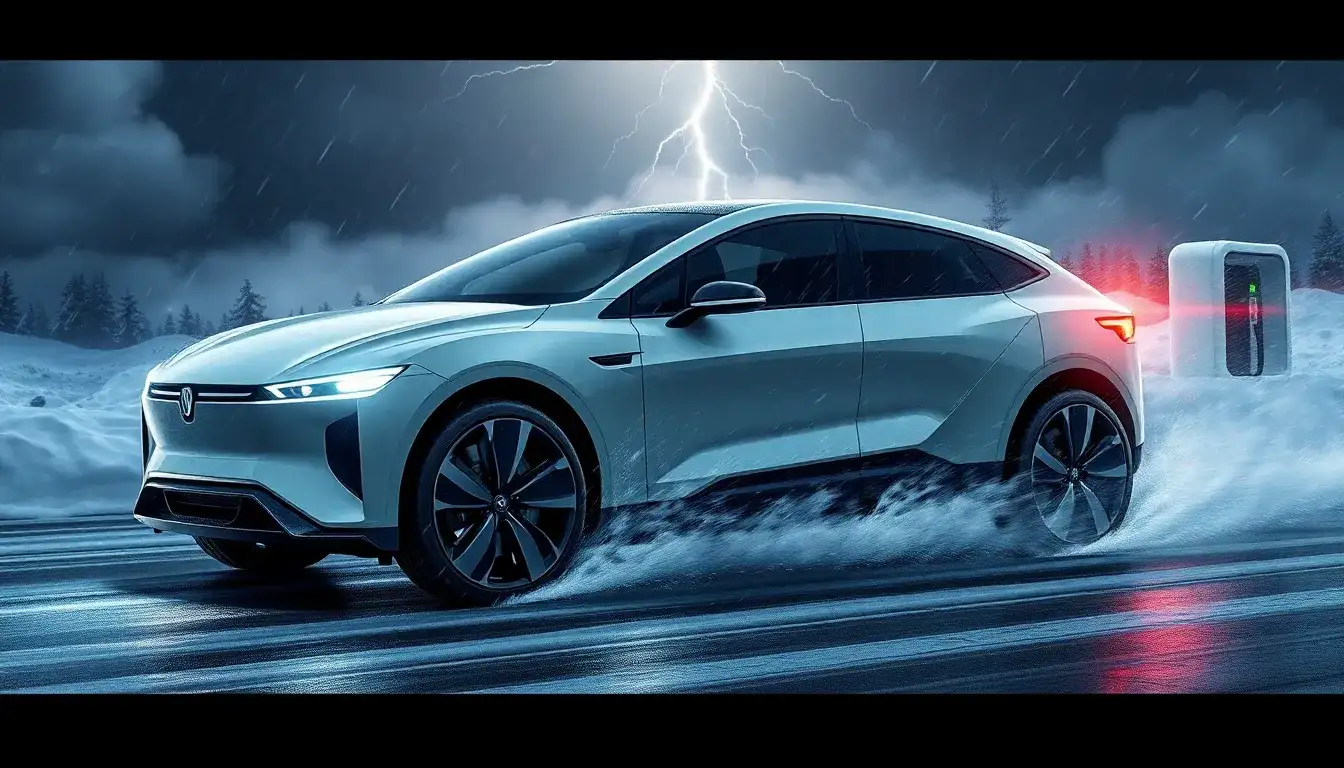
There are electric vehicles (EVs) that include technologies specifically designed to help them handle extreme weather conditions, though no EV is impervious to weather impacts on performance. Here are the key points regarding EVs and extreme weather handling:
Cold Weather
- Cold temperatures generally reduce EV battery efficiency and driving range significantly because chemical reactions in the battery cells slow down, and additional energy is required to heat the battery and cabin. This can halve the effective range at very low temperatures like -4°F.
- Many modern EVs incorporate thermal management systems that collect heat generated by the electric motor and other components to warm up the battery cells, helping mitigate cold temperature effects. This technology is crucial in cold climates such as Norway’s, where EV adoption is very high despite harsh winters.
- EVs often feature preconditioning capabilities, allowing the cabin and battery to be warmed while the vehicle is still plugged in, maximizing battery performance and range for cold starts.
- Practical measures such as parking indoors or under cover, and using connector covers to prevent charging ports from freezing are common recommendations to help EVs handle cold weather better.
Hot Weather
- High temperatures (around 40°C or 104°F) can accelerate battery degradation and damage cells if batteries overheat.
- To combat this, most new EVs have active thermal management systems that cool the battery cells to prolong their lifespan and maintain performance. However, this cooling uses additional battery energy and reduces driving range somewhat.
EVs Specifically Designed for Extreme Weather
While many EVs include robust thermal management systems as standard to help them operate across a wide temperature range, some vehicles and manufacturers emphasize extreme weather readiness:
- Electric SUVs and trucks designed for rugged, off-road, or cold climates tend to have enhanced insulation, stronger thermal regulation, and better preconditioning features.
- For example, certain electric trucks and off-road EVs are promoted with capabilities for snow, ice, and harsh environments, integrating durable battery enclosures and heating/cooling systems optimized for extreme conditions (though such models were not specifically detailed in the search results).
Summary
No EV is immune to range reductions or performance effects from extreme temperatures, but many modern electric vehicles are specifically engineered with thermal management systems, preconditioning features, and design considerations that help them handle both cold and hot weather conditions more effectively than earlier models. These technologies are critical for maintaining battery health, driver comfort, and vehicle range under extreme weather scenarios.
Original article by NenPower, If reposted, please credit the source: https://nenpower.com/blog/are-there-any-evs-specifically-designed-to-handle-extreme-weather-conditions/

