

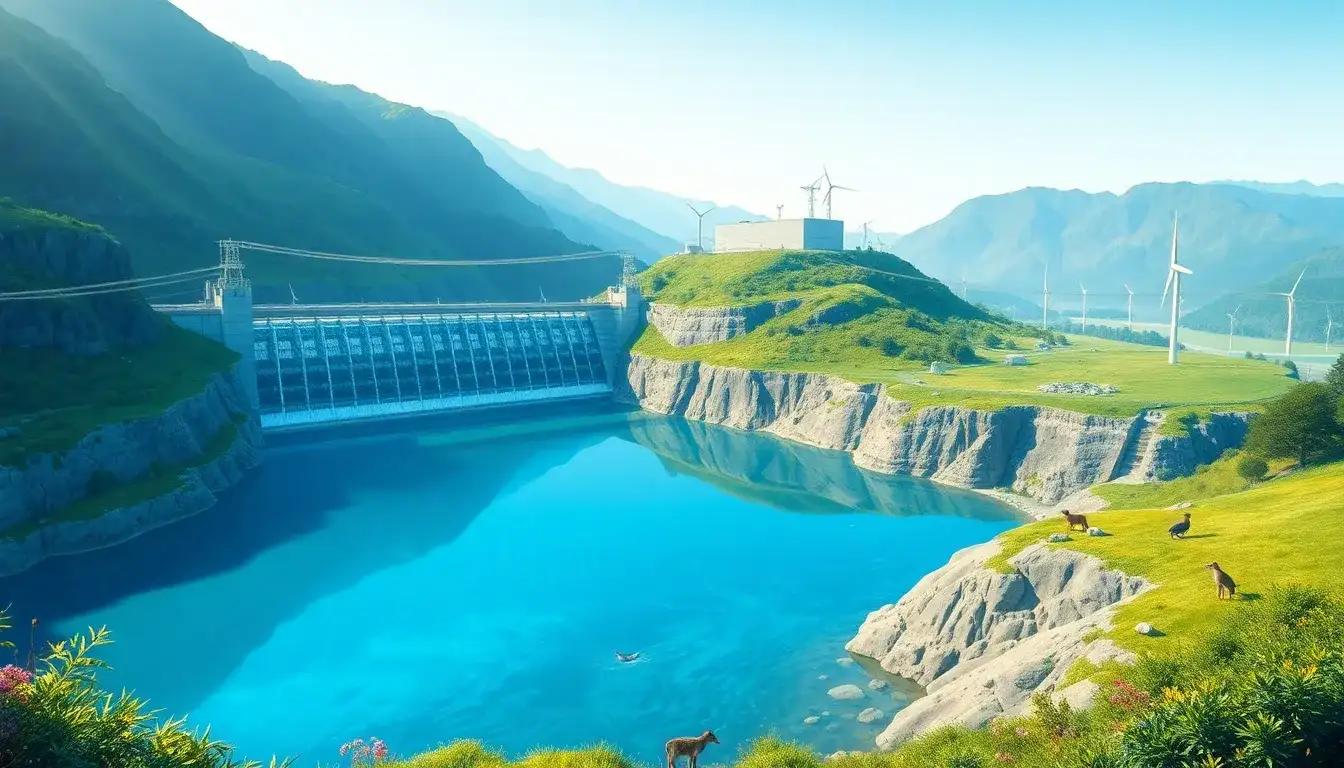
Pumped hydroelectric energy storage (PHES) has some associated environmental impacts, though generally it is considered one of the greener energy storage technologies. The key impacts can be grouped as follows:
Water Resource and Aquatic Ecosystem Effects
PHES, particularly in closed-loop systems, involves sourcing and cycling significant amounts of water between reservoirs. This can create complexities related to water rights and potentially impact aquatic habitats and ecosystem function due to alterations in water flow and quality. Open-loop systems, which use existing water bodies, may have more direct impacts on aquatic ecosystems and river ecology.
Greenhouse Gas Emissions
Life cycle assessments show that PHES has relatively low greenhouse gas emissions compared to other energy storage options, primarily because it stores energy using water movement rather than chemical reactions. However, emissions do occur mainly from construction activities (such as producing cement, steel, and concrete) and from electricity losses during pumping and generation. These losses are linked to the carbon intensity of the grid electricity used for pumping. As grids incorporate more renewable energy, these emissions are expected to decrease further.
Construction and Ecological Impacts
Building PHES facilities often requires damming, diversion of rivers, or excavation, which can disrupt local ecosystems, alter natural landforms, and pose risks like flooding during construction or operation. These activities can lead to loss of habitat and ecological disruption.
Social and Land Use Considerations
PHES development can affect local communities through land use changes and ecological disturbances. Underground pumped storage using abandoned mine pits has been studied as a way to mitigate surface impacts and improve social acceptance, though traditional surface systems generally have better economic and environmental performance due to economies of scale.
Summary Table of Environmental Impacts of PHES
| Environmental Aspect | Description | Notes |
|---|---|---|
| Water Resource Use and Quality | Water cycling between reservoirs; potential aquatic impact | More complex in closed-loop PSH |
| Ecosystem and Habitat Alteration | Dams/rivers diverted; habitat loss and ecological disruption | Construction and operation phases |
| Greenhouse Gas Emissions | Low lifecycle emissions, mainly from construction and energy loss | Emissions decline with cleaner grid |
| Construction Materials | Use of cement, steel causes environmental burden | Significant in construction phase |
| Flooding and Safety Risks | Possible major flooding during/after construction | Requires careful risk management |
| Social Impact | Land use, local community disruption | Underground storage can reduce surface impacts |
In conclusion, while PHES is among the more environmentally friendly energy storage options due to low operational emissions and long life, it does involve environmental trade-offs, especially related to water use, ecosystem disruption, and construction materials. Advances like underground pumped storage and cleaner grid electricity can help reduce these impacts over time.
Original article by NenPower, If reposted, please credit the source: https://nenpower.com/blog/are-there-any-environmental-impacts-associated-with-pumped-hydroelectric-energy-storage/

