

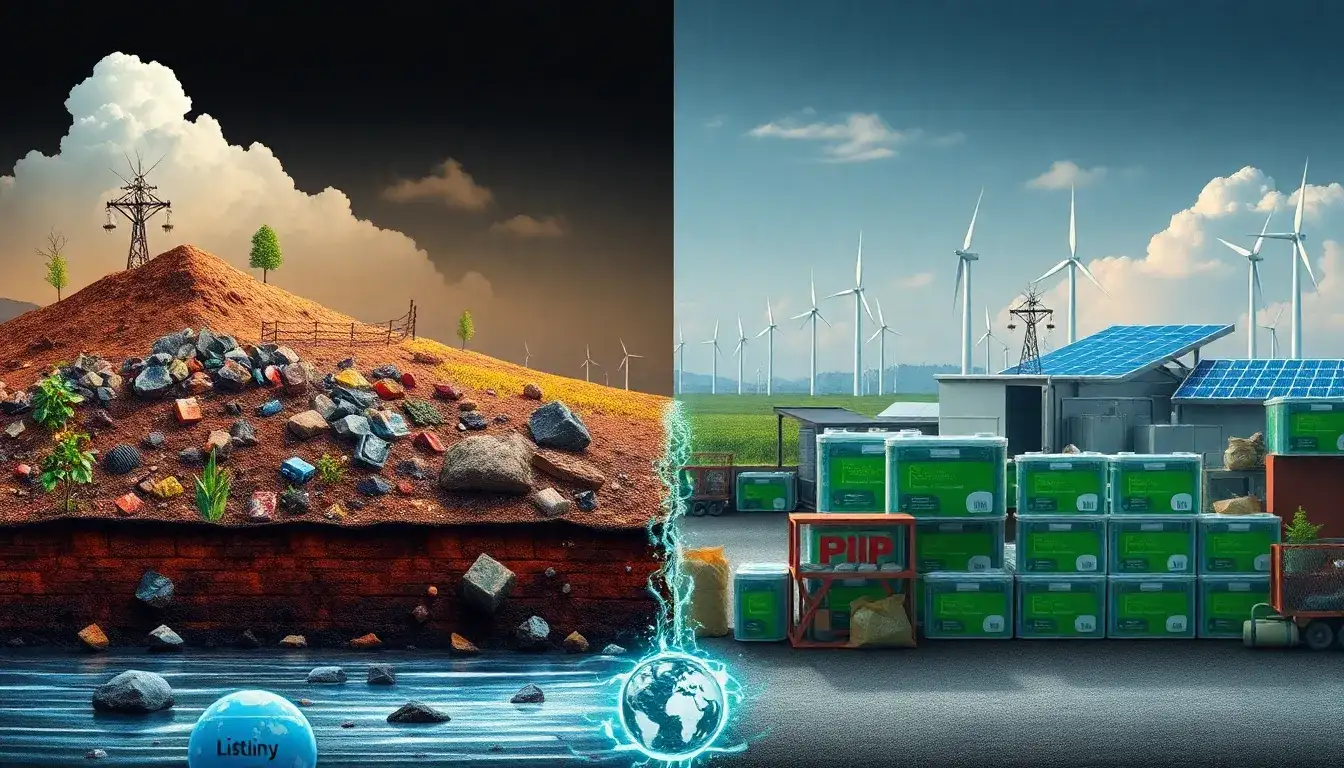
Disposal of both lithium-ion and lead-acid batteries involves environmental costs, but the nature and extent of these impacts differ significantly.
Environmental Costs of Lithium-Ion Battery Disposal
- Toxic Chemical Leakage: Lithium-ion batteries contain toxic metals such as cobalt, manganese, and nickel. When improperly disposed of, these metals can leak into soil and water, contaminating ecosystems and posing risks to human health.
- Fire Hazards: Lithium-ion batteries pose a serious fire risk if they end up in landfills. These batteries can ignite and cause fires that release harmful smoke and toxic gases, damaging air quality and local habitats. Statistics show increasing landfill fires caused by lithium-ion batteries, including 124 fires over a few years at one site in the Pacific Northwest of the U.S.
- Resource and Energy Intensity: Production and disposal are energy-intensive. Lithium extraction is water- and chemical-intensive, causing environmental degradation and community disturbances in mining areas. Recycling lithium-ion batteries reduces environmental impact compared to mining new materials but is still inefficient and resource-demanding.
- Environmental Contamination and Ecosystem Disruption: Improper disposal leads to pollution of soil, air, and water systems, resulting in ecosystem damage, biodiversity losses, soil fertility decline, and risks to agriculture and food security.
Environmental Costs of Lead-Acid Battery Disposal
While the search results don’t provide detailed comparative data on lead-acid battery disposal, it is well known from broader environmental literature that:
- Lead-acid batteries contain lead and sulfuric acid, both highly toxic substances. Improper disposal can cause lead contamination of soil and water, which is especially harmful due to lead’s persistence and toxicity.
- Recycling of lead-acid batteries is more established globally than lithium-ion recycling. Lead-acid batteries are nearly 100% recyclable, which reduces environmental costs if properly managed.
- However, lead poisoning remains a critical concern in improper disposal or informal recycling processes, affecting soil quality and human health significantly.
Summary Comparison
| Aspect | Lithium-Ion Batteries | Lead-Acid Batteries |
|---|---|---|
| Toxic substances | Cobalt, nickel, manganese (toxic metals) | Lead, sulfuric acid (highly toxic and persistent) |
| Environmental risks | Chemical leakage, fire hazard, toxic smoke | Lead poisoning, acid leakage |
| Recycling efficiency | Low, recycling still developing and resource-intensive | Very high, well-established recycling infrastructure |
| Common disposal issues | Landfill fires, ecosystem contamination | Soil and water contamination if not recycled properly |
| Production impact | High water and chemical use in mining | Lead mining also polluting though recycling reduces impact |
In conclusion, lithium-ion batteries pose significant environmental risks upon disposal including toxic leakage, fire hazards, and ecosystem damage, compounded by challenges in efficient recycling. Lead-acid batteries also have serious toxicity issues, but a more mature recycling system helps mitigate some environmental costs. Both battery types require proper disposal and recycling to minimize environmental harm.
Original article by NenPower, If reposted, please credit the source: https://nenpower.com/blog/are-there-any-environmental-costs-associated-with-the-disposal-of-lithium-ion-batteries-compared-to-lead-acid-batteries/

