

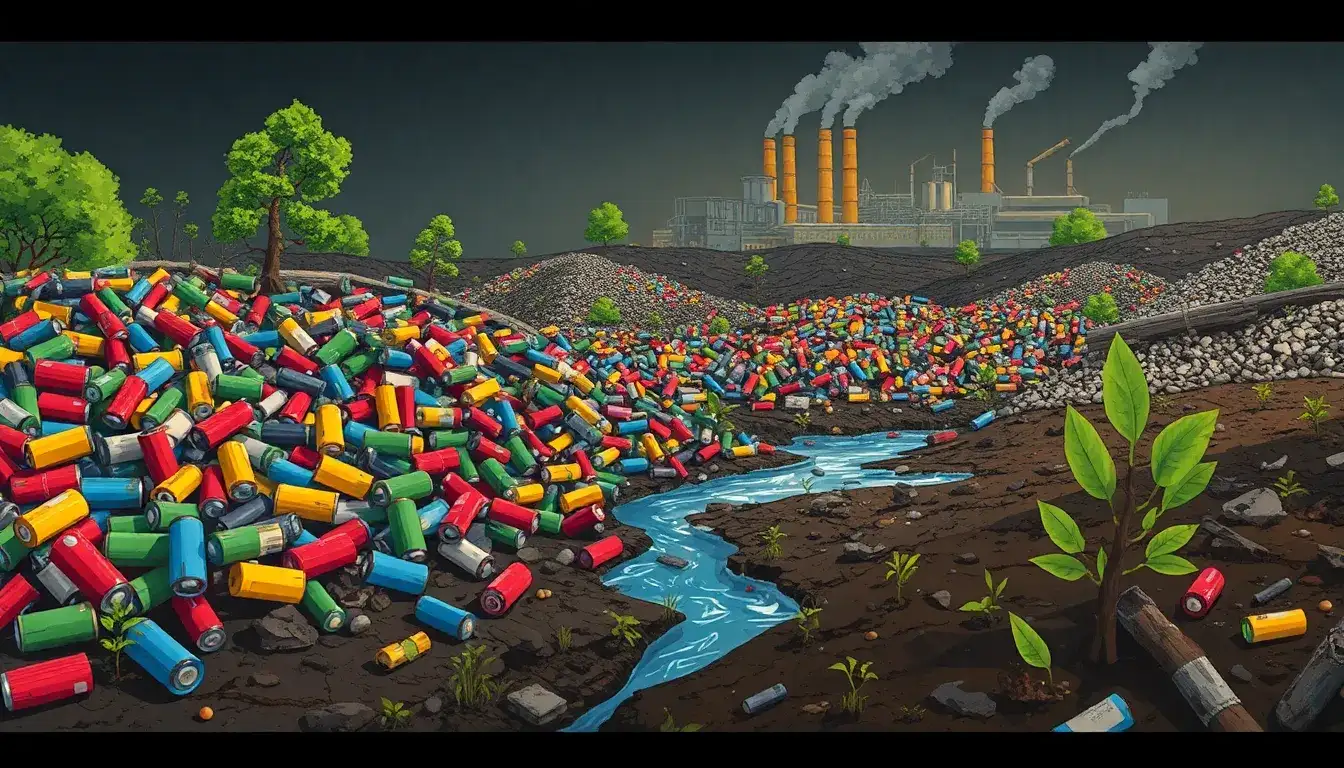
Yes, there are significant environmental concerns associated with the disposal of lithium-ion batteries. These concerns can be summarized as follows:
Environmental Concerns
- Toxic Leachates and Fires: Lithium-ion batteries can release toxic heavy metals such as lead, cobalt, nickel, and copper into the environment if improperly disposed of in landfills. These metals can contaminate soil and groundwater. Moreover, lithium-ion batteries can cause landfill fires, which are difficult to control and can burn for years.
- Resource Depletion and Pollution: The mining of lithium, cobalt, and nickel for battery production contributes to environmental degradation, including water pollution and soil degradation. This can disrupt local ecosystems and affect biodiversity.
- Greenhouse Gas Emissions: The production of lithium-ion batteries is energy-intensive, often relying on non-renewable energy sources, which increases greenhouse gas emissions compared to traditional battery types.
- Recycling Challenges: While recycling lithium-ion batteries can mitigate some environmental impacts by recovering valuable materials and reducing virgin material extraction, it is complex due to the variety of battery chemistries and physical designs. The process can also release toxic fumes if not handled properly.
Benefits of Recycling
Despite these challenges, recycling lithium-ion batteries is shown to significantly reduce environmental impacts. It can decrease greenhouse gas emissions by 58% to 81%, use 72% to 88% less water, and consume 77% to 89% less energy compared to mining and processing virgin materials.
In summary, the disposal of lithium-ion batteries poses environmental concerns, but recycling offers a sustainable solution to mitigate these impacts.
Original article by NenPower, If reposted, please credit the source: https://nenpower.com/blog/are-there-any-environmental-concerns-associated-with-the-disposal-of-lithium-ion-batteries/

