

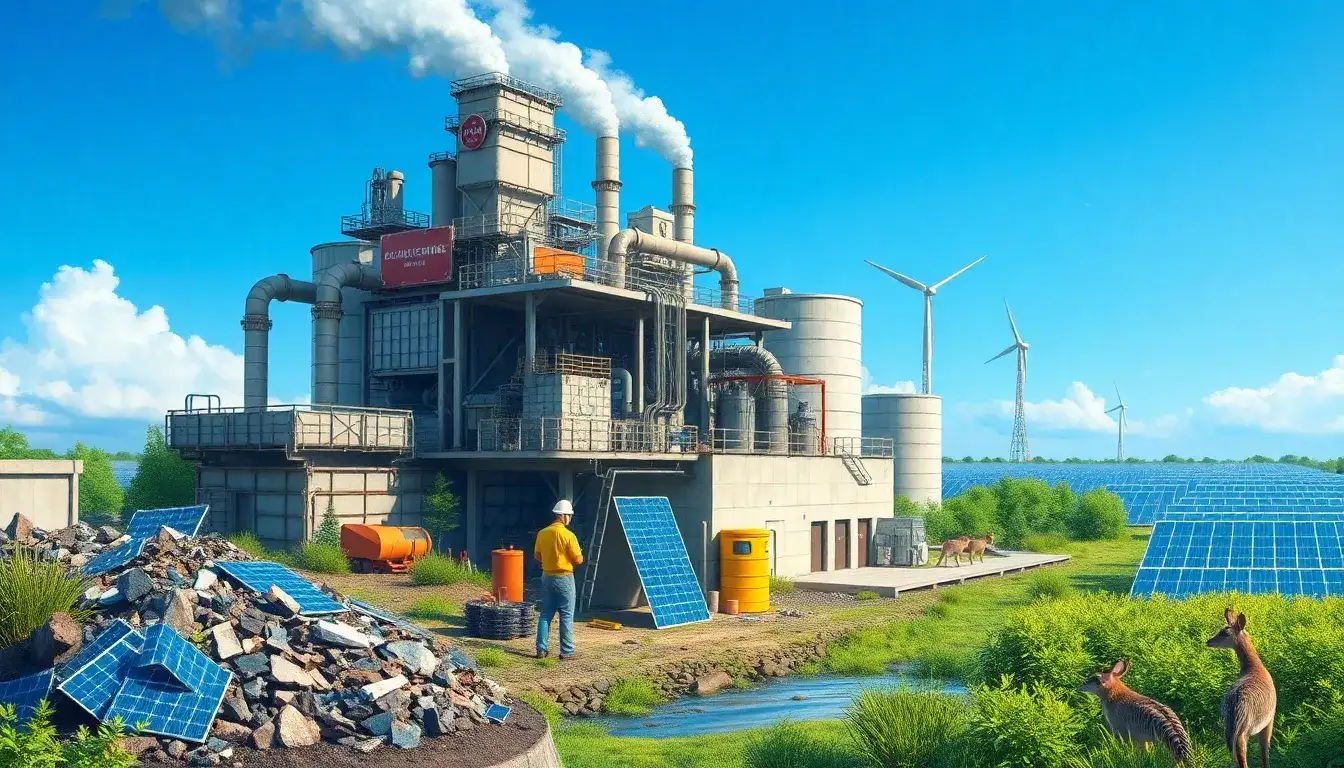
Environmental Concerns Associated with Mechanical PV Panel Recycling
- Material Complexity and Hazardous Substances: PV panels can contain hazardous substances, including heavy metals such as lead and cadmium. Improper handling during mechanical recycling can risk the release of these toxic materials into the environment if not carefully managed. This necessitates strict controls and safety protocols during the recycling process.
- Energy Use and Emissions: Although recycling reduces overall energy consumption compared to producing materials from virgin resources, mechanical recycling processes still require energy for operations such as crushing and sorting. The associated carbon emissions depend on the energy sources used and the efficiency of recycling facilities.
- Waste and Residue Management: Mechanical recycling does not always achieve complete recovery. Some residual waste and fine particulates may be generated, which need safe disposal or further processing to avoid environmental contamination.
- Lack of Standardization and Economic Viability: Variation in panel designs and materials complicates mechanical recycling, potentially leading to inefficiencies and increased environmental impact due to processing challenges and the need for specialized handling.
- Logistical Challenges: The distributed nature of solar panel installations increases the environmental footprint from transportation to recycling centers, especially if facilities are distant. This adds emissions and complicates collection efforts, potentially undermining environmental gains.
Benefits That Outweigh These Concerns
Despite these challenges, mechanical recycling of PV panels provides clear environmental advantages when compared to landfill disposal or incineration:
- It recovers up to 90-95% of glass and semiconductor materials, reducing demand for virgin materials and mining-related environmental damage.
- Recycling prevents toxic substances in panels from leaching into soil and groundwater, protecting ecosystems and human health.
- The process reduces CO2 emissions significantly—for example, approximately 1,200 pounds of CO2 emissions are avoided per ton of recycled panels compared to producing new materials from scratch.
- It supports the circular economy by conserving resources and lowering the overall environmental impact of solar energy production.
Summary
Mechanical recycling of solar PV panels does carry some environmental concerns, primarily related to potential toxic material release, energy use, and logistics. However, with proper management, controlled processes, and improved recycling infrastructure, these concerns are mitigated and outweighed by substantial environmental benefits in reducing waste, conserving resources, and lowering greenhouse gas emissions.
Thus, mechanical recycling is a key component in sustainable end-of-life management for solar panels, essential for maintaining the environmental integrity of solar energy systems.
Original article by NenPower, If reposted, please credit the source: https://nenpower.com/blog/are-there-any-environmental-concerns-associated-with-mechanical-pv-panel-recycling/

