

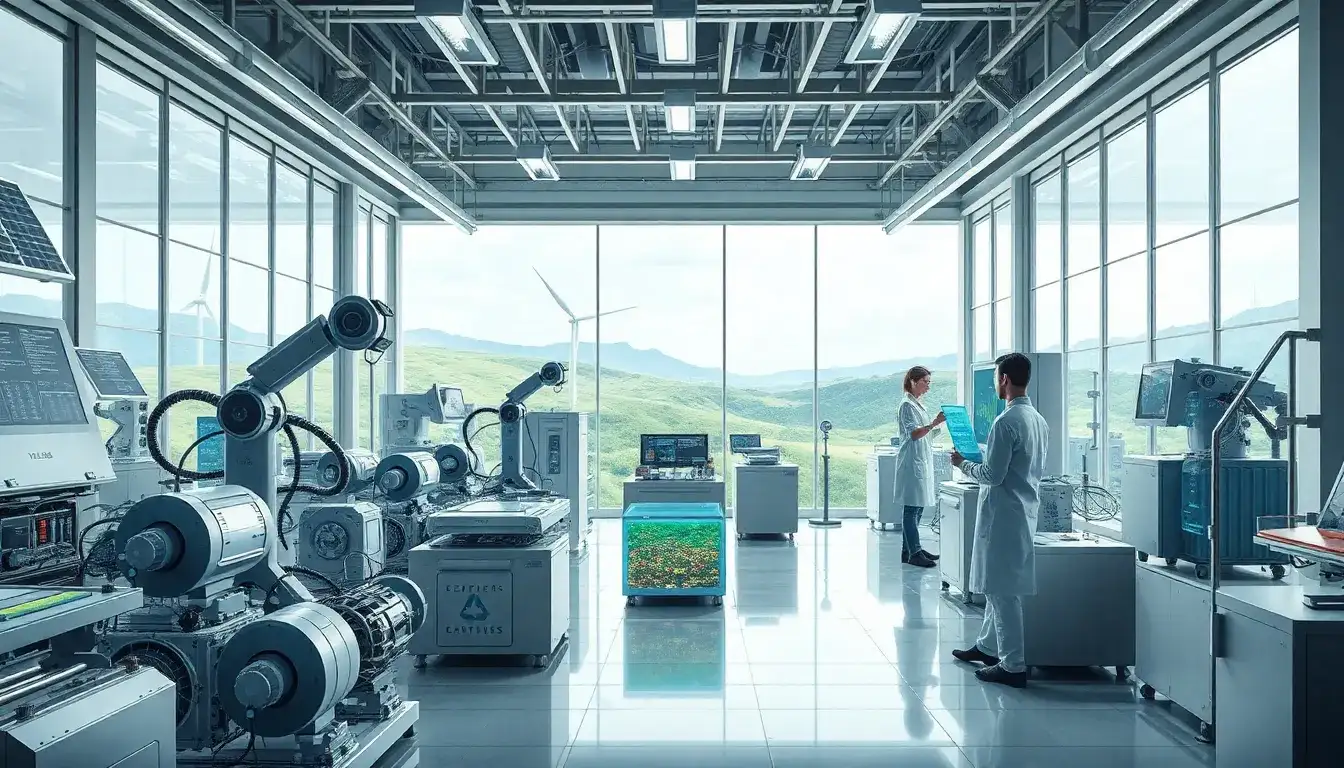
Emerging technologies show strong potential to significantly reduce the carbon footprint of electric vehicle (EV) battery production through innovations in materials, processes, and digital tools.
1. Advanced Recycling Technologies
A key breakthrough is Ascend Elements’ patented Hydro-to-Cathode® process, which incorporates recycled materials to manufacture new EV battery cathode materials. This method currently achieves a 49% reduction in carbon emissions compared to traditional cathode manufacturing that relies on primary raw materials. The company targets up to a 90% reduction in the carbon footprint of battery material production by 2030 through further advancements in recycling and process improvements.
2. Artificial Intelligence and Digital Twins
Emerging digital technologies such as Artificial Intelligence (AI) and digital twins are reshaping battery manufacturing. AI helps optimize production processes by improving efficiency, reducing energy consumption, and predicting material performance to minimize waste. Digital twins—virtual replicas of manufacturing systems—enable real-time monitoring and simulation, allowing for fine-tuning that reduces resource usage and emissions during battery production.
3. Advanced Battery Chemistries
Innovations in battery chemistry can also contribute to carbon footprint reduction. By developing cathode and anode materials that require less energy-intensive mining and processing, or that use more abundant and less environmentally impactful elements, manufacturers can lower the overall emissions associated with battery production. These advanced chemistries, combined with recycling and digital enhancements, support a more sustainable battery lifecycle.
4. Industry-Wide Efforts and Targets
Companies and researchers acknowledge that EV battery production is a high-emission activity, with studies showing that nearly half of an EV’s carbon emissions can come from the battery manufacturing process itself. This awareness drives continuous efforts to decarbonize through cleaner energy use in factories, greener raw material sourcing, and more efficient manufacturing technologies.
In summary, emerging technologies including advanced recycling processes like Hydro-to-Cathode®, AI-driven manufacturing optimization, digital twins, and improved battery chemistries are all converging to significantly reduce the carbon footprint of EV battery production. These innovations promise to make EV batteries more sustainable and accelerate the decarbonization of the overall electric vehicle supply chain.
Original article by NenPower, If reposted, please credit the source: https://nenpower.com/blog/are-there-any-emerging-technologies-that-could-significantly-reduce-the-carbon-footprint-of-ev-battery-production/

