

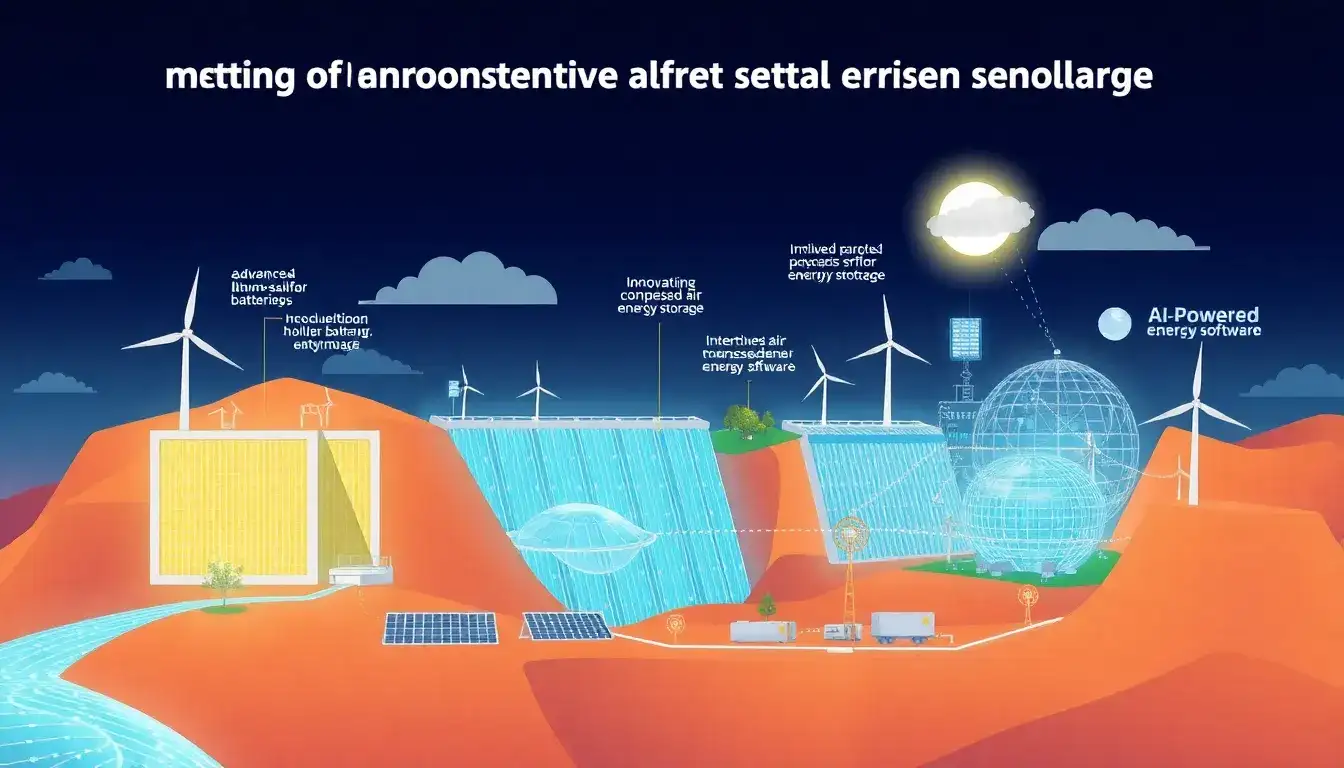
While pumped hydro storage (PHS) remains a prominent form of energy storage due to its cost-effectiveness and scalability, several emerging technologies are gradually gaining traction and could potentially challenge its cost leadership in the future. These include:
Emerging Energy Storage Technologies
1. Lithium-Ion Batteries
- Advancements and Costs: Lithium-ion battery costs have fallen significantly, with a decline of over 90% in the last decade. This trend is expected to continue, driven by increased manufacturing capacity and economies of scale.
- Applications: While initially used mainly in portable applications, lithium-ion batteries are increasingly being deployed in grid-scale applications, offering flexibility in terms of location and scalability.
2. Flow Batteries and Other Long-Duration Storage
- Technology: Flow batteries, such as vanadium redox batteries, are designed for long-duration energy storage (up to several days). They offer a scalable and potentially cost-competitive solution, especially when compared to PHS in regions where land requirements are limited.
- Cost and Adoption: Though currently more expensive than PHS, their costs are decreasing as technology improves, making them more viable alternatives for long-duration storage needs.
3. Compressed Air Energy Storage (CAES)
- Mechanism: CAES involves storing compressed air in underground caverns and expanding it to generate electricity when needed. It is less reliant on geographical features compared to PHS.
- Cost-Effectiveness: CAES can be cost-effective for large-scale, long-duration storage but requires suitable geological formations. Advances in isothermal compression technology have improved its efficiency.
4. Molten Salt and Phase-Change Thermal Storage
- Application: These technologies store thermal energy, which can be converted into electricity as needed. They are particularly useful in systems integrated with solar thermal plants or as district heating solutions.
- Cost and Scalability: They offer flexibility in design and can be more scalable than PHS in certain settings, especially where site-specific installations are less feasible.
5. Sodium-Ion Batteries and Other Alternatives
- Potential: Sodium-ion batteries are under development as an alternative to lithium-ion, potentially offering cost savings due to abundant sodium resources.
- Challenges: While promising, these technologies are not yet widely commercialized, and their long-term cost leadership is uncertain.
Challenges for Emerging Technologies
- Scalability: One of the major challenges for new technologies is achieving the same level of scalability as PHS, which often requires large-scale infrastructure investments.
- Cost Reduction: Continuous cost reduction is crucial for emerging technologies to become competitive with PHS.
- Regulatory Support: Government policies and incentives play a significant role in fostering the development and adoption of these technologies.
In summary, while PHS remains a standard due to its established cost-effectiveness and scalability, emerging technologies are steadily improving and could challenge its leadership as they become more cost-competitive and widely adopted.
Original article by NenPower, If reposted, please credit the source: https://nenpower.com/blog/are-there-any-emerging-technologies-that-could-challenge-the-cost-leadership-of-pumped-hydro-storage/

