

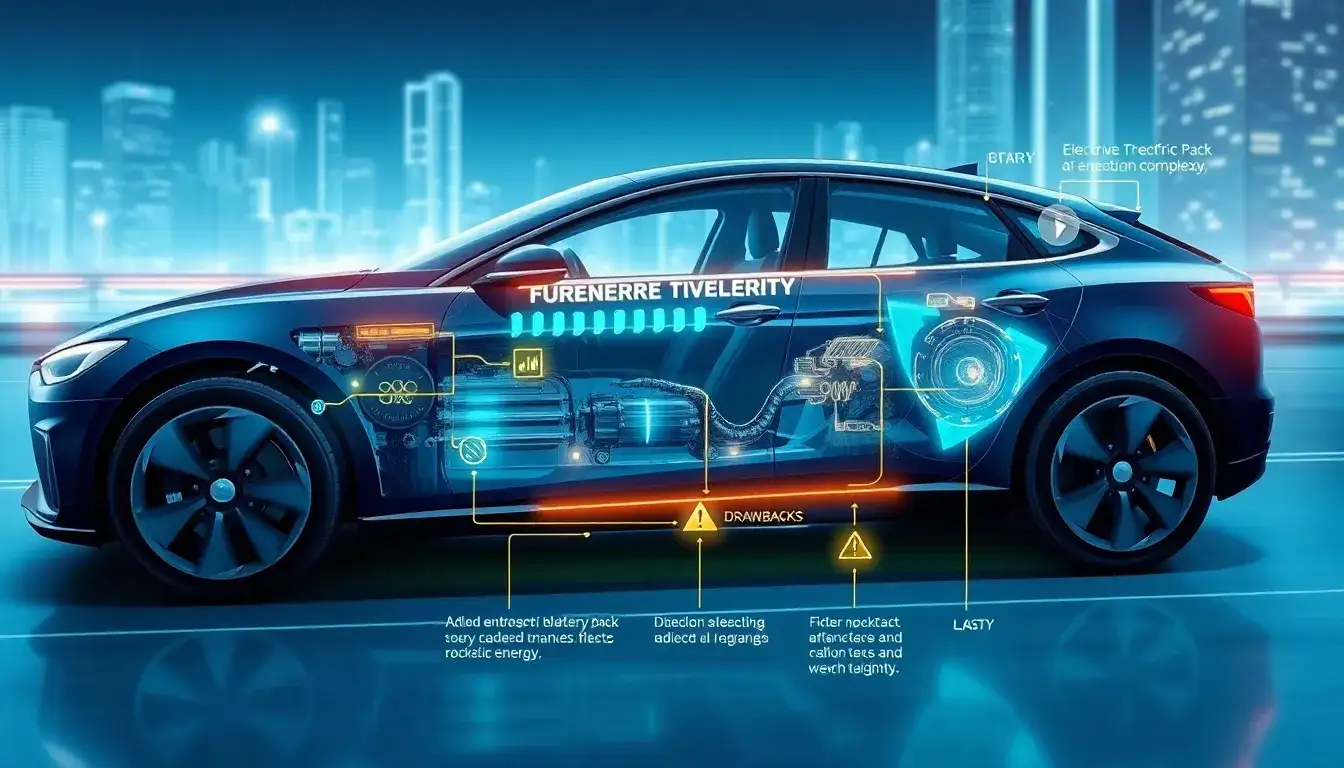
Regenerative braking systems, commonly found in electric and hybrid vehicles, have several downsides despite their advantages in energy recovery and brake wear reduction. The main disadvantages include:
- Reduced effectiveness at low speeds: When a vehicle is traveling slowly, it has less kinetic energy, resulting in the regenerative braking system generating less energy to recharge the battery. This limits how much energy can be recovered during city driving or slow traffic situations.
- Potentially less stopping power: Regenerative braking usually provides adequate deceleration during gradual stops, but it may not deliver the same immediate stopping force as traditional hydraulic brakes. Drivers may need to press the brake pedal harder to achieve the same level of braking, especially noticeable in older or less advanced systems, although newer models have improved this issue significantly.
- Braking “feel” differences: Many drivers notice a different sensation in the brake pedal when using regenerative braking, sometimes feeling less smooth or responsive compared to conventional brakes. This can affect driving comfort until users adjust or newer systems enhance responsiveness.
- Complexity and cost: Regenerative braking systems are more complex and can be more expensive to produce and maintain than traditional braking systems. This is due to the need for additional electric motors, controllers, and battery systems to capture and store energy effectively.
- Inconsistent energy recovery: The amount of energy recaptured depends on how the driver applies the brakes. Typically, as drivers apply more brake force approaching a stop, the regenerative system becomes less efficient and conventional brakes must compensate. External factors like terrain, temperature, and vehicle conditions also influence effectiveness.
- Less use of traditional brakes can lead to corrosion: Because regenerative braking reduces the usage of conventional brake pads and rotors, moisture and rust can build up more easily on these components, potentially causing maintenance issues if not properly inspected and serviced regularly.
In summary, while regenerative braking offers significant benefits such as enhanced energy efficiency and reduced brake wear, its limitations include lower effectiveness at low speeds, potentially less immediate stopping power, different pedal feel, increased system complexity, and maintenance considerations related to infrequent use of conventional brakes.
Original article by NenPower, If reposted, please credit the source: https://nenpower.com/blog/are-there-any-downsides-to-regenerative-braking-systems/

