

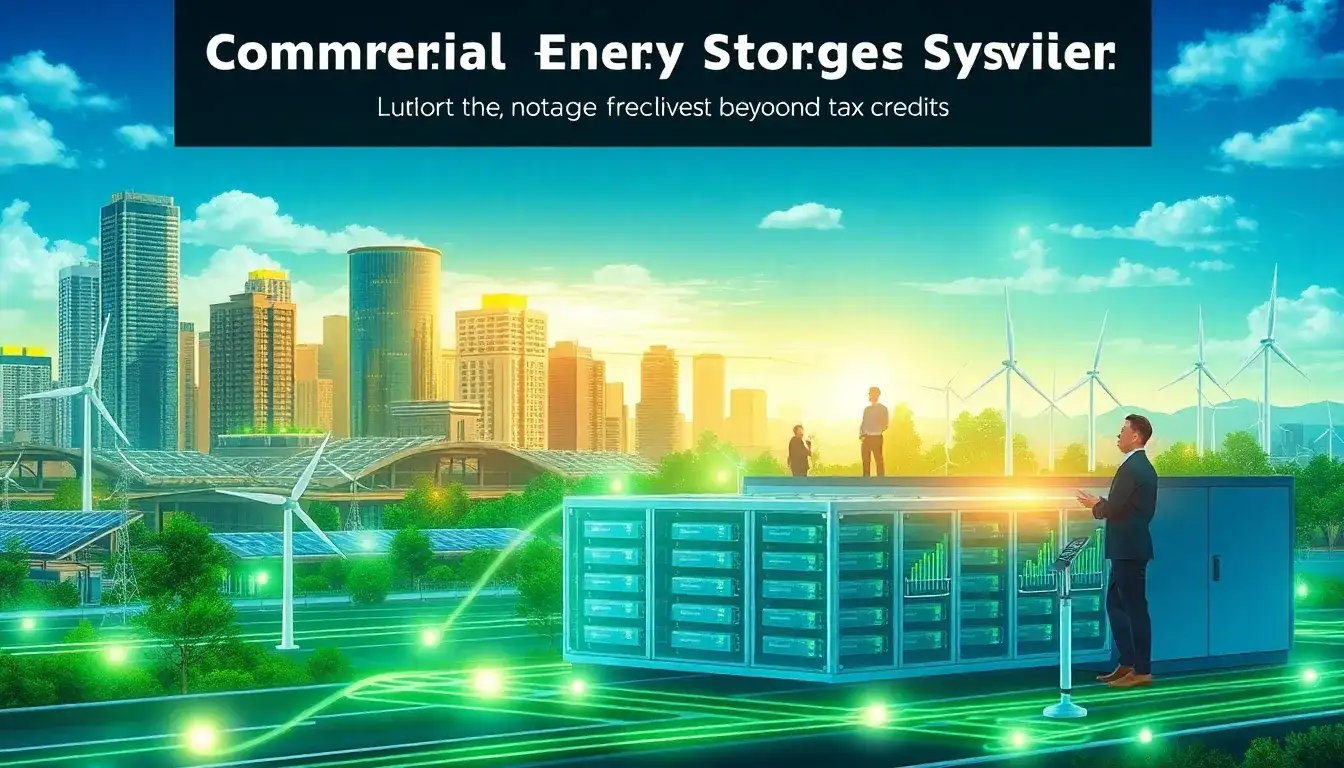
Yes, there are multiple additional incentives for commercial energy storage systems beyond federal tax credits. These include state-level rebates, performance-based incentives, participation in demand response and capacity markets, and utility programs. Key details include:
State and Utility Rebates and Incentives
- Many states offer upfront rebates or performance-based incentives for commercial battery storage installations. For example:
- California’s Self-Generation Incentive Program (SGIP) provides dollar-per-kilowatt rebates, including additional funds for high fire threat areas and low-income households.
- Connecticut offers up to 50% savings on installation for businesses.
- Massachusetts has financial incentives and financing solutions to reduce installation costs and support grid stability.
- New York State provides incentives through NYSERDA’s Retail Energy Storage Incentive, funding standalone or paired energy storage systems up to 5 MW, focusing on load management and shifting on-site renewable generation.
Participation in Grid Programs
- Commercial storage can generate revenue and receive payments by participating in:
- Demand response programs where the storage system helps reduce load during peak times.
- Virtual Power Plant (VPP) participation where aggregated storage systems provide grid services.
- Capacity markets, which pay for reliable availability of energy capacity, offering additional financial benefits.
Other Financial Incentives and Provisions
- Some projects may receive additional bonus tax credits for meeting domestic content requirements or serving low-income communities, further improving cost-effectiveness.
- Nonprofits and municipalities (tax-exempt entities) can utilize the Direct Pay provision to receive the value of the tax credit as a direct cash payment, lowering barriers to investment.
- The federal Clean Electricity Investment Credit (CEIC) offers credit rates starting at 6% of project cost, increasing up to 50% if certain conditions (like US-made materials or energy communities) are met, which replaced earlier IRA incentives in 2025.
In summary, beyond tax credits, commercial energy storage systems can benefit from a variety of state rebates, utility programs, participation in grid support markets, and enhanced federal incentive provisions that collectively reduce upfront costs and create ongoing revenue streams.
Original article by NenPower, If reposted, please credit the source: https://nenpower.com/blog/are-there-any-additional-incentives-for-commercial-energy-storage-systems-beyond-tax-credits/

