

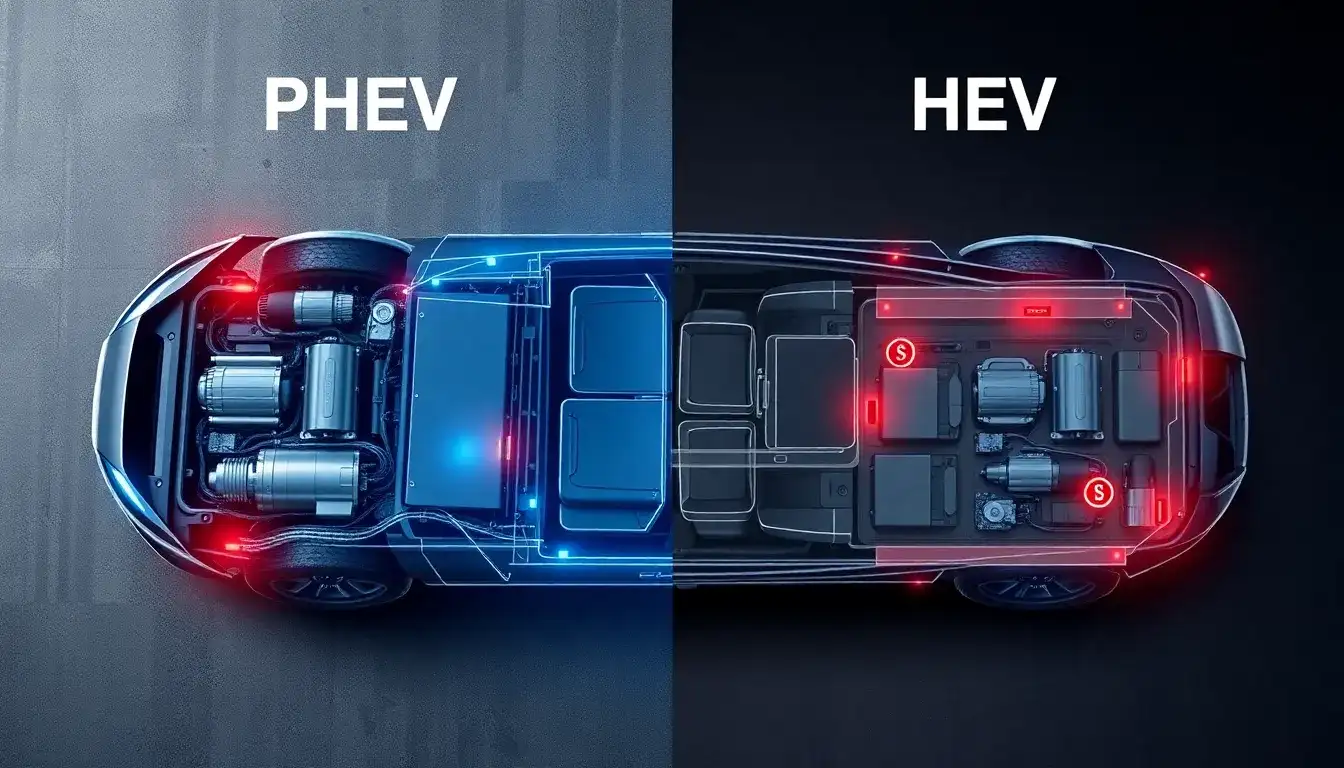
Based on available data, plug-in hybrid electric vehicles (PHEVs) may exhibit slightly higher electrical component failure rates compared to hybrid electric vehicles (HEVs) in practice, though specific electrical-component reliability data remains limited. Key factors include:
Complexity and Usage Patterns
PHEVs require larger batteries and more robust charging systems to support extended electric-only ranges (20–30 miles), increasing component exposure to stress. HEVs, with smaller batteries and no external charging, operate simpler electrical systems with fewer failure points.
Reliability Trends
Recent surveys indicate PHEVs report 70% more problems than gas-only vehicles, while HEVs (non-PHEV) generally match or exceed conventional vehicle reliability. Though this data groups all issues, electrical faults (e.g., isolation failures, charging faults) likely contribute given PHEVs’ expanded HV systems.
High Voltage (HV) System Vulnerabilities
Both HEVs and PHEVs face loss of isolation (LOI) risks in HV systems, a common failure mode across electrified vehicles. However, PHEVs’ frequent charging cycles and larger battery packs may amplify wear on insulation and connectors over time, though direct comparisons are not explicitly documented.
Maintenance Factors
HEVs and PHEVs share similar electrical maintenance needs (minimal servicing for motors/electronics), but PHEVs add charging hardware (e.g., onboard chargers, charge ports) that HEVs lack, introducing additional failure pathways.
Conclusion: While HV system risks apply to both, PHEVs’ design complexity and charging-related components likely contribute to higher overall problem rates compared to HEVs. However, manufacturer-specific engineering quality plays a critical role in actual reliability.
Original article by NenPower, If reposted, please credit the source: https://nenpower.com/blog/are-the-electrical-components-in-phevs-more-prone-to-failure-than-in-hevs/

