

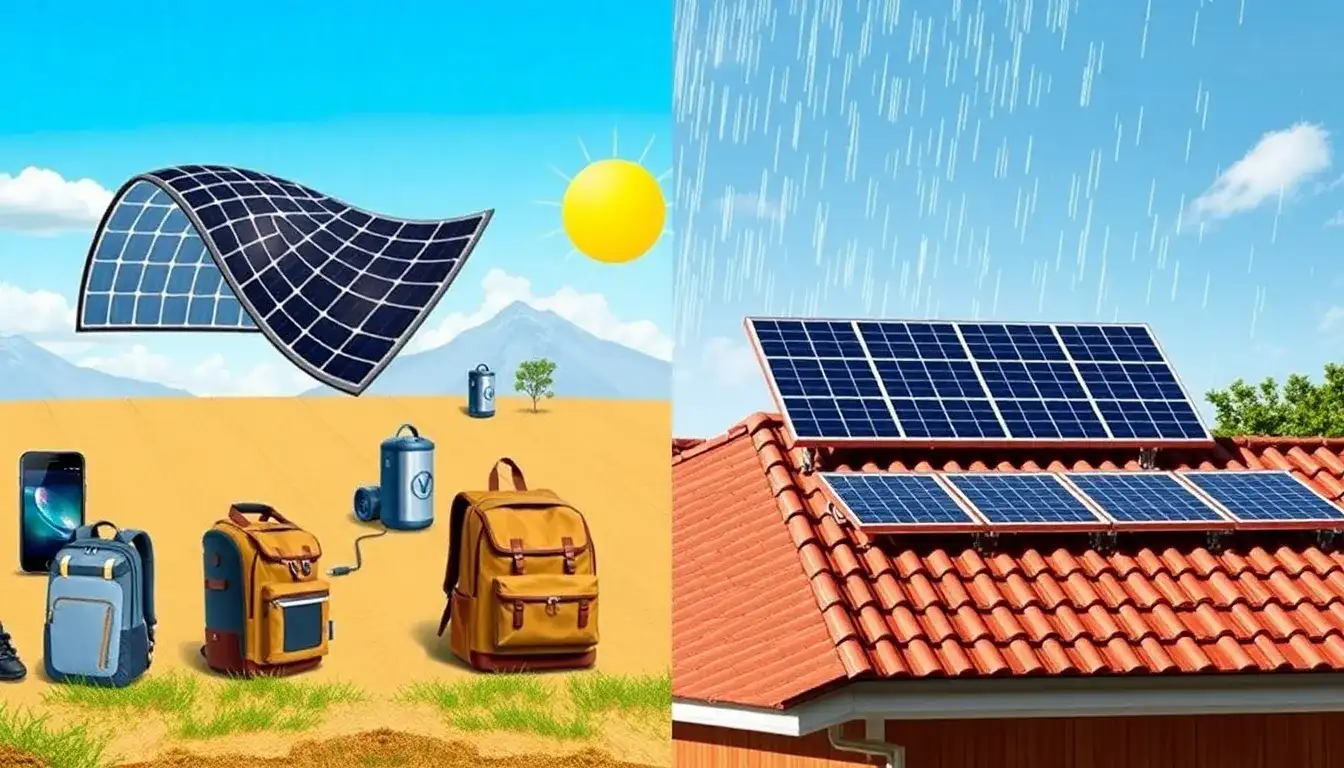
Flexible solar panels are generally less durable than traditional rigid solar panels. While flexible panels offer advantages like lightweight, thin form factor, and the ability to bend and conform to curved surfaces, their lifespan and robustness do not match those of rigid panels.
Durability Comparison
- Lifespan:
Flexible solar panels typically last around 5 to 15 years, with some sources extending that up to 20 years or a maximum of 30 years in high-quality models. In contrast, traditional rigid solar panels often last much longer, commonly between 25 and 40 years under normal conditions. - Materials and Construction:
Flexible panels use thin plastic or polymer substrates rather than the glass-encased cells used in rigid panels. This makes them more prone to wear and tear, and less resistant to scratching, water ingress, and environmental damage. Rigid panels, with their tough glass layers, provide superior protection against weather and physical impacts. - Resistance to Weather and Physical Stress:
Flexible panels are designed with weather-resistant coatings and can withstand moderate weather including sun, rain, and light wind. However, they fare worse than rigid panels against extreme weather such as hail or heavy storms and may degrade faster under harsh conditions. - Mechanical Stress:
The bending ability of flexible panels gives them resilience against breakage from flexing, but repeated bending and the direct mounting against surfaces without air gaps can cause faster material degradation. In comparison, rigid panels are mounted with spacing allowing airflow, which helps with cooling and durability. - Efficiency and Heat:
Flexible panels tend to get hotter due to their mounting method (flat against surfaces), which can reduce their efficiency by up to 20% on hot days and potentially accelerate material wear.
Summary Table
| Feature | Flexible Solar Panels | Traditional Rigid Solar Panels |
|---|---|---|
| Typical lifespan | 5–15 years (up to 20-30 in some cases) | 25–40 years |
| Construction materials | Thin plastic/polymer, thin-film cells | Glass-encased crystalline silicon cells |
| Weight | Very light (4-6 lbs approx.) | Heavy (30-50 lbs approx.) |
| Weather durability | Moderate; resistant to UV and rain but weaker vs. storms/hail | High; better protection against extreme weather |
| Flexibility | Can bend (up to 30–360°) | Rigid, cannot bend |
| Efficiency loss on heat | Up to 20% due to heat buildup | Less heat buildup thanks to air gaps |
| Installation | Easier, adhesive-based mounting possible | Heavier, usually requires screws and hardware |
Conclusion
Flexible solar panels are not more durable than traditional rigid panels. While their flexibility and light weight enable unique installation possibilities and portability, these come at the cost of reduced longevity, lower efficiency, and greater susceptibility to environmental and mechanical wear. Traditional rigid solar panels remain more durable and efficient for long-term stationary installations, especially in harsh environments.
Original article by NenPower, If reposted, please credit the source: https://nenpower.com/blog/are-flexible-solar-panels-more-durable-than-traditional-ones/

